Door Hanger Design Tips for High-Impact Local Campaigns

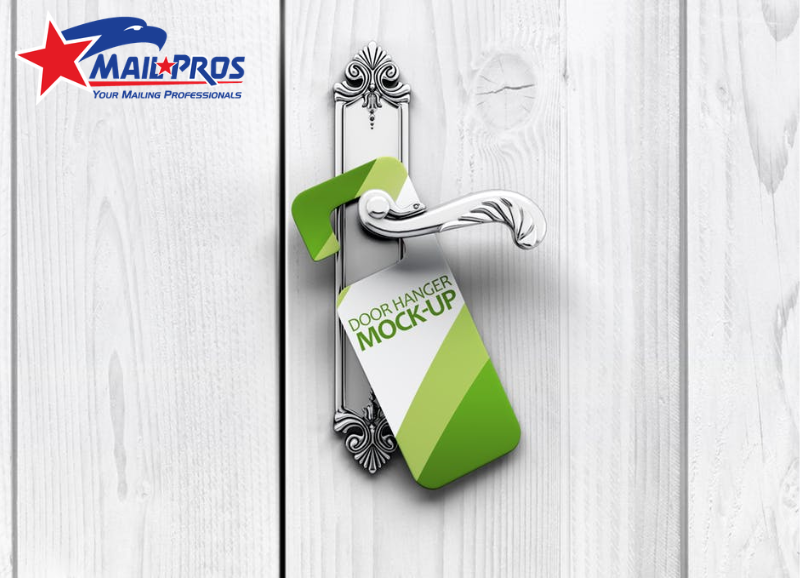
Local advertising works best when a message reaches the right household at the right moment. Digital ads can disappear in crowded feeds, while promotional emails may never reach the primary inbox. A door hanger creates a different form of contact because it must be seen and physically removed.
That advantage can be lost through weak copy, crowded artwork, poor paper selection, or careless distribution. Effective campaigns combine practical door hanger design tips with clear targeting, professional production, and a response method that can be measured. Businesses planning a neighborhood promotion can start with professional door hanger printing and use this framework to build a focused campaign.
Begin With One Campaign Goal
Decide whether the door hanger should produce estimate requests, appointment bookings, store visits, coupon redemptions, event registrations, or calls for a specific service. One defined objective keeps the message clear.
A strong campaign serves one audience, presents one benefit, and requests one action.
Select distribution areas according to service range, property type, customer fit, and delivery cost. For broader neighborhood coverage, compare door-to-door delivery with EDDM postcard printing before selecting a format.
Create a Five-Second Message Hierarchy
Most people will scan a door hanger and decide quickly whether the offer deserves attention. The front must answer four questions:
- What is being offered?
- Why is it useful?
- Who is providing it?
- What should the reader do next?
Lead with a benefit instead of a general slogan. “Save $50 on Your First Plumbing Repair” communicates more value than “Reliable Service for Every Home.” It identifies the service, explains the benefit, and supports immediate action.
Place the headline below or beside the knob opening. Follow it with the offer and one clear call to action.
Print the design at full size and view it from several feet away for five seconds. If the service, offer, and next step are not obvious, simplify the layout.
Make the Offer Specific and Credible
Strong door hanger marketing gives the reader a concrete reason to respond. Effective offers include a fixed-dollar discount, free estimate, complimentary inspection, first-visit credit, bundled service, or limited neighborhood promotion.
Weak: Special savings available now.
Stronger: Save $25 on Your First Lawn Treatment Through August 31.
The stronger version states the value, service, and deadline. Add any service-area limits, minimum purchases, or new-customer restrictions.
Urgency should come from a genuine deadline, seasonal demand, or limited capacity. Unsupported claims such as “best in the city” or “lowest price guaranteed” weaken trust unless the business can prove them.
Give Each Side a Separate Job
Two-sided printing creates more room, but both sides should not repeat the same message. The front earns attention; the back removes hesitation.
Use the front for the headline, main visual, offer, call to action, and essential contact information. Use the back for service benefits, business hours, coverage areas, an approved testimonial, license details, and concise offer terms.
This separation protects the first impression while giving interested readers enough information to decide. Additional door hanger campaign ideas can help adapt the message for home services, restaurants, real estate, fitness, and local retail.
Design for Real Viewing Conditions
A door hanger may be viewed in direct sunlight, porch shade, rain, or low evening light. Readability matters more than decoration.
Choose one display font and one highly legible body font. Create hierarchy through size, weight, and spacing rather than adding several typefaces. Keep body copy readable on the printed piece, not only on a computer screen.
Use strong color contrast and leave open space around the headline, offer, and call to action. Remove weak sentences before reducing the font size. Long paragraphs, oversized service lists, and several phone numbers turn a quick advertisement into work for the reader.
Use Images That Support the Promise
Images should explain the service or show the result. A landscaper can feature a genuine before-and-after comparison. A restaurant can display the promoted meal. A real estate professional can use the property, while a repair company can show the work being offered.
Generic stock photography may look polished but often adds little meaning. Original project photos or real products create a stronger connection to the business.
Check every image at actual print size. Low-resolution files, aggressive cropping, dark shadows, and small details may look acceptable on a monitor but fail in print.
Match the Format to the Content
The best size depends on the campaign. A compact format works for a simple coupon or one-service promotion. A longer format provides space for a menu, property details, service packages, or several proof points.
Sturdy cardstock is less likely to bend during handling. Gloss coating can strengthen photographs and bold colors, while matte coating reduces glare and supports text-heavy designs.
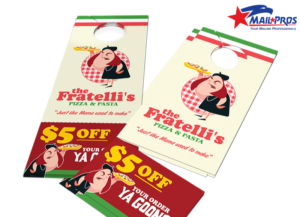
Campaigns that need a detachable coupon or take-away offer may benefit from rip hanger printing. Select the format before designing so the artwork follows the correct dimensions, cutout, perforation, and safe area.
Prepare Accurate Print Files
A strong concept can still fail during production. Use the printer’s exact template and confirm these points before approval:
- Extend backgrounds through the required bleed.
- Keep text, logos, and QR codes inside the safe area.
- Use high-resolution images and requested color settings.
- Check the dieline and knob opening.
- Verify prices, dates, numbers, URLs, and disclaimers.
- Review a full-size proof whenever possible.
Do not assume that a resized flyer will become a usable door hanger. The cutout changes the available space and can push important elements into unsafe positions.
Build Tracking Into the Design
A campaign cannot improve when responses are impossible to trace. Use a dedicated landing page, unique QR code, campaign phone number, or neighborhood coupon code.
The landing page must match the printed promise. A free-estimate offer should open a short estimate form rather than a general homepage. Test every QR code from the printed proof and include a written URL or phone number as a backup.
Record the quantity distributed, route, delivery date, calls, submissions, appointments, sales, and revenue. Cost per qualified lead provides more useful insight than scan volume alone. For campaigns combining several print formats, targeted mailing lists can support a separate addressed-mail component.
Protect Results During Distribution
Good design cannot recover from poor placement. Train distributors to secure each hanger neatly, respect private property, avoid damaged pieces, and follow applicable local rules. Controlled-access communities and apartment buildings may require permission.
Do not leave hangers where they can become litter or interfere with entry hardware. Record completed streets so delivery can be checked against the route plan.
Timing also matters. Seasonal service offers should arrive before demand peaks. Restaurants may coordinate promotions with weekends, openings, or local events. Home-service campaigns can follow nearby completed work while the business is already active in the area.
Common Door Hanger Design Mistakes
Avoid these campaign weaknesses:
- A headline that names the company but not the benefit
- Too many services presented with equal emphasis
- Small contact details
- A QR code with no backup response method
- Generic images unrelated to the offer
- Important copy placed too close to the cutout
- No deadline, tracking method, or redemption instructions
- Different messages on the hanger and landing page
The most useful door hanger design tips remove uncertainty. Every element should help the reader understand the offer, trust the advertiser, or take the next step.
Frequently Asked Questions
What Information Should a Door Hanger Include?
Include a benefit-led headline, specific offer, business identification, contact information, one call to action, and the terms needed to understand the promotion. Supporting benefits and proof can appear on the back.
What Is the Best Door Hanger Size?
Choose the size according to the amount of information. Compact sizes suit coupons and single-service promotions. Longer formats work better for menus, property details, service packages, or image-led campaigns.
Should Door Hangers Be Printed on Both Sides?
Two-sided printing is useful when the campaign needs immediate impact and supporting detail. Keep the offer and response path on the front; use the back for proof, service information, and terms.
Do QR Codes Improve Door Hanger Campaigns?
A QR code can lead to a quote form, menu, appointment page, property listing, or coupon. The destination must be mobile-friendly, match the offer, and have a printed URL or phone number as a backup.
How Can a Business Measure Results?
Use unique links, QR codes, phone numbers, or coupon codes. Track distribution by route and compare inquiries, qualified leads, appointments, sales, revenue, and cost per lead.
Conclusion
High-impact door hanger marketing depends on connected decisions. The audience shapes the offer. The offer determines the headline. The headline controls the layout. The selected format affects production, while the response method determines how performance will be measured.
Before printing, define the target routes, confirm one persuasive offer, test the design at full size, and verify every response path. Then request a custom printing quote with the required size, stock, coating, quantity, and delivery date. A careful print review and trackable distribution plan can turn a local promotion into a repeatable source of qualified leads.