From Inbox Fatigue to Mailbox Trust: Psychology of Direct Mail

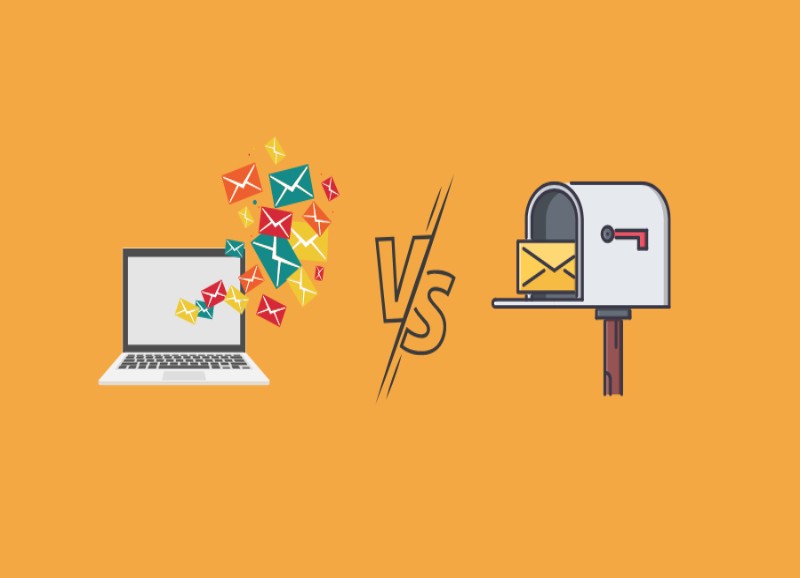
We are all inundated with constant emails, notifications, and messages online. Cash offers are pervasive, and inbox fatigue has set in from constant promotions that never elicit buyer response beyond deletion.
In the midst of all this digital chaos, direct mail gets attention. It touches people in a way that feels personal, physical, and memorable. Unlike emails, it grabs attention, builds trust, and inspires real engagement.
In this blog, we’ll find out how direct mail marketing beats inbox fatigue; why it’s actually more effective than email; how to connect with a digital strategy, and how to plan a perfect campaign that really yields results.
What Is Inbox Fatigue?
This is an emotional state of mental overwhelm caused by being bombarded with too much information, messages, notifications, and emails. However, when people open their email app today, it is usually filled with thousands of promotions, automation messages, alerts, and updates. Over time, these digital communications become redundant, distanced and overbearing.
Fully engrossed in these appeals, individuals learn not to read them but rather ignore them before reading. So many never get past the subject line. Others may not do so for prolonged periods of time. They ignore marketing emails altogether or allow them to languish in spam folders.
Inbox fatigue is more than just too much email. It is about losing interest, attention, and trust in digital communications. Just like any single message can stand out less in a sea of noise when every voice sounds the same. Yet people are less and less inclined to interact. As well, this reduced attention also affects even the best-designed emails with great offers.
The Core Reason Direct Mail Works Better Than Email in 2026
The primary cause direct mail marketing will outperform email in 2026 is that it doesn’t get lost. In a digital world, direct mail is something physical. It taps into a human instinct that remains unchanged even as technology advances. Below are the core reasons why direct mail trumps email regarding capturing attention and driving engagement:
Physical Contact
Someone is opening, touching, folding, sliding out (or throwing away) a piece of printed mail and physically interacting with it. Such engagement elicits greater focus than merely flicking through an inbox. We tend to deal with physical things differently from digital ones. They slow down, pay more attention, and retain what they saw for longer.
Less Competition
Email inboxes are crowded. Each message goes up against dozens more. Marketing emails most often sit next to social notifications, bills, and personal messages. When a piece of direct mail ends up in a mailbox, there are only a handful of pieces in competition. This lack of competition gives direct mail service an edge that email will never come close to.
Perceived Value
Physical mail is viewed as more personal and valuable by many. “When a brand pays to print, pay for postage, people can feel that it matters. They see printed mail as important, not just an automated notification. A reason that they may read and hold on to the message more is because of this value.
Higher Response Rates
Many marketing studies have proven that receipt of a piece of physical mail still commands better response rates than digital messages. And when people see something in the mail that feels relevant and well designed, they are motivated to do something about it. Whether they visit a website, call a number, or redeem an offer, direct mail service drives actual engagement.
Better Memory Retention
Direct mail persists in the physical environment longer. It is not deleted with the push of a button. Instead, they leave it on a desk, stick it to a board, or take it home with them. This generates several moments of exposure as the individual interacts with that mail piece over time.
Each of these reasons directly explains why direct mail remains hugely powerful in a landscape dominated by digital interaction. It circumvents inbox fatigue by providing something that can feel neither digital nor repetitive or impersonal.
How Direct Mail Blends with Digital Today
Direct mail doesn’t replace digital marketing. It works along with digital strategies to make stronger results. In fact, some of the most successful campaigns in 2026 have used direct mail as a bridge to digital engagement. Here are a few examples of how brands combine direct mail and digital:
- QR Codes: A QR code on a direct mail piece will take the consumer to a landing page, video, online form, or special offer. It connects real mail to a digital experience, which can drive user engagement.
- Personal URLs: A personalized URL (PURL) on a mailer tells the recipient to go to a unique page built just for them. This makes the experience more personal and valuable.
- SMS and Email Follow‑Ups: A business might send out direct mail and then follow it up with an email or text message reminding the recipient of the offer they received in the mail. This adds another level of reinforcement to the message, boosting response rates
- Social Media Integration: Some campaigns go so far as to advertise on social media to individuals who received direct mail. On top of that, it creates multiple touch points, increasing the chances of getting action.
- Tracking Online Behavior: When a direct mail campaign encourages people to visit a digital address, marketers have the ability to track behavior, measure engagement, and determine which messages are performing better than others. This helps make further campaigns more effective and data-driven.
How to Plan a Direct Mail Campaign in 2026
Strategy and creativity go hand-in-hand when it comes to planning a direct mail campaign. It takes more than printing a postcard and mailing it. An effective campaign needs to be considered, purposeful, and tied to metrics-driven outcomes. The following are the steps to plan a successful direct mail campaign:
Understand Audience
The first step of any solid campaign is understanding who you are communicating with. Your audience should be defined based on demographics, behaviors, and interests. The relevance of your message directly relates to the response.
Choose Your Message
Your message needs to be focused and insightful, whether promoting a product, offering a discount, or inviting someone to an event. If the message is not relevant to the receiver, they will immediately close your email. When the message looks like it was made for them, people engage.
Select Your Format
Select the format that best meets your objectives. Postcards work well for brief notes and offer ideas. You can explain and tell more stories with letters. Brochures are great for complex services. Product catalogues are best suited for product-rich offerings. Dimensional mail and packages create surprise and intrigue.
Design with Intent
Design signals value, tone, and trustworthiness. Ensure Your Mail Piece Is Easy to Read & Visually Inviting and on-Brand. This can be aligned with the design aspects, colors, images, and copy to work together without distraction in communicating.
Include a Call to Action
Each piece of mail needs to tell the person what you want them to do next. Your call-to-action must be clear, simple, and enticing; whether it’s visiting a URL, scanning a code, calling a number, or bringing the coupon.
Integrate with Digital Touchpoints
Decide how direct mail services will integrate with online experiences. Leverage QR codes, personalized URLs, email reminders, or social retargeting to connect physical with digital in a seamless journey.
Track and Measure
Your campaign success should be measurable. Monitor behavioral patterns, responses, visits, and conversions. That doesn’t mean you can’t use data to adjust for next time, showing what worked well and what needs work. Precisely that is what makes future campaigns possible.
Following these will ensure that your direct mail campaign is not some generic message printed on paper but a strategic communication tool aimed at making an impact and achieving results.
To Sum Up
Direct mail cuts through inbox fatigue because it’s something different. It offers physical presence, deeper attention, higher trust, and tangible value. Unlike email, which is not physically present and can be easily ignored, direct mail comes into the real world where attention has not yet been burned. We slow down, absorb the message, reflect on it, and frequently put it into practice.
When digital strategies are combined with direct mail, it works even better. It can point people to online action from physical mail through QR codes, personalized URLs, and follow-up messages. Thus, this hybrid model enhances the engagement of both in-person and digital.
If you want your message to pop out of the noise, get noticed, and be remembered, our direct mail services are one of the most powerful weapons in the market today. And it retains what’s best about human attention in an age drowning in digital matter.
Direct mail isn’t a mere marketing channel. It’s the gap between meaningful messaging and true engagement.