
Every small business owner eventually hits a wall with digital marketing. You pour money into social media ads, fight against constantly changing algorithms, and wonder if your message is actually reaching the people in your own neighborhood. This is usually the moment when clients come to me asking about snail mail. Specifically, they want to know if EDDM (Every Door Direct Mail) is actually a viable strategy or just a waste of paper. It is a valid question because marketing budgets are tight, and you cannot afford to throw spaghetti at the wall just to see what sticks.
From my experience working with hundreds of local businesses, the answer isn’t a simple yes or no. It depends entirely on what you sell, who you serve, and how you execute the campaign. EDDM is a powerhouse for saturation marketing, allowing you to land a postcard in every mailbox on a specific carrier route without needing a mailing list. However, it requires a strategic approach. If you treat it like a generic flyer drop, you will likely be disappointed. But if you treat it like a targeted geographic campaign, it can deliver a return on investment that digital channels simply can’t match.
Understanding the Real Appeal of Saturation Mailing
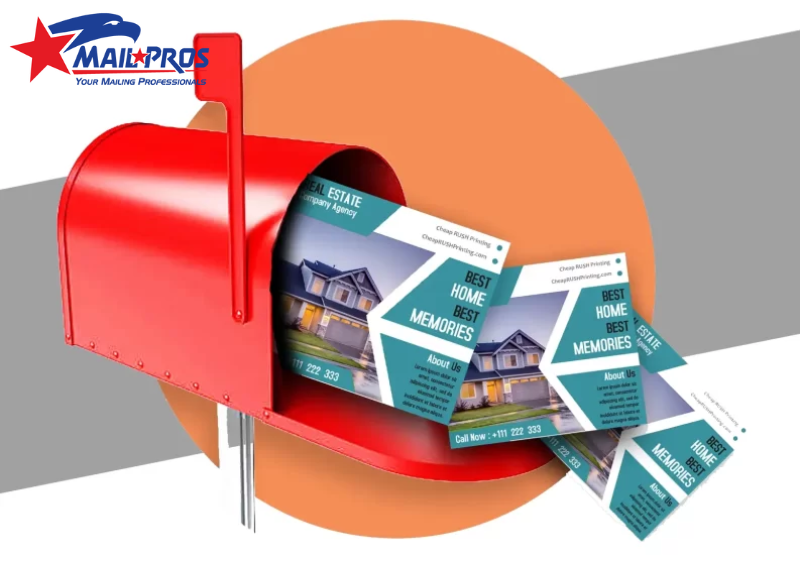
The core concept of Every Door Direct Mail is simplicity and reach. Unlike traditional direct mail, where you purchase a specific list of names and addresses based on demographics, EDDM operates on the principle of neighborhood saturation. You are essentially telling the post office, Deliver this piece to every single home on this street. For local businesses like pizzerias, landscapers, or real estate agents, this is incredibly powerful because your perfect customer is often just anyone living within a five-mile radius of your operation.
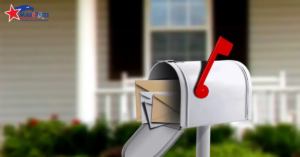
At MailProsUSA, we often see business owners surprised by the tangible nature of this strategy. In a world where emails are deleted with a swipe, a physical postcard has to be held, looked at, and physically managed. That split second of attention is valuable. If your design is compelling and your offer is strong, that card ends up on the refrigerator rather than in the recycling bin. This staying power is the primary reason why saturation mailing continues to be a cornerstone for local business growth.
Why Postage Rates Matter for Your Budget
One of the biggest hurdles for small businesses regarding direct mail is the cost of postage. First-class stamps are expensive, and even standard bulk mail can add up quickly if you aren’t careful. This is where EDDM shines. The USPS offers significantly reduced postage rates for these campaigns because you are doing some of the work for them. By targeting specific routes and bundling the mail effectively, you bypass much of the sorting process that usually takes place at the distribution center.
However, saving money on postage is only half the battle. You need to view these savings as an opportunity to invest more in the quality of your printed piece. Since you are paying less to get the card into the mailbox, you can afford a larger format or higher-quality paper stock. We always advise clients to look at the benefits of professional mail services to ensure they are maximizing these postage discounts while maintaining a professional look that builds trust with homeowners.
The Power of Hyper-Local Targeting
Many business owners mistakenly believe that EDDM is a spray and pray method with no targeting capabilities. While it is true that you can’t target by individual income or age, you can target by carrier route, which serves as a surprisingly accurate proxy for demographics. Neighborhoods tend to be economically and socially similar. By choosing specific routes, you can focus on areas with single-family homes, higher property values, or proximity to your storefront, avoiding apartments or business districts if they don’t fit your profile.
Using Route Selection Tools Effectively
Success with EDDM starts with the map. You need to visualize where your current customers are coming from and identify look-alike neighborhoods nearby. This is where technology bridges the gap between old-school mail and modern data. By utilizing an interactive map tool, you can see exactly how many households are on a route and what the estimated postage will be before you commit. This level of transparency allows for precise budget planning.
This geographic focus is exactly how EDDM boosts local business growth. If you are a service provider, such as a roofer or a dentist, you don’t need to market to the whole city, you just need to dominate the neighborhoods surrounding your practice or job sites. Saturation mailing creates a neighborhood effect where residents see your brand repeatedly. When a neighbor hires you, and others see your truck, the postcard they received last week suddenly becomes relevant, reinforcing your local authority.
Common Design Mistakes That Kill Campaign Results
I have seen too many business owners try to save money by designing their own postcards, only to clutter the space with too much text and poor-quality images. In the mail, you have about three seconds to make an impression. If your headline isn’t clear or your offer isn’t compelling, your investment is wasted. A common mistake is focusing on the business features rather than the customer’s benefits. Don’t just list your services; tell the homeowner how you solve their problem.
The Importance of Size and Paper Quality
Size matters in the mailbox. If you send a small postcard, it gets lost inside the pages of a grocery store circular or hidden under bills. EDDM allows for larger, “flat” sized mail pieces that stand out physically. Using a large, glossy format ensures that your message is the first thing a person sees when they open their mailbox. High-quality EDDM postcard printing is essential here; flimsy paper feels cheap, and if the paper feels cheap, the customer assumes your service is cheap too.
Is Your Industry Right for Saturation Mailing?
It is important to be honest: EDDM is not for everyone. If you sell specialized B2B software or high-end niche products that appeal to only 1% of the population, saturation mailing will likely result in a low ROI. This strategy works best for businesses with broad appeal. If the majority of households on a street could theoretically use your service think restaurants, gyms, mechanics, home improvement, and real estate then EDDM is a strong contender for your marketing dollars.
Who Wins and Who Loses with EDDM
The businesses that win are those that understand the lifetime value of a new customer. A dentist might spend $1,000 on a mailing to get three new patients. On the surface, that sounds expensive. But if one patient stays for five years, the ROI is massive. Conversely, businesses with very low margins and no repeat business might struggle to make the numbers work. Implementing smart strategies to expand locally, such as including aggressive new-customer offers or QR codes for tracking, is vital for those in competitive industries.
The Logistics: DIY vs. Professional Management
You can technically do EDDM yourself. You can design the card, print it, bundle it in batches of 50 or 100, fill out the facing slips, pay at the post office, and drop it off. However, for a busy business owner, the time cost is often higher than the monetary savings. The paperwork can be confusing, and if you bundle the mail incorrectly, the post office can refuse the drop-off. I have seen frustrated owners walk out of the post office with their boxes of mail because of a simple paperwork error.
Navigating USPS Requirements Without Headaches
This is why many businesses opt for full-service providers. We handle the printing, the paperwork, the bundling, and the delivery to the USPS. This ensures your campaign goes out on time and without hassle. Before you decide which route to take, you should research everything you need to know about the process. Understanding the logistics helps you decide if your time is better spent managing the campaign or managing the new leads that come in from it.
FAQs
What is the minimum number of pieces required for an EDDM mailing?
For the Retail option, which most small businesses use, the minimum is 200 pieces per mailing per day. This low barrier to entry makes it excellent for testing small neighborhoods before rolling out a larger campaign.
How long does it take for the mail to be delivered?
Once the mail is dropped off at the local post office that serves the targeted route, delivery is usually very fast typically within 1 to 3 business days. However, printing and processing time before the drop-off will vary depending on your service provider.
Do I need a mailing permit to use EDDM?
If you use EDDM Retail, you do not need to purchase a specific mailing permit, you use the standard EDDM Retail Indicia. If you are mailing huge quantities through a Business Mail Entry Unit (BMEU), a permit is required, but most small businesses stick to the Retail option.
Can I target businesses only and exclude residential homes?
Generally, no. EDDM is designed for saturation. While you can choose routes that are business heavy, the carrier delivers to every mailbox on that route. You cannot skip the residential boxes on a mixed route.
How do I track the success of my campaign?
Since you aren’t mailing to specific names, you can’t match sales to a client list directly. The best way to track ROI is to use a specific call-to-action on the card, such as Bring this card for $20 off, use a dedicated phone number, or a QR code that leads to a unique landing page.
What is the best size for an EDDM postcard?
While there are several approved sizes, the most popular and effective is usually the 6.5 x 9 or the massive 9 x 12. These sizes qualify as flats and provide ample canvas space for high-quality images and readable text.
Does EDDM work for online-only businesses?
It can, but it is harder. EDDM works best for businesses that serve a physical local area. If you are an online store, you need a very compelling reason for a local homeowner to log on and buy from you specifically, rather than a global competitor.
Conclusion
So, is EDDM worth it for small businesses? From my perspective as a print and marketing provider, the answer is a resounding yes provided you are in a consumer-facing industry and you approach it with a plan. It remains one of the most cost-effective ways to build brand awareness and drive traffic in a specific geographic area. It cuts through the digital noise and puts your brand literally in the hands of your potential customers.
However, success rarely happens by accident. It requires selecting the right routes, crafting a professional message, and viewing direct mail as an investment rather than an expense. If you are ready to stop guessing and start reaching your local market effectively, take the time to explore the resources on our blog or reach out to a professional to guide you through the process. Your neighbors are ready to buy; you just need to let them know you are there.