How to Improve Flyer Marketing ROI and It Measurable Revenue

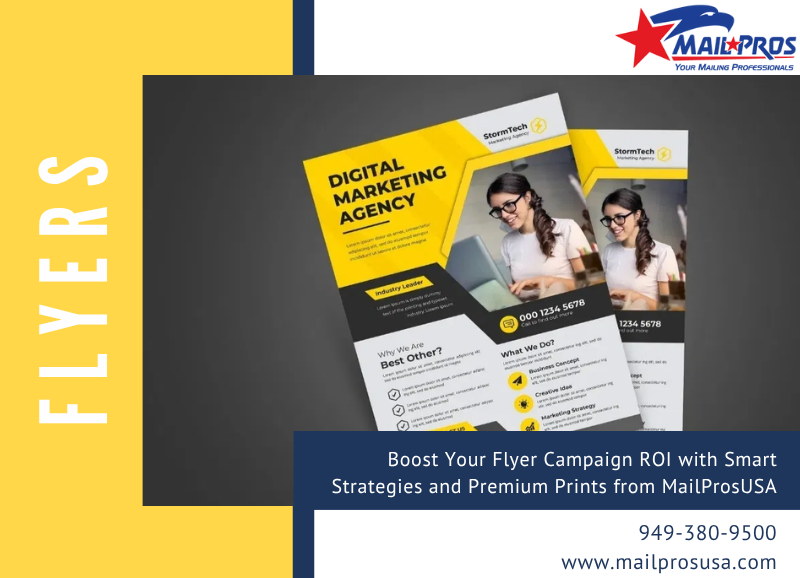
Flyer marketing ROI improves when the audience, offer, design, distribution, and tracking process support one measurable outcome. Businesses that calculate the break-even point before printing and connect responses to completed sales can identify what produced revenue, what created waste, and what should change in the next campaign.
A polished flyer can still underperform when it reaches the wrong audience, carries a weak offer, or sends readers to an unrelated page. Strong results begin before design, with a financial target and customer-acquisition plan.
Flyer Marketing ROI Starts With a Defined Goal
Flyer marketing ROI measures the financial return generated by a campaign compared with its total cost.
ROI = (Campaign revenue − Total campaign cost) ÷ Total campaign cost × 100
Include design, printing, audience data, postage or distribution, promotional discounts, tracking tools, and related staff time.
For example, a $2,400 campaign that generates $6,000 in attributable revenue produces a 150% ROI. Also review gross profit and customer value because revenue alone can make a heavily discounted promotion appear stronger than it is.
Set one precise goal before production. “Generate 60 booked estimates in 30 days” is more useful than “increase awareness” because60 booked estimates in 30 days” is more useful than “increase awareness” because it guides the offer, audience, call to action, and performance metrics.
Find the Break-Even Point Before Printing
Calculate how many customers or sales are needed to recover the investment.
Assume the campaign costs $3,000 and one new customer produces $150 in average gross profit. The campaign must generate 20 customers to break even:
$3,000 ÷ $150 = 20 customers
If 5,000 flyers will be distributed, the required customer conversion rate is 0.4%. This figure does not predict performance, but it establishes a practical threshold. A plan that requires an unrealistic conversion rate needs a stronger offer, better targeting, a lower cost, or a higher-value conversion.
Break-even planning keeps the campaign focused on profitable actions rather than scan volume.
Audience Quality Determines Campaign Efficiency
After setting the financial target, decide who should receive the flyer. Broad coverage may spend the budget on people who cannot use the offer.
Useful audience filters include:
- ZIP code, city, or service radius
- Homeownership and property type
- Household income or age range
- Business type, company size, or job title
- Previous purchase behavior
- Customer inactivity period
- Distance from a store or office
A roofing company may prioritize homeowners in older neighborhoods, while a restaurant may focus on households inside a practical delivery area.
MailProsUSA offers targeted mailing lists for narrowing consumer or business audiences through geographic, demographic, or firmographic criteria. Stronger audience alignment reduces wasted distribution and supports better flyer campaign returns.
Build the Offer Before Finalizing the Design
The audience determines what matters; the offer gives that audience a reason to act. Define it before approving the design.
A strong offer should make four points clear:
- What the customer receives
- Why the offer is valuable
- When it expires
- What action comes next
“Save 20% on your first service booked by August 31” is clearer than “Contact us for special savings.” Specific terms reduce uncertainty and make redemptions easier to track.
Estimate order value, fulfillment cost, discount cost, and customer acquisition value before printing. A large discount may increase response while reducing the actual return.
Create a Clear Path From Headline to Action
Once the offer is settled, the headline, supporting message, proof, and call to action need a visible order. Readers should not have to search for the promotion or the main response method.
A conversion-focused flyer usually includes:
- A benefit-led headline
- One primary offer
- Brief supporting information
- Relevant proof or terms
- One dominant call to action
- Essential contact details
Typography must remain readable at final size. Images should clarify the service or outcome, while white space keeps important details from competing.
Businesses can review the elements of professional flyer design and available custom flyer printing options before approving production.
Match Distribution to the Buying Window
Good design cannot recover a campaign that arrives too late or reaches the wrong location. Distribution should follow the customer’s decision window.
An event promotion must arrive early enough for planning. A seasonal service should reach customers before demand peaks. A grand-opening flyer needs time to build awareness without arriving so early that the date is forgotten.
Distribution may involve addressed mail, neighborhood delivery, event handouts, package inserts, partner locations, or in-store placement. Choose the method according to the required audience and action.
For addressed campaigns, bulk mailing services can combine list processing, printing, addressing, presort, and USPS delivery. Businesses needing wider campaign support can also review direct mail marketing services.
Track Every Response Through to Revenue
Tracking must be planned before the artwork is released. Once an untracked flyer has been distributed, reliable attribution becomes difficult.
Campaign-specific response methods include:
- A unique QR code
- A dedicated landing-page URL
- A promotional code
- A trackable phone number
- A numbered coupon
- A source question at checkout
The destination should repeat the printed promise. A free-estimate flyer should lead to a page focused on that estimate, not a general homepage.
Record the full path:
Flyers distributed → responses → qualified leads → completed sales → revenue → gross profit
A scan is a response. A booked appointment or purchase is a conversion. Keeping those actions separate makes flyer advertising ROI easier to compare across offers, neighborhoods, and campaign periods.
Measure Profit, Not Activity Alone
Review several connected metrics:
Response rate = Responses ÷ Flyers distributed × 100
Conversion rate = Completed conversions ÷ Responses × 100
Cost per lead = Total campaign cost ÷ Qualified leads
Cost per acquisition = Total campaign cost ÷ New customers
Revenue per flyer = Attributed revenue ÷ Flyers distributed
Response rate measures initial action, while conversion rate shows whether that action became a business result. Cost per acquisition and gross profit reveal whether the campaign created sustainable value.
Where possible, compare the mailed audience with a small, similar group that did not receive the flyer. This helps separate campaign-driven results from purchases that might have occurred anyway.
Test One Meaningful Variable at a Time
Controlled testing improves future campaigns when only one major element changes. Test a headline, image, offer, call to action, format, or audience segment while keeping quantity, timing, and follow-up as consistent as possible.
Changing the audience, discount, design, and distribution date together makes the result difficult to interpret. The winning version should be selected through conversions, customer acquisition cost, or gross profit, not scan volume alone.
A small test run can reveal whether weak results came from the creative, offer, audience, or response process before the full budget is committed.
Complete a Final Campaign Preflight
Before printing, confirm that:
- The audience matches the offer and service area.
- The headline communicates a clear benefit.
- The terms and expiration date are accurate.
- The flyer requests one primary action.
- The QR code, URL, and phone number work.
- The landing page repeats the printed offer.
- The total cost and break-even target are documented.
- Staff know how to record responses.
- The final proof is readable at actual size.
- A campaign review date is scheduled.
This final check connects strategy, production, and measurement while preventing avoidable operational errors.
Frequently Asked Questions
How is flyer marketing ROI calculated?
Subtract the total campaign cost from the revenue attributed to the flyer campaign. Divide the result by the campaign cost and multiply by 100. Also review gross profit and customer acquisition cost for a more accurate business assessment.
What is the best way to track a flyer campaign?
Use a unique QR code, landing page, promotional code, phone number, or coupon. Follow each response through to the completed sale or appointment so that activity is not mistaken for revenue.
How many flyers should a business print?
Base the quantity on the reachable audience, budget, break-even requirement, and distribution method. A smaller test run is safer than committing the full budget before the audience and offer have been validated.
What should a marketing flyer include?
Include a clear headline, one primary offer, brief supporting details, accurate terms, contact information, and one visible call to action. Every element should help the reader understand the value or complete the next step.
How can a business improve a low flyer response rate?
Review audience quality, offer strength, arrival timing, visual hierarchy, and ease of response. Change one major variable, run comparable test batches, and judge the result through qualified leads, conversions, and profit.
Make the Next Flyer Campaign Accountable
Strong flyer marketing ROI comes from connecting a realistic goal to a qualified audience, a financially sound offer, clear design, timely distribution, and reliable tracking. Each stage should produce information that strengthens the next campaign.
MailProsUSA supports flyer printing, audience selection, direct mail production, and mailing execution in one coordinated process. Visit MailProsUSA to define the audience, quantity, format, offer, and launch date for a flyer campaign built around measurable response and profitable customer acquisition.