How Rack Card Printing Helps You Attract More Customers

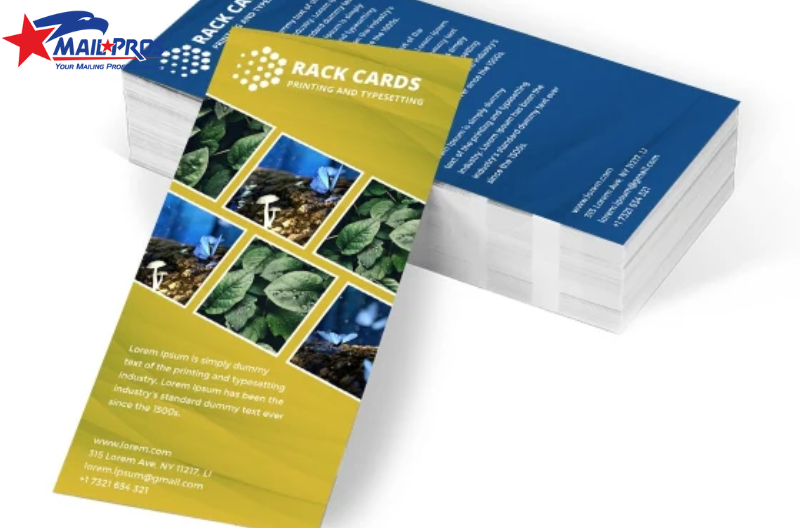
We often get caught up in the digital whirlwind of social media ads and email blasts, forgetting that real business happens in the physical world. There is something distinctly powerful about walking into a hotel lobby, a visitor center, or a local coffee shop and seeing a well-designed display of information. As a printing provider, I’ve seen firsthand how a simple 4×9 inch card can do the heavy lifting for a business when the owner isn’t there to speak for themselves. This is where the humble rack card shines.
Unlike a digital ad that can be swiped away in a fraction of a second, a rack card is a tangible invitation. It sits patiently in high-traffic areas, waiting for the exact moment a potential customer is looking for a service like yours. At MailProsUSA, we have helped countless business owners from tour operators to real estate agents turn these slender pieces of cardstock into reliable lead-generation machines. It isn’t just about putting ink on paper; it is about creating a silent salesperson that works for you around the clock.
The “Grab-and-Go” Psychology of Rack Cards
The genius of the rack card lies in its specific format. They are designed to fit into standard display racks, which means they are almost always placed in environments where people are actively looking for information. Think about the last time you were a tourist in a new city; you likely scanned a wall of brochures looking for a place to eat or a museum to visit. That moment of search is high-intent behavior. When someone reaches for your card, they are already interested.
However, capturing that interest requires more than just showing up. The top third of your card is prime real estate. If the headline and image visible above the rim of the holder don’t scream value, the card stays in the rack. We always advise our clients to treat that top three inches like a billboard. If you are curious about the technical specs that make this work, you can look at our Rack Card Printing options to see standard sizing and bleed requirements that ensure your message isn’t cut off.
Design Elements That build Trust and Authority
One of the most common mistakes I see business owners make is trying to cram an entire website’s worth of text onto a single card. When a potential customer picks up a card, they are usually in a hurry or on the move. They need to digest the “who, what, and where” in under five seconds. A cluttered design feels overwhelming and, frankly, unprofessional. It signals to the customer that doing business with you might be complicated or disorganized.
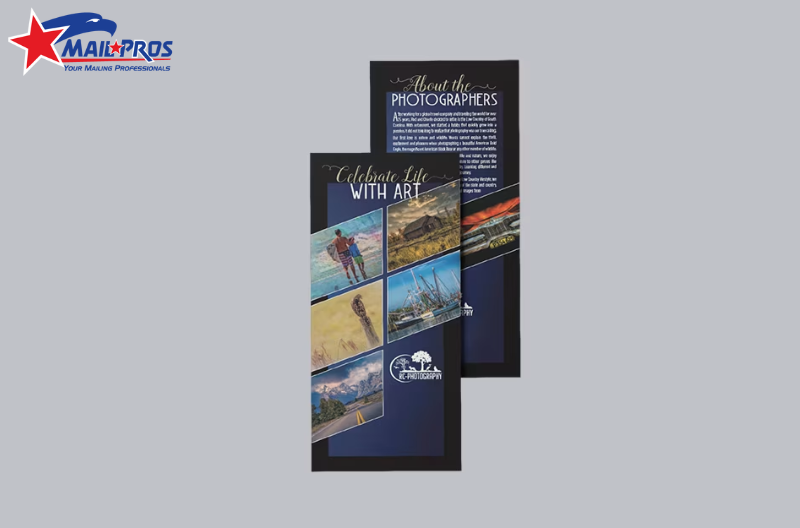
To avoid this, focus on high-resolution imagery and bullet points. Use the front of the card to hook them emotionally with a stunning visual, and use the back for the nitty-gritty details like pricing, maps, or hours of operation. This is similar to the strategy used in Postcard Printing, where brevity is key. The difference here is that you have a bit more vertical space to tell a story, but the rule of “less is more” still applies to the text.
Choosing the Right Paper Stock Matters
You might have the best design in the world, but if your card flops over in the rack because the paper is too thin, it reflects poorly on your brand quality. In the printing industry, we talk a lot about “hand feel.” When a customer picks up a flimsy piece of paper, they subconsciously associate it with “cheap.” When they pick up a sturdy, 14pt or 16pt card stock with a nice gloss or matte finish, they associate it with “established” and “trustworthy.”
Durability is also practical. Rack cards are often stuffed into pockets, purses, or car consoles. A robust card stock ensures your contact information survives the journey home. While Flyers are great for mass handouts at events where volume is the goal, rack cards are meant to have a longer shelf life. They need to stand tall in the display and withstand a bit of handling without dog-earing immediately.
Strategic Placement and Cross-Promotion
Printing the cards is only step one; getting them into the right hands is step two. Many of our most successful clients use rack cards for cross-promotion. For example, a local gym might leave a stack of cards at the health food store down the street, and vice versa. This creates a referral network that costs nothing but the price of printing. It is a community-based approach that digital marketing struggles to replicate with the same level of trust.
If you are targeting a specific neighborhood rather than a business partner, you might want to look into Door Hanger Printing. While rack cards wait for customers to come to them, door hangers go to the customer. However, the rack card is versatile enough that you can actually slip them into presentation folders or shopping bags as a thank-you note or a coupon for a future visit, effectively doubling their utility.
Integrating Rack Cards into a Broader Campaign
Marketing works best when your print materials “talk” to each other visually. Your rack card should look like a cousin to your Brochures and your signage. Consistency builds memory. If a customer sees your Poster Printing ads at a bus stop and then sees the same color scheme and logo on a rack card in a hotel lobby, that repetition increases the likelihood of a sale significantly.
For businesses that rely on localized marketing, combining rack cards with EDDM Postcard Printing (Every Door Direct Mail) can be a powerhouse strategy. You use EDDM to blanket a neighborhood with awareness, and then place rack cards in local hubs to capture the foot traffic that the mailer generated. It covers both bases: the residents at home and the visitors exploring the area.
Adding Value with Incentives
Why should someone keep your card? A pretty picture is nice, but a discount is better. We often suggest adding a dedicated space at the bottom of the card for a coupon code or a “bring this in for 10% off” offer. This not only encourages the customer to hold onto the card but also allows you to track the ROI of your print run. You will know exactly how many customers came from the hotel lobby versus the visitor center based on the codes used.
If you really want to emphasize a coupon, you might consider Rip Hanger Printing. These are similar to door hangers but include a perforated tear-off business card or coupon at the bottom. However, you can apply the same logic to a standard rack card by visually separating the bottom inch of the design with a dotted line, signaling to the customer that this part of the card has monetary value.
Why Professional Printing Wins Over DIY
I understand the temptation to print a few cards on an office inkjet printer to save money, especially when you are just starting out. However, the lack of professional bleed (printing to the edge), the uneven cutting, and the water-soluble ink usually end up costing you more in lost reputation. Professional equipment ensures that your colors are vibrant and consistent. To learn more about who we are and our commitment to quality, you can visit our About Us page.
We handle the technical headaches like color mode conversion (RGB to CMYK) and resolution checks so you don’t have to. Real estate agents, specifically, cannot afford to have low-quality photos of properties. The print needs to be crisp. If you are unsure about your files or need advice on paper stocks, we are always here to help. You can reach out via our Contact Us page for guidance on your next project.
FAQs
What is the standard size for a rack card?
The industry standard is 4 inches by 9 inches. This size is specifically chosen because it fits perfectly into standard brochure holders and display racks found in hotels, rest stops, and lobbies.
Should I use a matte or glossy finish?
This depends on your goal. Glossy is generally better for cards with lots of photos (like travel or food) because it makes colors pop. Matte is excellent for text-heavy cards or if you want a more elegant, subdued luxury feel. Matte is also easier to write on if you plan to add notes.
What is the difference between a rack card and a brochure?
A rack card is a single, flat sheet (usually printed on both sides), whereas a brochure is folded. Rack cards are best for quick, digestible information, while brochures are better for detailed explanations or storytelling.
How thick should the paper be?
We recommend at least 14pt cardstock. Anything thinner tends to curl forward when placed in a display stand. For a truly premium feel that stands perfectly straight, 16pt is the gold standard.
Can I mail a rack card?
Yes, you can! A 4×9 card fits into a standard #10 business envelope. Some businesses also mail them as oversized postcards, though postage rates may vary compared to standard postcard sizes.
Conclusion
Rack cards remain one of the most cost-effective ways to attract local customers because they capitalize on impulse and location. They are tangible, easy to distribute, and, when designed correctly, incredibly persuasive. By focusing on a strong visual hierarchy, using quality paper stock, and placing them in strategic locations, you can turn a simple piece of paper into a consistent revenue stream.
If you are ready to start your next print project or need advice on how to structure your design for the best results, check out more insights on our Blog. We are here to ensure your business looks as professional on paper as it is in person.