Political Campaign Advertising Services for Local and National Elections

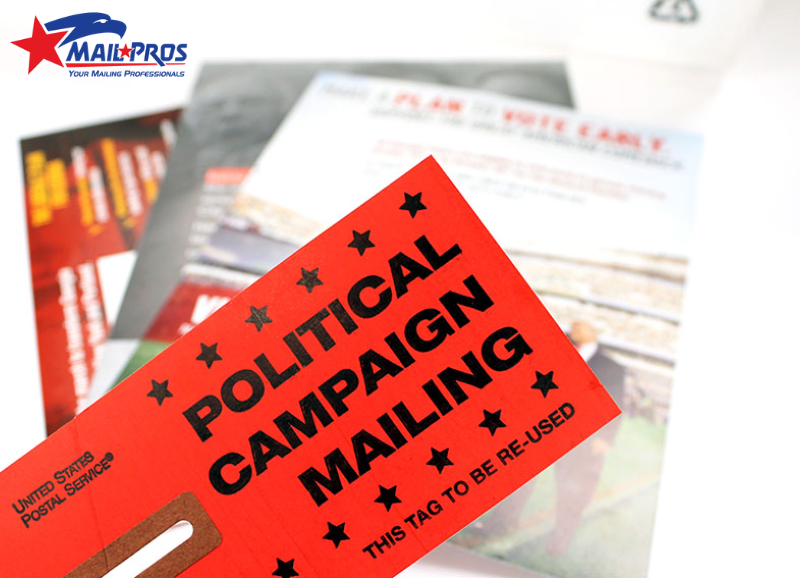
Political campaigns succeed when strategy, voter data, creative messaging, production, and delivery work together. A strong message can lose its value when it reaches the wrong audience, arrives too late, or fails to explain what voters need to do next.
Political campaign services help candidates, political committees, advocacy groups, and ballot initiatives coordinate these moving parts. The process may include audience segmentation, political direct mail, campaign printing, postal preparation, digital integration, response tracking, fundraising communication, and get-out-the-vote outreach.
Instead of treating each mailpiece as an isolated project, campaigns need a connected communication plan. Every postcard, letter, brochure, email, landing page, and voter reminder should support the same campaign objective while moving the audience toward a clear action.
Begin With a Defined Campaign Objective
Every political communication needs one primary purpose. A candidate-introduction postcard, policy comparison, donation appeal, volunteer request, and voting reminder cannot use the same message structure.
Before writing or designing campaign materials, define:
- The audience receiving the message
- The information that audience needs
- The action recipients should take
- The date by which they must act
- The geographic area being covered
- The campaign milestone connected to the communication
- The method used to measure response
This planning stage prevents crowded mailpieces and unclear calls to action. It also creates continuity across the campaign. An introductory mailing can establish name recognition, a second piece can explain priority issues, and a later message can provide voting instructions.
Campaign teams that need support coordinating these elements can explore comprehensive political campaign services covering targeting, design, printing, mailing, and delivery planning.
Build the Campaign Around Voter Segments
Once the objective is clear, the next step is identifying who needs to receive the message. Sending the same communication to every household may increase volume, but it does not always improve relevance.
Voter segmentation allows campaigns to organize audiences according to geography, publicly available voter information, campaign engagement, communication preferences, and election-related needs. Potential segments may include:
- Registered voters within a district
- Consistent or occasional voters
- Identified campaign supporters
- Previous donors or volunteers
- Households requiring multilingual information
- Voters eligible for early or absentee voting
- Residents affected by a specific local issue
Each segment needs a defined communication purpose. Supporters may receive turnout instructions, while undecided voters may need a concise explanation of the candidate’s priorities. Previous donors may receive a fundraising letter connected to a campaign deadline.
Accurate targeting depends on clean and lawfully obtained data. Campaigns should remove duplicate records, review address quality, apply suppression rules, and protect access to voter information. Professionally prepared targeted mailing lists can help campaigns narrow outreach by location and relevant audience criteria.
Create a Connected Political Mail Schedule
After defining voter segments, campaigns can build a mailing sequence instead of relying on one large mail drop. A connected sequence gives each piece a specific role and allows the message to develop throughout the election cycle.
An example schedule may include:
- Candidate introduction and background
- Priority issue or policy explanation
- Endorsement or community-support message
- Fundraising or volunteer appeal
- Early-voting and absentee-ballot reminder
- Final get-out-the-vote communication
The timing must account for more than the date a campaign wants voters to receive the piece. Design approval, data preparation, compliance review, printing, finishing, transportation, postal entry, and delivery all require time.
Working backward from the desired in-home date reduces last-minute production pressure. It also gives the campaign room to correct an address issue, revise a disclaimer, or update voting information before printing begins.
Select the Right Political Direct Mail Format
With the schedule established, each message can be matched to an appropriate format. The best choice depends on the amount of information, the audience, the campaign stage, and the required action.
Political Postcards
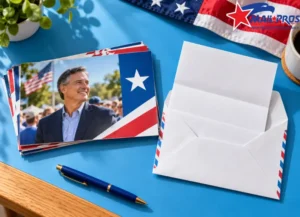
Postcards are useful for candidate introductions, endorsements, event announcements, deadline reminders, and short issue messages. The front should communicate the central point immediately, while the reverse side can provide supporting details and a clear call to action.
Letters and Envelopes
Letters create space for fundraising appeals, personal endorsements, detailed policy explanations, and formal campaign communication. Personalization may improve relevance, but all variable fields must be reviewed carefully before production.
Brochures and Self-Mailers
Folded pieces work well when a campaign needs to present several connected topics, such as a candidate biography, policy platform, voting record, or comparison of positions. Clear sectioning is essential so recipients can scan the material without facing a wall of text.
Oversized Mailpieces
Larger formats can support a major campaign announcement, visual comparison, or final-week message. Because they may require a higher production and postage investment, they are most useful when reserved for an important audience or communication milestone.
Write and Design for Fast Understanding
Once the format is selected, the content must make sense at a glance. Most voters will first scan the headline, image, candidate name, and call to action before deciding whether to read further.
A strong political mailpiece usually includes:
- One focused headline
- A clearly identified candidate, office, or ballot issue
- Short supporting paragraphs
- Readable typography
- Strong visual contrast
- Authentic and relevant photography
- Consistent campaign colors and messaging
- A specific next step
The message should lead with the issue most relevant to the recipient. Supporting information can explain the candidate’s position, experience, or proposed action, but it should not compete with the primary point.
Calls to action must also be precise. “Vote on November 3,” “Return your ballot by October 27,” and “Confirm your polling location” provide more direction than broad phrases such as “Make your voice heard.”
Review Compliance Before Production
Creative approval is not the final step before printing. Political communications may be subject to federal, state, and local requirements covering disclaimers, sponsorship identification, fundraising language, and placement.
Requirements can vary according to the election, communication type, jurisdiction, and organization funding the message. For that reason, campaign staff or qualified legal counsel should review the final copy and design before production begins.
The review should cover every connected campaign asset, including:
- Postcards and letters
- Donation appeals
- Landing pages
- Emails
- Digital advertisements
- QR-code destinations
- Event-registration pages
Completing this review early protects the mailing schedule. Discovering a disclaimer or authorization issue after printing has begun can lead to reprinting costs and missed delivery windows.
Coordinate Printing, Mailing, and Postal Delivery
After approval, the campaign moves from strategy into execution. Printing quality, addressing accuracy, finishing, sorting, and postal preparation all influence whether the material reaches voters as intended.
The final mailing file should be checked for duplicate households, incomplete addresses, recent moves, invalid records, and required suppressions. The printed proof should also be reviewed for color accuracy, image quality, personalization, disclaimer placement, and barcode clear space.
Full-service direct mail marketing services can bring data processing, creative production, printing, addressing, and postal delivery into one coordinated workflow. This reduces the gaps that can occur when separate vendors manage each stage.
Connect Direct Mail With Digital Outreach
Direct mail becomes more useful when it leads voters to a measurable digital action. The printed piece and digital destination should use the same message, visual identity, and campaign promise.
Useful connections include:
- A QR code leading to an issue page
- A short URL for volunteer registration
- A campaign-specific donation page
- An event-registration form
- A dedicated phone number
- An online polling-location resource
- Email reminders timed around mail delivery
The destination must continue the message rather than introduce an unrelated topic. A postcard focused on early voting should lead to early-voting information, not a general campaign homepage.
Mobile usability also matters. Voters scanning a QR code should reach a fast, readable page with a visible action button and minimal unnecessary navigation.
Measure Results and Improve the Next Mailing
Tracking completes the communication cycle. Without measurement, campaigns cannot determine whether the audience, message, format, or timing contributed to the response.
Relevant metrics may include:
- Delivered and undeliverable volume
- QR-code scans
- Landing-page visits
- Donations
- Volunteer registrations
- Event signups
- Calls generated
- Cost per completed action
- Response by voter segment
- Response by mailing date
Campaigns can compare results across different voter groups, messages, geographic areas, and formats. However, testing remains useful only when the variables are controlled. Changing the headline, image, format, and audience simultaneously makes it difficult to identify what affected performance.
A more detailed guide to measuring political direct mail performance can help campaign teams select meaningful metrics and use the findings to refine later outreach.
Prepare a Focused Get-Out-the-Vote Sequence
As Election Day approaches, campaign messaging needs to become simpler and more urgent. Long policy explanations should give way to clear voting information.
A get-out-the-vote sequence may address:
- Voter-registration deadlines
- Vote-by-mail request deadlines
- Ballot-return instructions
- Early-voting dates
- Polling-place information
- Election Day voting hours
- Transportation or accessibility support
Every date, location, and instruction must be verified before the material enters production. The communication should make the required action immediately clear and provide a dependable source for additional information.
This final phase should also remain connected to earlier outreach. The colors, candidate identification, and message should feel familiar, while the call to action shifts toward completing the vote.
Frequently Asked Questions
What do political campaign services include?
Political campaign services may include voter targeting, mailing-list preparation, message development, graphic design, printing, addressing, postal processing, delivery planning, digital integration, response tracking, fundraising communication, and get-out-the-vote outreach. The exact services depend on the campaign’s audience, election schedule, objectives, and available budget.
When should a political direct mail campaign begin?
Planning should begin as soon as the campaign identifies its audience, message, election milestones, and desired delivery dates. Starting early provides enough time for voter-data preparation, compliance review, creative approval, printing, postal processing, and adjustments when election information or campaign priorities change.
Which political mail format works best?
The best format depends on the message. Postcards support recognition and reminders, letters provide space for fundraising or formal communication, brochures explain several connected issues, and oversized mailpieces create visual impact for major announcements or high-priority voter segments.
How can campaigns track political direct mail results?
Campaigns can use unique QR codes, short URLs, dedicated phone numbers, donation pages, event forms, volunteer registrations, and delivery data. Results should be reviewed by voter segment, geographic area, mailing date, message, and format to identify useful patterns.
How many political mailers should a campaign send?
There is no fixed number that applies to every election. Mailing frequency depends on the length of the campaign, competitiveness of the race, voter segments, available budget, campaign milestones, and coordination with digital, field, fundraising, and get-out-the-vote activities.
Conclusion
Effective political campaign services connect strategy, voter data, creative development, compliance, printing, delivery, digital response, and performance measurement. When these elements operate as one system, every communication has a defined audience, purpose, deadline, and next step.
Campaign teams should begin by establishing voter segments and election milestones. From there, they can build a connected mailing sequence, assign the correct format to each message, verify legal and voting information, and create measurable response paths.
Do not leave campaign production until the final weeks of the election cycle. Organize the audience, message, mailing schedule, and delivery requirements before critical dates become difficult to secure. Request a customized campaign quote to begin planning the targeting, format, production timeline, and postal strategy for the next campaign.