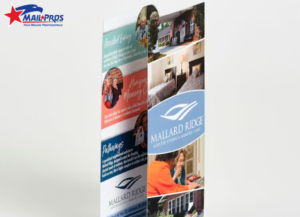


If you’ve ever walked into a hotel lobby, a visitor center, or even a local diner, you’ve seen them. They are those tall, slender cards standing at attention in a display stand, practically begging you to pick them up.
They are rack cards.
As a professional in the printing and marketing space, I’ve seen businesses spend thousands on digital ads that get scrolled past in milliseconds, only to realize that a well-placed rack card can sit on a counter and generate leads for months. But what exactly are they, and more importantly, how can you use them to actually grow your business?
In this guide, we’re going to break down everything you need to know about rack cards—from standard sizes and paper stocks to the “insider” strategies that separate a card that gets trashed from one that gets cash.
The Basics: What Is a Rack Card?
At its core, a rack card is a printed marketing piece designed to fit into a standardized display rack. Think of it as a brochure without the folding. It provides a quick, visual snapshot of your business, service, or event.
Because they are typically displayed alongside dozens of other cards (your competitors), they have one job: to stand out instantly.
Standard Dimensions
While you can technically print them in custom sizes, the industry standard is 4″ x 9″.
Why this size? It fits perfectly into standard brochure holders and display racks found in high-traffic areas.
Alternate size: You might occasionally see 3.5″ x 8.5″, but 4×9 is the “gold standard” because it maximizes the printable area while still fitting in a standard #10 business envelope (more on that later).
Why Use Rack Cards in a Digital World?
You might be thinking, “Do people still pick up paper cards?” The answer is a resounding yes—if they are in the right place at the right time.
When I work with clients at MailProsUSA, I often remind them that rack cards reach customers when they are already looking for something to do or buy.
1. High-Intent Audiences
A tourist in a hotel lobby looking at a rack of cards is actively searching for a restaurant, a tour, or a museum. They aren’t scrolling Facebook out of boredom; they are in “buying mode.”
2. Cost-Effective
Compared to multi-page brochures, rack cards are incredibly affordable to print. You get high-impact color on sturdy cardstock for pennies per piece, especially when ordering in bulk.
3. Versatility
They aren’t just for tourist racks. I’ve seen successful clients use them as:
Menus: Perfect for takeout menus or drink specials.
Event Programs: A slim guide for conferences or weddings.
Direct Mailers: Since they fit in a standard envelope, they make for a sturdy, high-quality insert.[
Designing for Impact: Lessons from the Print Shop
I’ve seen thousands of designs come through the press, and I can tell you within five seconds which ones will work and which ones are a waste of ink. Here is the reality of what works.
The “Top 3 Inches” Rule
This is the most critical mistake businesses make. When your card is sitting in a rack, the bottom 6 inches are often covered by the holder or other cards.
The Fix: Your headline, logo, and “hook” must be in the top 3 inches of the design. If your main offer is at the bottom, no one will ever see it.
Paper Stock Matters
Nothing screams “amateur” like a floppy rack card.
My Recommendation: Always use 14pt or 16pt cardstock. The card needs to be rigid enough to stand up straight in the rack. If it curls or flops over, it looks neglected and unprofessional.
Finish: A UV High Gloss finish makes colors pop and protects the card from fading in sunlit lobbies. However, if you want people to write on it (like a form), go with a Matte or Uncoated finish.
Pro Tip: If you are looking for high-quality production, check out our Rack Card Printing options to ensure your cards stand tall and look crisp.
Rack Cards vs. Rip Hangers: What’s the Difference?
This is a common point of confusion. I often have clients ask for “those rack cards with the tear-off thing at the bottom.”
While you can have a rack card with a perforated tear-off coupon, there is a distinct product called a Rip Hanger.
Rack Cards go in a rack or stand.
Rip Hangers are door hangers with a perforated business card or coupon at the bottom.
If your strategy involves walking neighborhoods and leaving materials on doorknobs, a standard rack card won’t work (no hole for the knob!). For that specific “door-to-door” strategy, you’ll want to look into Rip Hanger Printing. They serve a different purpose but are equally powerful for local service businesses like landscapers, roofers, and pizza shops.
Beyond the Rack: Using Cards for Direct Mail
One of the best-kept secrets in the industry is using rack cards for Direct Mail Marketing.
Because a 4×9 card fits perfectly inside a standard #10 envelope, it is often cheaper to mail than a large catalog or oversized postcard. Plus, when the recipient opens the envelope, they pull out a thick, glossy, premium card that feels valuable—not a flimsy letter.
If you are considering a mailing campaign, combining rack cards with a targeted list can be a game-changer. You can learn more about how we handle these logistics on our Direct Mail Marketing page.
Common Mistakes to Avoid (Real-World Experience)
Over the years, I’ve seen some painful errors that could have been easily avoided.
1. The “Wall of Text”
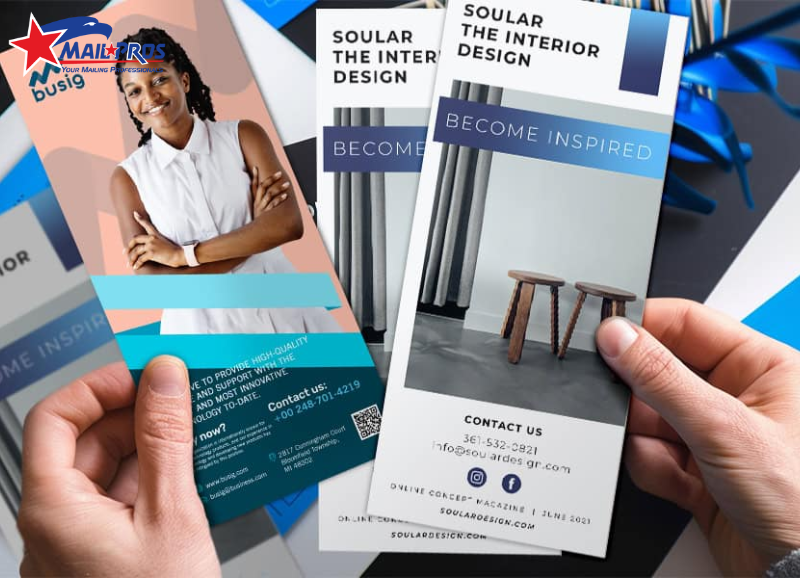
Don’t treat a rack card like a novel. You have about 2 seconds to grab attention. Use bullet points, high-quality photos, and short sentences. If I have to put on reading glasses to understand your offer, you’ve lost me.
2. Forgetting the Back
I’m surprised how many people leave the back blank to save a few bucks. The front grabs their attention; the back closes the deal. Use the back for maps, detailed pricing, FAQs, or a secondary offer.
3. Missing the Call to Action (CTA)
A pretty picture is nice, but what do you want them to do?
“Scan this QR code for 10% off”
“Bring this card to the front desk for a free gift”
“Call today for a free estimate”
Be specific.
FAQs
Q: What is the best paper weight for a rack card?
A: Go with at least 14pt cardstock. 16pt is even better for a premium feel. Anything less than 12pt will likely curl forward in the display stand.
Can I mail a rack card like a postcard?
A: Technically, yes, but 4×9 is not a standard postcard size for USPS automation rates, so postage might be higher. It is usually more effective to insert them into a #10 envelope or use a standard postcard size if you want to mail without an envelope.
Should I put a QR code on my rack card?
A: Absolutely. It bridges the gap between print and digital. Link it to a landing page, a menu, or a booking form. Just make sure the QR code is large enough to scan easily.
How many rack cards should I print?
A: Printing is a volume game. The price per piece drops significantly when you order 1,000 compared to 250. If you have multiple distribution locations, ordering 2,500 or 5,000 is usually the “sweet spot” for value.
What is the difference between a brochure and a rack card?
A: A brochure is folded (usually tri-fold) and offers more space for detailed information. A rack card is a single, unfolded card (front and back) designed for quick readability and durability.
Conclusion
Rack cards are far from outdated. In fact, in an era of digital clutter, a tangible, high-quality piece of marketing material can be the touchpoint that converts a browser into a buyer. Whether you are placing them in local visitor centers, using them as takeout menus, or inserting them into mailers, they are a versatile workhorse for your business
The key is quality—sturdy paper, vibrant print, and a design that hooks the reader instantly.
If you’re ready to get your design off the screen and into your customers’ hands, check out Our Resources at the MailProsUSA Blog for more tips, or browse our printing products to get started today.