

There is nothing quite as frustrating for a business owner as seeing their hard-earned marketing budget end up in the recycling bin. I’ve sat down with countless clients who were convinced that direct mail “just doesn’t work” because they tried it once and got zero phone calls. When we dig into what happened, the issue is almost never the postcard design or the offer. The issue is usually who received the mail.
In the world of local marketing, geography is destiny, but geography alone isn’t enough. You can’t just blanket a massive zip code and hope for the best; that is the quickest way to burn through cash. To succeed, you need precision. This is where a high-quality Eddm Mapping Tool becomes the most valuable asset in your marketing arsenal.
Using a mapping tool allows you to visualize where your customers actually live, rather than guessing based on vague neighborhoods. It bridges the gap between a great idea and a profitable campaign. Let’s dive into why selecting the right mapping technology is critical for your business and how to use it effectively.
Why Precision Matters in Local Direct Mail
I often tell business owners that Every Door Direct Mail (EDDM) is like a scalpel, not a sledgehammer if you use it correctly. The beauty of the USPS EDDM program is that it allows you to reach every home on a specific mail carrier’s route. However, the pitfall is that if you pick the wrong route, you are paying to advertise to people who will never buy from you.
For example, I once worked with a high-end landscaping company that wanted to send flyers to a specific zip code. If they had mailed the entire code, 40% of their budget would have gone to apartment complexes that didn’t have yards. By using MailProsUSA and our mapping capabilities, we were able to filter out multi-family units and focus strictly on single-family homes with higher median incomes.
Precision isn’t just about saving on postage, it’s about increasing your conversion rate. When your message lands in the mailbox of someone who actually needs your service, the paper stops feeling like “junk mail” and starts feeling like a timely offer. That shift in perception is what drives ROI.
Features That Make an EDDM Mapping Tool Effective
Not all mapping interfaces are created equal. Over the years, I’ve used clunky government sites and sleek third-party software. The best tools share a few common traits that make your life easier and your targeting sharper. You shouldn’t need a degree in data science to figure out where to send your postcards.
Visualizing Carrier Routes vs. Zip Codes
The biggest misconception I see is that business owners think in terms of Zip Codes. A Zip Code is a massive area that can contain wildly different demographics. A carrier route, on the other hand, is the specific path a mail carrier walks or drives. This is the granular level where you win or lose.
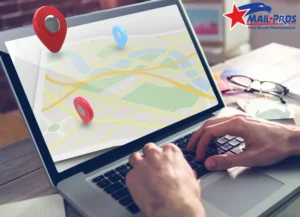
A superior mapping tool allows you to hover over these specific routes on a map. You should be able to see exactly which streets are included. This visual element is vital because you know your town better than a computer does. You might know that Route C004 is an older neighborhood that needs roof repairs, while Route C005 is a brand-new development that doesn’t.
Demographic Filters for Better ROI
This is where the magic happens. A map without data is just a drawing. The most effective tools overlay census data on top of the physical map. You should be able to filter routes by average household income, age, household size, and homeownership percentage.
For instance, if you run a daycare center, you want to target routes with a high density of young families and children. If you sell luxury cars, income data is your best friend. Utilizing these filters is a core part of a winning EDDM direct mail strategy. It ensures that your message resonates with the lifestyle of the recipient.
Common Mistakes When Selecting Routes
Even with the best tools, human error plays a role. One of the most common mistakes I see clients make is ignoring physical barriers. A mapping tool might show two neighborhoods right next to each other, but in reality, they are separated by a six-lane highway or a river with no bridge.
If you are a pizza shop or a dry cleaner, customers usually won’t cross a major physical barrier for convenience services. Just because a route is within a 3-mile radius doesn’t mean it’s accessible. You have to look at the map with a local logic mindset.
Another mistake is failing to understand the difference between Total Residential and Total Business. Some routes are heavy on businesses. Unless you are offering B2B services, paying to put a residential flyer in a law office’s mailbox is a waste. Before finalizing your selection, always check the breakdown of address types provided by the tool. For a deeper dive into avoiding these pitfalls, check out our guide on EDDM US services.
How Different Industries Utilize Mapping Data
The way a realtor uses a mapping tool is very different from how a restaurant owner uses it. Understanding your industry’s specific needs will help you get the most out of the software.
Retail and Restaurants: Driving Foot Traffic
For retail stores and restaurants, the drive time factor is huge. You aren’t just looking for people with money; you are looking for people who live close enough to visit impulsively. I usually advise these clients to start with a tight radius around their physical location and expand outward.
Using the tool to identify high-density residential routes immediately surrounding your store is the most cost-effective way to boost foot traffic. If you are running a Grand Opening or a seasonal sale, hitting every home within a 2-mile drive is a proven tactic. You can learn more about this specific approach in our article on EDDM for retail businesses.
Service-Based Businesses: Targeting Homeowners
Plumbers, roofers, and HVAC technicians have a different challenge. You don’t care how close the customer is to your office; you care about the condition of their home. Here, the “homeownership” filter on the mapping tool is non-negotiable. Renters generally do not buy new HVAC systems.
I’ve helped roofing companies track storm paths and then use the mapping tool to target the specific carrier routes that were hit hardest by hail. That level of responsiveness is only possible when you have a tool that lets you select routes quickly and accurately. This aligns perfectly with broader direct mail marketing principles delivering the solution when the problem is fresh.
Integrating Mapping with Your Overall Strategy
Selecting your routes is only step one. Once you have identified your ideal audience using the map, you need to ensure the rest of your campaign can support it. This means having the logistics in place to handle the printing, bundling, and delivery to the post office.
Many business owners get overwhelmed by the paperwork required by the USPS. A good service provider doesn’t just give you a map; they handle the facing slips, the bundling requirements, and the postage payment. The goal is to make the process seamless so you can focus on handling the influx of new customers.
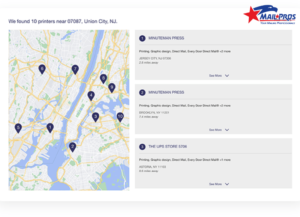
Furthermore, consistency is key. One-off mailings rarely yield the best results. I encourage clients to save their selected routes in the tool. If a specific route performs well, you should plan to hit that same route 3 to 4 times a year. This repetition builds brand familiarity and trust. You can read more about building visibility through repetition in our post on how EDDM can boost local business visibility.
Finally, don’t forget that EDDM is a physical medium that works best when it feels substantial. Use the mapping tool to save money on postage, and reallocate those savings into higher-quality paper stock or a larger postcard size. A flimsy card sent to the right person is still less effective than a premium card sent to the right person.
FAQs
Can I use an EDDM mapping tool to target specific houses?
No, EDDM is designed to reach every mailbox on a carrier route. You cannot cherry-pick specific addresses (like skipping odd numbers). If you need to target specific individuals, you would need a targeted mailing list, not EDDM. However, you can choose to exclude businesses and focus only on residential addresses.
How accurate is the demographic data in these tools?
The data typically comes from the U.S. Census and is updated regularly. While it won’t tell you the exact income of the family at 123 Main St, it gives you a very accurate average for that specific carrier route (which usually contains 300-600 homes). This is statistically significant enough to make informed marketing decisions.
Is EDDM cheaper than standard direct mail?
Yes, significantly. Because you are doing some of the work for the post office (by mapping and bundling the mail by route), the postage rate is much lower than First Class or Standard mail. The mapping tool helps you maximize these savings by ensuring you aren’t mailing to “dead zones” where your customers don’t live.
Can I see which routes my competitors are mailing?
Generally, no tool will show you live data of a competitor’s active campaigns. However, by using the mapping tool to identify the most lucrative neighborhoods, you can safely assume your competitors are trying to reach those same people. The key to winning is better design, a better offer, and consistency.
Conclusion
Finding the best EDDM mapping tool is about more than just looking at a map of your city; it’s about gaining the ability to make data-driven decisions that protect your budget. As a service provider, I have seen too many businesses fail simply because they were shouting into the void rather than speaking to the right audience.
By utilizing carrier route data, demographic filters, and a logical approach to geography, you can transform your direct mail from a gamble into a predictable revenue generator. Remember, the mailbox is a personal space. When you take the time to target correctly, you aren’t interrupting; you’re inviting.
If you are ready to stop guessing and start targeting, take some time to explore the mapping options available to you. And for more insights, tips, and strategies on how to grow your local business, be sure to visit our blog for the latest updates.