How Postcard Mailing Services Use Variable Data Effectively

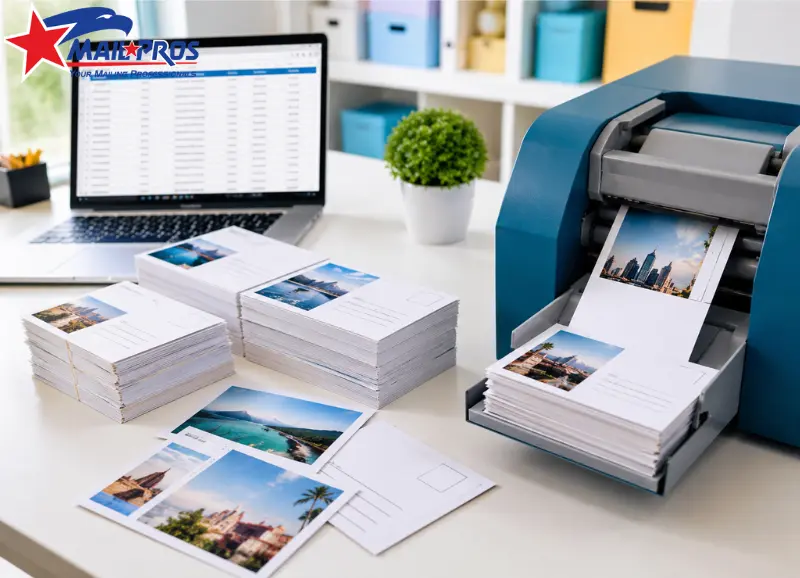
Postcard mailing services handle variable data by connecting a customer or prospect file to a print template, then changing selected fields from one record to the next. Names, offers, images, local contact details, promo codes, and QR destinations can vary while the core design stays consistent.
Useful personalization has a clear purpose. A different offer for an existing customer, a local phone number for a territory, or a service image matched to audience interest can improve relevance. The result still depends on clean data, sound rules, and careful proofing.
What the Data Controls in a Postcard Campaign?
Variable data printing starts with a fixed layout and a structured source such as a CSV file, spreadsheet, or CRM export. Design elements are linked to specific columns so each finished piece reflects the correct recipient or segment.
A home-services company might change the headline by service area. A retailer could feature a product category based on purchase history. A multi-location business could print the nearest branch and landing page.
This gives personalized postcards more substance than a basic name merge and makes postcard marketing easier to scale because production follows defined rules instead of manual artwork changes.
How Postcard Mailing Services Prepare the Mailing File?

Postcard mailing services need a clean source file before design rules are applied. Common columns include first name, address, city, state, ZIP Code, customer type, offer code, image code, and response URL.
Duplicates, incomplete addresses, outdated records, and inconsistent formatting should be resolved before production begins. USPS says mailers claiming certain presorted or automation prices for First-Class Mail and USPS Marketing Mail must meet Move Update requirements, including updating qualifying address records within 95 days before mailing.
Field Mapping Turns Data Into Production Rules
Every changing field should have one defined job. First_Name may control a greeting, Segment a headline, Offer_Code a promotion, Image_Code a visual, and QR_URL a response page.
The map should also include fallback logic. If a name is missing, the card might use “Local Homeowner.” A blank image code can call a general approved visual. An unavailable personalized URL can revert to a campaign landing page.
Postcard mailing services that define these rules early are less likely to discover broken layouts deep in the file. Long names, blank fields, unusual address formats, and imported CRM records often expose problems that the first few rows do not show.
When audience data still needs refinement, targeted mailing list services can support demographic, geographic, or business-list selection. The useful question is whether the available fields support a meaningful campaign decision.
Personalization Should Change Something Meaningful
Strong personalized postcards use data where it can influence relevance. A roofing company may change the local office and offer by territory. A dental practice may separate new-patient outreach from recall reminders. A dealership may show vehicle categories based on earlier inquiries.
This is where direct mail marketing becomes more precise. The variable element should answer a practical question for the recipient: Is this offer, location, product, or service relevant to me?
Marketing postcards can also carry segment-specific promo codes or QR destinations. Those fields connect print marketing with campaign attribution while keeping the physical piece simple.
How Postcard Mailing Services Handle Proofing?

A single attractive proof is not enough for a variable project. Postcard mailing services should review records that test the limits of the setup.
Check the longest names, every offer version, blank optional fields, each image set, local phone numbers, and QR destinations. Scan QR codes from a printed proof at final size. Confirm that the correct headline, image, offer, and response path appear together.
The strategy behind personalized mail is explored further in personalization in direct mail: making it work, including the difference between segmentation and recipient-level customization.
This protects direct mail campaigns from a common failure: correct data placed in the wrong creative combination. An offer can be perfectly printed and still be wrong for the recipient.
A disciplined proofing routine also helps a mailing services provider avoid preventable reprints and creates a clear approval record before production.
Example: 20,000 HVAC Cards Across Three Territories
Consider an HVAC company preparing 20,000 marketing postcards for three service areas. Its file contains territory, customer status, offer code, technician image, local phone number, and landing-page URL.
Existing customers receive a maintenance reminder. New prospects receive a seasonal inspection offer. Each territory displays the correct contact information, and the QR code leads to the appropriate booking page.
This is useful postcard marketing because every changing field has a job. The campaign is not customized merely for appearance. The data changes information that can affect response.
Businesses planning production can review postcard printing services once the field rules are clear. The layout should accommodate realistic text lengths, image proportions, postal space, and the final call to action.
Connect Printing, Mailing, and Response Tracking
Variable production is strongest when postcard printing, list preparation, postal processing, and measurement are planned as one workflow. Postcard mailing services can use unique promo codes, dedicated landing pages, trackable QR destinations, or campaign phone numbers to connect responses to the correct segment.
Tracking should be planned before production so the source file already contains the fields required for attribution.
Clear ownership matters too. Direct mail services should establish who approves the mailing file, who checks the creative logic, and how corrected records are handled before final release.
Variable Postcard Preflight Checklist
Before releasing personalized pieces for production:
- Remove duplicates and suppressed records.
- Confirm complete and consistently formatted address fields.
- Define the purpose of each changing field.
- Add fallback values for missing optional data.
- Test the longest names and headlines.
- Verify every offer and image combination.
- Scan each QR destination from a printed proof.
- Match the approved data file to the approved creative rules.
- Keep sensitive information off exposed mailpieces.
- Confirm the response-tracking method before mailing.
These checks give mailing services a repeatable control point and reduce preventable errors in print marketing.
What to Ask Before Choosing a Provider?
A provider should explain the workflow from raw data to finished mailpiece. Ask how lists are cleaned, how variable text and images are processed, how missing values are handled, and how many data combinations appear in the proof set.
Also ask whether postal preparation and reporting can be coordinated. The technology is useful only when the database, creative rules, production files, and mailing process stay aligned. Reliable direct mail requires control at each handoff.
For campaigns that combine data-driven creative with production and postal handling, customized direct mail services provide a relevant service path.
FAQs
Can every postcard in one mailing contain different information?
Yes. Postcard mailing services can change approved text, images, codes, and response destinations from record to record when the database and template are structured correctly.
What file format works for variable postcard data?
CSV and Excel files are commonly used because each column can represent one field. Clean headers, consistent formatting, and one recipient record per row make the data merge easier to validate.
Is adding a first name enough for effective personalization?
A first name is basic personalization. Stronger personalized mail usually changes something more useful, such as an offer, local contact, image, service, or response path.
How can variable QR codes be checked before mailing?
Each QR destination should be tied to an approved field, matched to the intended segment, and scanned from a printed proof. This matters when direct mail marketing uses multiple landing pages or offers.
How can businesses reduce errors in variable postcard campaigns?
Use documented field mapping, fallback rules, representative proofs, and a final preflight review. Direct mail campaigns are easier to control when the approved data file and creative rules are locked together before production.
Conclusion
Well-managed postcard mailing services turn database fields into controlled production instructions. The best results come from a clean audience file, meaningful segmentation, clear fallback logic, representative proofing, and a response method chosen before the print run.
A practical next step is to define two or three audience segments, decide which fields should change, prepare the matching offers and creative, and test edge cases before scaling. Businesses ready to coordinate strategy, printing, personalization, and mailing can start with MailPros USA and build the campaign around one measurable objective.