How First-Party Data Is Reshaping Modern Direct Mail Campaigns

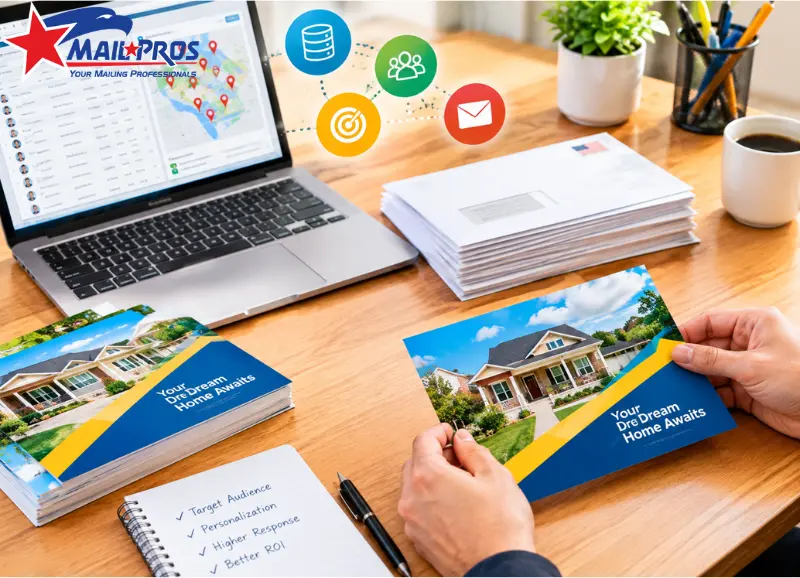
Purchase records, quote requests, service dates, loyalty activity, form submissions, and CRM history can shape who receives a mailed offer and when it arrives.
Design and postage still matter, but the customer signal behind the piece increasingly determines whether it feels timely or irrelevant.
Why First-Party Data Is Reshaping Direct Mail?
First-party data is information a business collects through its own relationship with customers and prospects. It can include mailing addresses, order history, appointment dates, lead status, membership activity, product preferences, and response history.
The important difference is context. A business is not relying only on a broad demographic assumption. It is using information created through an actual interaction.
USPS guidance on first-party data captures the idea in a useful line.
“Your customers are already telling you what they want, if you only know how to listen.”
The better question is not how much customer information is available. It is which signal gives the business a legitimate reason to mail now.
What First-Party Data Changes in Direct Mail Planning
Behavioral Segmentation
A customer file becomes more useful when it reflects behavior instead of simply storing contact details.
An HVAC company can separate homeowners serviced last spring from people who requested an estimate but never booked. A retailer can distinguish a first-time buyer from a repeat customer. Those groups may share a ZIP Code, but they should not receive the same offer.
For broader acquisition campaigns, businesses can combine what they already know about good customers with a carefully selected targeted mailing list rather than send one message to a loosely defined market.
Trigger-Based Timing
Customer events can also determine when a piece should arrive.
A quote request may justify a follow-up within days. A subscription renewal has a known window. A replenishment offer should follow the normal buying cycle, not an arbitrary calendar date.
This is one of the clearest ways first-party data improves direct mail. The mailing has a reason to arrive at a particular moment.
Relevant Personalization
Useful personalization goes beyond placing a first name above the address block.
Variable data can change the offer, image, location, QR destination, product category, or call to action. A recent lead may need proof and a simple next step. A loyal customer may respond better to recognition or early access than to a generic discount.
Personalization should make the message more relevant. If the underlying record is wrong, it only makes the mistake more visible.
Building a First-Party Data Workflow That Holds Up in Production

Define the Customer Event
Before choosing paper stock or creative, define the event that puts someone into the campaign.
For a win-back campaign, that may be an unusually long gap since purchase. For a service company, it may be a completed job plus an expected maintenance interval. For lead follow-up, it may be a quote request with no booking.
A clear entry rule keeps unrelated customer needs from being mixed into the same mailing. Businesses that need creative, data, printing, and mailing coordinated together can use direct mail marketing services instead of managing several separate production steps.
Clean the Mailing File
Good segmentation cannot rescue bad address data.
Duplicate households, old addresses, missing unit numbers, inconsistent formatting, and outdated suppression records can weaken a campaign before production begins.
USPS PostalPro NCOALink information explains how change-of-address records can be used to update mailing lists before mail enters the system.
Keep a stable customer ID with each record. It becomes useful later when campaign activity is matched back to purchases, appointments, or other conversions.
Match the Offer to the Signal
The offer should follow naturally from the customer condition.
A lapsed buyer may need a reason to return. A customer approaching a service interval may need a reminder more than a discount. A prospect who already requested pricing may need proof, a deadline, or an easier booking path.
For campaigns where creative or offers change by segment, customized mailing services fit better than producing one identical piece for the entire file.
When the offer and audience rule line up, the campaign is easier to understand and easier to evaluate.
Measuring Direct Mail With Customer-Level Attribution
Measurement should be decided before production, not after the campaign is mailed.
Campaign-specific QR codes, landing pages, phone numbers, offer codes, or customer identifiers can show who responded. Transaction matchback can compare the mailed file with later purchases or appointments.
A holdout group adds context. If a comparable group does not receive the mailing, the business can compare conversion rates and estimate incremental lift instead of assuming every later sale came from the campaign.
Direct mail measurement should also move beyond response rate when revenue data is available. Cost per conversion, incremental revenue, average order value, and contribution margin show whether another round makes financial sense.
This is where first-party data becomes more than a targeting tool. The same identity used to select the audience can help close the measurement loop.
Privacy and Data Quality Protect the Customer Relationship
Owning customer data does not mean every field belongs in a mailed message.
Businesses should collect information for a clear purpose, control access to customer files, keep suppression rules current, and follow applicable privacy requirements. Sensitive details should never appear where another household member could easily see them.
Old or irrelevant fields also create targeting mistakes and make customer records harder to maintain.
A useful test is whether the recipient would understand why the piece arrived. In direct mail, privacy is visible in the creative itself, so a message that reveals too much can damage trust quickly.
If the connection between the customer relationship and the message would feel surprising or intrusive, the campaign needs another review.
Route-Based Mailing Still Has a Place
First-party data is strongest when the business already knows the customer or lead. It is not automatically the best targeting method for every campaign.
A new restaurant, dental office, or roofing contractor may care more about reaching households around a location than identifying individuals one by one. In that case, geographic coverage can be more useful.
EDDM postcard printing fits that type of campaign because the mailing is built around selected postal routes rather than a named customer database.
The distinction keeps strategy clean. Use customer-level information when the relationship matters. Use route coverage when location is the real qualification.
Testing Turns Better Data Into Better Decisions
A first-party data strategy improves only when campaigns are tested carefully.
Start with one meaningful audience and keep the offer clear. Define the attribution window before the mail date.
If the campaign uses postcards, postcard printing can support a controlled run before a larger rollout.
Change one major variable at a time. If the audience, creative, offer, format, and timing all change together, results become difficult to explain.
The first campaign only needs to create a reliable baseline for the next decision.
Frequently Asked Questions
What First-Party Data Is Most Useful for Mailing Campaigns?
Useful fields usually include a deliverable postal address, customer ID, purchase or service history, last activity date, and customer status. Extra fields should improve targeting, personalization, or measurement.
How Does First-Party Data Improve Direct Mail?
It helps a business decide who should receive a campaign, why the message is relevant, when it should arrive, and how later activity can be matched back to the original audience.
Can Website Activity Trigger a Printed Mailer?
Yes. A website or CRM event can trigger a mailed piece when the business has the necessary customer identity, postal address, permissions, and workflow.
The trigger should also have a sensible time limit so old behavior does not create an irrelevant message.
What Is the Best Way to Measure Mailing ROI?
Use campaign-specific response tracking, transaction matchback, and a holdout group where practical. Compare campaign cost with incremental conversions, revenue, and margin rather than relying only on scans or coupon redemptions.
When Is EDDM Better Than a Customer Mailing List?
EDDM is usually better when the target is a neighborhood or service area rather than known individuals. Customer-level campaigns are better suited to retention, reactivation, renewal, cross-sell, and other relationship-based goals.
Conclusion
First-party data is changing direct mail because it brings customer context into decisions that once depended heavily on broad lists and fixed mailing schedules.
The strongest campaigns begin with a customer condition that gives the business a clear reason to communicate.
For the next campaign, define one valuable segment, clean the file, match the offer to the trigger, and decide how response will be measured before production.
MailPros USA can help turn that plan into a production-ready campaign with targeting, printing, mailing, and fulfillment support built around a measurable objective.