
Business Newsletter Frequency: The Right Rhythm for Better Results


Monthly newsletter makes sense if you want your customer to know about you on a regular basis (monthly). If you provide a seasonal service, then mailing every quarter will work. Having an issue of your newsletter every other month allows you to develop content for each mailing and provide contact with your customers every two months rather than having to wait for a full quarter to contact them again.
Start with the customer’s next decision, then check the workload and annual cost. A printed newsletter about an approaching service need has a clear purpose. Sending another edition just to fill a date on the calendar is harder to justify.
Practical Mailing Schedules For Newsletters
Select your frequency of newsletter distribution based on how rapidly the requirements of customers evolve and how regularly new content is available from the company. The following three frequencies serve as a starting point when designing a print campaign.
| Mailing Interval | Annual Issues | A Suitable Starting Point |
| Monthly | 12 | Frequent product changes, classes, events, or repeat purchases |
| Every Two Months | 6 | Regular advice with a longer preparation cycle |
| Quarterly | 4 | Seasonal services or a smaller production budget |
Seasonal Timing
An HVAC contractor can create four different newsletter editions based on their customer’s seasonally-related issues. These issues are: preparing for the hot months; maintaining systems during those hot months; preparing for the cold months; and caring for systems during those cold months. Each of the four newsletter editions has its own focus, so it does not require a completely new issue every month.
During the spring/summer months when garden centers are constantly changing their inventory and giving customers planting advice, they will likely have to be in closer contact with their customer base. You can base your newsletter schedule on how often these changes take place, as well as the climate in your area and the amount of preparation time that your customers need.
Audience Needs And Issue Planning
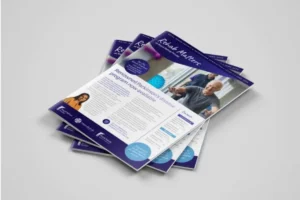
Before committing to a recurring run, outline three editions for the intended audience. If their main stories repeat the same offer, the proposed pace may be faster than the available material supports.
The Right Recipients
Existing customers and potential new customers will most likely require different types of information. If a contractor is moving into new geographical areas, they should obtain targeted mailing lists that are representative of the service area (by ZIP code) prior to charging for additional services. For existing customers, start with accurate customer data and eliminate all duplicates.
The number of people that subscribe to your email list is as much a factor as any other in determining which email marketing platform is the right one for you. When you send email to people who do not care about what you are saying, then all you are doing is increasing your cost of doing business, and you will still have people receiving unwanted material.
Customer Questions
Service calls and sales conversations reveal what readers need explained. The HVAC marketing newsletter could address filter selection, appointment preparation, or what a maintenance visit includes. A printed direct mail newsletter built around one of those questions has a reason to arrive before the customer books.
Newsletters need room for a complete explanation. Give the answer, any important limitation, and the next step. A printed newsletter should still help someone who keeps it for reference instead of responding immediately.
The Annual Budget For Print Mailing

Compare the full year’s expense before choosing between four, six, and twelve issues. Writing, design, address work, finishing, postage, and staff time sit alongside the print charge. A quote that excludes those items cannot establish the total campaign budget.
Comparable Print Quotes
Keep the recipient count and specifications identical when requesting estimates. The newsletter printing service needs the page count, size, paper, color requirements, and finishing details. Changes to those specifications can alter both production cost and preparation time.
Paper and finishing choices affect the estimate for business newsletter printing. Select the format after outlining the issue, so the page count follows the material. Extra pages need both content and funding.
Yearly Cost Comparison
For illustration, an assumed total cost of $1,500 per issue produces annual totals of $6,000 for quarterly mailing and $18,000 for monthly mailing. These are sample calculations, not market prices. Actual estimates depend on the list and specifications.
If the quote includes a rented list, ask whether the fee covers all planned issues. Record any additional list charges in the annual estimate.
For business newsletter marketing, the comparison should include what each extra edition adds. Six issues may cover the planned topics without the writing and production expense of twelve. Monthly newsletters still need enough substance to justify that extra commitment.
The Print And Delivery Calendar
An issue can be well written and still arrive too late. For the contractor’s spring edition, the important date is when households should receive the advice, with enough time left to arrange a service appointment.
Arrival Windows
Ask the newsletter mailing agency to separate the intended arrival window from the postal submission date. Printing completion is another milestone. These dates serve different purposes and should appear separately in the production plan.
For campaigns using that mail class, leave a margin before an event or offer deadline. The printer’s completion date alone cannot provide that assurance.
Production Deadlines
Work backward from the arrival window when setting the newsletter schedule. Confirm the provider’s lead times, then record four deadlines.
- Source material and writing completed.
- Technical details and offer terms checked.
- Final proof approved by the named decision-maker.
- Finished copies prepared for postal submission.
If approval slips, reassess the offer and arrival window. Sending two editions close together to catch up can defeat the spacing planned for newsletters.
Production Capacity For A Recurring Schedule
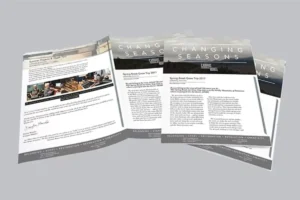
The recurring campaign has to be handled by a single individual who is responsible for taking it from the “draft” stage to the “mail out.” This person should have knowledge of who on staff reviews the advice, who approves expenses related to the campaign and who has authorization to approve the release of the campaign.
In addition to reviewing non-technical content, the technical content will require evaluation by an individual with expertise in evaluating advice.
For instance, in the HVAC example, a staff professional must verify that the product referenced, as well as its associated services are described correctly. Be sure to credit the person who reviewed the information when possible. Also, update any outdated information prior to utilizing it again.
Final Approval
A printed direct mail newsletter needs one complete approval covering the artwork, recipient count, offer dates, and response details. Test the phone number and web address shown on the piece. An approved design with an expired offer still needs correction.
When business newsletter printing is part of an overall direct mail marketing service, the handoff process should clearly state which company or individual will complete the addressing and postal preparation.
The company will also need to designate a final approver for the newsletter. In addition, it is recommended that the company keep both the newsletter and the instructions for mailing the newsletter together. This allows the designated approver to review all aspects of the newsletter and mailing prior to the actual mailing date.
Results And Mailing Frequency
Judge newsletter frequency by the purpose of the campaign. For the contractor, that might mean suitable appointment requests and completed bookings. Copies printed and QR scans alone cannot show whether the mailing produced worthwhile business.
Response Quality And Cost
Give each issue a separate response code or landing page, and record calls alongside digital inquiries. Define a qualified lead by service area and customer need. Divide campaign cost by the number of qualified leads to calculate cost per lead.
For sales, compare revenue after variable order costs with the mailing expense. This gives business newsletter marketing decisions a firmer basis than scan totals. Honor removal requests and consider other promotions reaching the same households when planning further newsletter mailing.
Schedule Comparisons
Allow the same response period for each issue, and account for seasonal demand. A spring service offer and a winter reminder reach customers under different conditions. Their results cannot isolate the effect of mailing intervals by themselves.
Test the proposed change with similar audiences and offers if possible. Frequency of newsletters should increase if the extra editions have a definite objective and the expense can be covered. If there are recurring topics, late deliveries, or poor responses, you need to reexamine your plan.
Frequently Asked Questions

Should a small business use monthly or quarterly mailing?
The monthly format will be successful if there are enough customer activities, content, and funding to produce twelve issues per year. On the other hand, the quarterly format can be used as a way to provide seasonal advice or if you have restricted production capabilities. Before committing to either format, make sure to evaluate the total annual cost of each and plan out some possible topics for each.
What are some of the best days to mail newsletters?
The date on which a person will receive their newsletter cannot be predicted. Therefore, the newsletter mailing agency needs to determine when it can produce the newsletters, the chosen mail class, and the time frame the agency wants the newsletters to arrive. Offers that require receipt by a specific date must allow for the mail to be delivered.
How much does a subscription printing program cost?
Costs depend on who you send your issues to, how you prepare them, how you post them, and what format they will be in. You can ask for an estimate for each issue and/or annually from the newsletter printing company by sending the same specifications. Be sure to confirm exactly what is included prior to comparing costs.
How Can A Business Avoid Overwhelming Recipients?
Each of your marketing newsletters should have a unique objective. It is best to send newsletters to the same audience as your other promotional activities. Additionally, each marketing newsletter must provide an easy-to-use unsubscribe option, and you should remove the unsubscribed users from all future newsletter recipient lists.
When is it time to cut back on mailing frequency?
Review the time periods during which your content is being repeated; your production is declining; or the cost of producing content exceeds its value. Reduce contact with your audience after reviewing your audience and offers. No matter how much time passes between messages, if the message isn’t right for your audience, you can’t make it work.
The Next Three Mailings
Set an arrival window and outline the first three topics. Request a quote from MailProsUSA with the recipient count, target ZIP codes, page count, and preferred interval. Compare newsletter mailing services using matching specifications and annual totals.
Approve the budget and production dates together, then give one person responsibility for keeping newsletters on schedule.