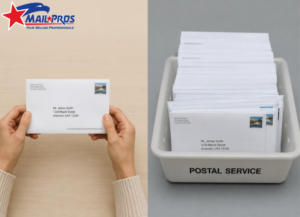
How Targeted Direct Mail Creates More Predictable Marketing Results

A campaign can generate impressions and clicks without producing enough qualified leads. The problem is often the gap between the message, audience, and requested action.
Targeted Direct Mail closes that gap by sending a relevant offer to selected households or businesses instead of mailing every address in a broad area. Recipients may be chosen by location, customer history, homeownership, property type, industry, or job role. This approach controls waste and identifies the audience groups worth further investment.
Targeted Mailing and EDDM Serve Different Goals
Every Door Direct Mail is built for broad geographic coverage. It can suit restaurants, retail stores, urgent care centers, and local services that may appeal to most households on selected routes.
This method is best when an offer depends on specific customer traits. A remodeling company may want homeowners in established neighborhoods. A pediatric practice may focus on households with children. A B2B supplier may need decision-makers at companies within a defined industry.
Use EDDM when neighborhood reach matters more than individual selection. Use a targeted list when the offer applies to a defined consumer or business profile. Businesses needing demographic, firmographic, or radius targeting can use custom audience services to estimate the reachable market before production.
Define the Business Result Before Choosing a List
Begin with a measurable outcome. “Increase awareness” is too broad to guide the audience, offer, or tracking method. A stronger objective would be to book estimates, generate consultations, reactivate customers, increase store visits, or promote a seasonal service.
Estimate the gross profit from an average new customer, the share of qualified leads that convert, and the highest acceptable acquisition cost.
For example, a business earning $600 in gross profit from an average new customer and converting one in four qualified leads can value each lead at about $150 before marketing costs. This does not predict results, but it helps determine whether the final cost per lead is sustainable.
For Targeted Direct Mail, a defined outcome prevents response volume from being mistaken for profitable growth.
Let Existing Customers Guide Audience Selection
The strongest audience profile begins with customer data. Review recent buyers and identify patterns linked to profitable, repeatable work. Useful signals may include ZIP Code, homeownership, property age, purchase history, service frequency, industry, company size, or decision-maker role.
Keep only filters that have a reasonable connection to the offer. Too many can produce an audience that is expensive, too small, or falsely precise.
Segmentation works best when each group has a distinct purpose. New prospects need a reason to consider the company, while former customers may need a reminder and unfinished leads may need stronger proof.
This is where audience strategy becomes more than list buying. It turns customer evidence into a practical plan for who should receive which message.
Clean Address Data Before Production
Poor address data wastes printing and postage. It also distorts response calculations because undeliverable pieces are counted as mailed even though they never had a chance to convert.
Before printing, standardize address fields, correct inconsistent ZIP Code information, identify permanent address changes, remove duplicates, check apartment or suite details, and apply the necessary customer or do-not-mail suppressions.
CASS-certified address matching helps standardize addresses, while NCOALink processing checks permanent change-of-address information. These tools improve data quality, but a valid address may still belong to the wrong prospect.
Once the list is accurate, the same segmentation data can shape the message each audience receives.
Build One Offer Around One Clear Need
A precise list should not receive generic copy. The headline, proof, offer, and call to action should reflect the reason that audience was selected.
A roofing company mailing owners of older homes might focus on inspection timing. A supplier mailing restaurant operators should emphasize availability and ordering efficiency rather than broad brand language.
In Targeted Direct Mail, variable data printing can adjust names, locations, offers, or images within one production run. Used carefully, customized direct mail creates relevance without using intrusive details.
The mailpiece should answer four questions:
- What is being offered?
- Why does it matter now?
- Why should the recipient trust the sender?
- What exact action should happen next?
Competing promotions weaken the decision. One audience, one primary offer, and one next step create a clearer path.
Make the Value Clear at First Glance
Good design supports the decision instead of competing for attention. The front of the piece should establish the benefit quickly, while the remaining space provides proof and makes the response method easy to find.
Use a simple hierarchy:
- Benefit-led headline
- Specific offer
- One reason to believe
- Visible call to action
- Deadline or next step
Postcards suit simple offers and reminders. Letters and self-mailers provide more room when the service requires explanation or trust.
Readable type, useful white space, contrast and a focused visual improve comprehension. Restrictions should remain legible.
Connect Every Response to the Campaign
Targeted Direct Mail becomes easier to improve when responses can be connected to the mailing. A general phone number and homepage may capture interest, but they make attribution difficult.
Use at least one campaign-specific response method:
- Unique QR code
- Dedicated landing page
- Campaign phone number
- Promotion code
- Personalized URL
- Post-campaign matchback analysis
The landing page should repeat the offer, work well on mobile devices, and request only the information needed for the next step.
Track response rate, qualified lead rate, conversion rate, cost per lead, customer acquisition cost, revenue, and gross profit. Response rate alone can make a weak campaign appear successful when the resulting leads are poor.
Test One Major Variable at a Time
Testing creates useful information only when the result can be explained. Changing the audience, format, headline, offer, and landing page together makes it impossible to know which decision affected performance.
Keep one version as the control and change one major element in the test version. Begin with the audience, offer, headline, format, response path, or mailing schedule. For Targeted Direct Mail, the winning version can become the new control.
This creates a disciplined improvement cycle rather than a series of unrelated mailings.
Use Frequency Without Repeating the Same Message
An urgent offer may need one piece, while longer buying decisions often need a sequence.
The first mailing can introduce the problem and core benefit. The second can add proof or answer an objection. The third can reinforce urgency with a deadline or seasonal reason. The audience and positioning remain connected, while each piece contributes something new.
This channel can also support email, paid search, sales calls, and retargeting when the visuals and offer remain consistent.
Businesses planning integrated campaigns can review additional strategies for 2026 before selecting the timing and channel sequence.
Common Problems That Reduce Campaign Value
The most damaging problems occur before or after printing:
- Selecting the audience from assumptions instead of customer evidence
- Buying a list without confirming its source or update practices
- Using an offer that is too general to create urgency
- Sending recipients to a generic homepage
- Including several competing actions
- Counting responses without tracking qualified leads and sales
- Treating one mailing as a final verdict
- Scaling before a controlled test establishes viability
Avoiding these problems gives the campaign a fair test and produces cleaner information for the next decision.
Frequently Asked Questions
What is Targeted Direct Mail?
This method sends promotional mail to selected households or businesses based on relevant geographic, customer, demographic, behavioral, or firmographic information. It is most useful when an offer does not apply equally to every address in an area.
Is targeted mailing better than EDDM?
Targeted mailing suits defined consumer or B2B audiences. EDDM is often more practical when a local offer is relevant to most addresses on selected routes.
How can a business measure direct mail results?
Use a unique QR code, landing page, phone number, offer code, or personalized URL. Then compare responses with qualified leads, sales, revenue, gross profit, and customer acquisition cost. Matchback analysis can also identify customers who converted through another path.
How often should the same audience receive mail?
Frequency should follow the buying cycle, season, offer, and campaign results. A planned sequence is more useful than repeatedly sending the same postcard. Each mailing should add proof, answer an objection, or provide a new reason to act.
What makes a mailing list reliable?
A reliable list has a clear source, relevant selection criteria, current addresses, duplicate removal, and appropriate suppressions. Deliverable records are not automatically qualified prospects.
Conclusion
Targeted Direct Mail performs best when the campaign is treated as one connected system. Audience selection shapes the message. Clean data supports delivery and personalization. The offer guides design. Tracking connects responses to revenue. Testing determines what should be repeated, changed, or stopped.
The strongest next step is one profitable audience, one relevant offer, and one controlled test measured from the start.
MailProsUSA coordinates audience selection, list preparation, design, printing, postal processing, and campaign tracking. Request a campaign review with your market, service area, offer, and budget, then launch with a measurable plan.