How USPS Informed Delivery Helps Direct Mail Get Seen Earlier

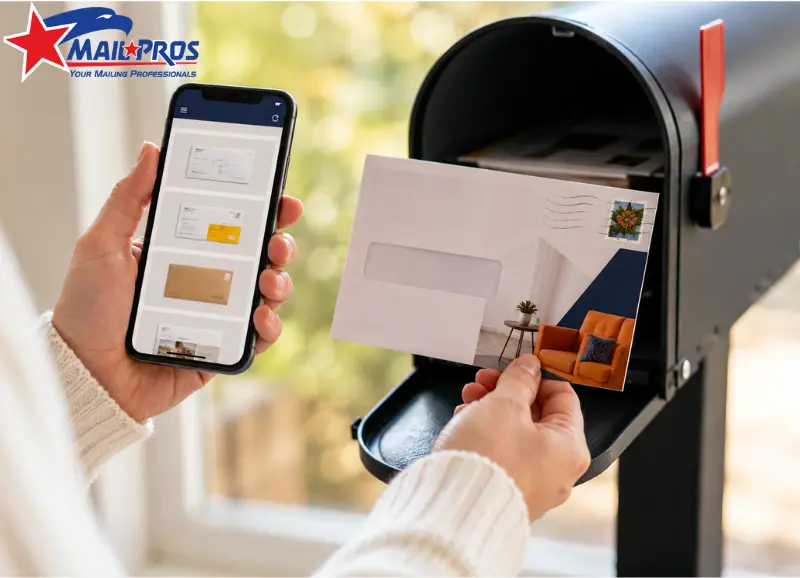
Eligible mail can appear in a recipient’s Daily Digest, dashboard, or mobile app before that person collects the physical piece. The preview can establish the sender, offer, and next step. It does not guarantee that every piece will appear or provide a full day’s notice.
For businesses, the service adds a digital moment to direct mail marketing without weakening print. Strong campaigns connect the address-side design, ride-along image, landing page, and offer. Professional mailing services can coordinate the required postal data and production.
]The USPS Informed Delivery requirements in this guide were checked in July 2026 against the March 2026 USPS overview and the Postal Service’s current campaign materials.
What the Recipient Sees Before the Mail Arrives?
Grayscale Mail Preview
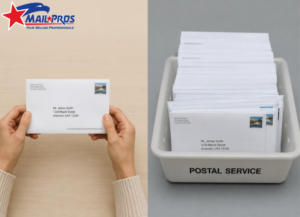
USPS photographs the exterior, address side of eligible letter- and card-size pieces during automated processing. Enrolled users can receive those grayscale images by email or view them through USPS digital tools. The physical piece continues through the mailstream.
Interactive Campaign Features
A standard preview shows the available mail image. An interactive campaign adds branded content and a secure link. For direct mail campaigns, one creates recognition while the other can also create an immediate response path.
The feature is not a separate promotional email list. USPS matches mailer-supplied assets to eligible pieces through postal identifiers. For teams coordinating USPS Marketing Mail, the accurate promise is “mail arriving soon,” not “mail guaranteed tomorrow.” Processing and enrollment determine what an individual sees.
This early look can support postcard marketing. A recognizable sender, clear address-side message, and strong grayscale contrast can establish the subject before mailbox pickup.
Where the Early Advantage Becomes Useful?

Two-Stage Brand Recognition
The service creates two connected moments. A person may notice the offer on a phone, recognize the printed piece later, and use the more convenient response route. USPS Informed Delivery supports that sequence, but it cannot rescue an irrelevant offer or poor list.
Consider a dental office announcing a new location. The mail image establishes the practice name, while the ride-along asset leads to directions and booking details. The postcard later reinforces the same promise. This is how direct mail advertising can gain early visibility without unsupported response claims.
The same principle applies to print marketing for retail openings, nonprofit appeals, home services, and events. The preview introduces the subject; the physical piece provides detail. For postcard mailing, both versions should share the offer, deadline, identity, and response instruction.
Plan the Campaign From the Delivery Date Backward
Response Goal and Conversion
USPS Informed Delivery works best when the response is chosen before creative work begins.
Start with one measurable action: request an estimate, schedule a visit, register, donate, redeem, or call. One primary action keeps targeted marketing from splitting attention.
Record the conversion event and baseline before creative work begins. A completed form, qualified call, or sale carries more meaning than a page view and guides reporting.
Audience and Barcode Alignment
USPS supports campaigns at the Mailer ID level and through serial-number ranges inside the Intelligent Mail barcode. Serial-level treatment lets audience groups receive different creative. Divide the list before addressing and barcode assignment.
A home-services company sending marketing postcards could separate customers from nearby prospects. A maintenance reminder and first-service offer should not share one generic response page.
A qualified direct mail service can verify automation compatibility, the Intelligent Mail barcode, and the full-service Service Type Identifier. These elements allow correct campaign matching and reduce business mailing errors.
Campaign Timing
USPS recommends starting two to three days before the first expected arrival. Its 2026 overview also tells PostalOne! users to wait at least two hours after campaign submission before uploading the mailing job.
USPS Informed Delivery should cover the realistic delivery window, especially across several states. Time-sensitive offers need enough validity for later arrivals. The USPS campaign process explains the sequence from planning through review.
Make the Printed Piece and Digital Preview Keep One Promise
Address-Side Design
The normal scan uses the address side, so important context cannot live only on the reverse. Use a recognizable sender, firm contrast, restrained copy, and clear postal space. Review the design at mobile size and in grayscale.
Campaign Image Requirements
An interactive campaign requires a ride-along image and target URL. A dual campaign adds a representative image that can replace the grayscale scan. That image is static; the ride-along image and “Learn More” link are interactive. USPS Informed Delivery uses one target for both clickable elements.
Treat the ride-along image like a compact button, not a miniature flyer. Use a visible brand, one benefit, and a clear instruction. USPS-linked guidance calls for an RGB JPEG no larger than 200 KB, within 300 pixels wide by 200 pixels high, using at least one maximum dimension.
Landing Page Alignment
The HTTPS page must relate directly to the mailpiece, repeat its offer, load quickly, and make the action obvious. Test redirects, forms, call buttons, analytics, and confirmation with the final URL.
Measure the Whole Response, Not Just the Click
Digital Activity Metrics
Reports can include sends, opens, click times, image position, processing dates, and click source. USPS Informed Delivery can show digital engagement, but an open or click does not prove a later purchase came from the preview.
Combine postal reporting with conversions, qualified calls, codes, reply pieces, orders, and revenue. This makes direct mail marketing decisions more dependable and keeps direct mail campaigns focused on results.
Controlled Campaign Testing
Change one meaningful variable at a time. Compare the audience, offer, ride-along instruction, or page headline while keeping timing and volume similar. That gives teams planning USPS Marketing Mail useful evidence for the next drop.
The useful question is whether the combined campaign produced a more qualified response at an acceptable cost. USPS Informed Delivery data matters when it helps answer that question.
Review the Campaign Before It Enters the Mail

Preproduction Checklist
The final review should cover the entire response path, not just the printed artwork:
- Confirm the mail class, automation eligibility, barcode, and full-service identifier.
- Check the address-side design in color, grayscale, desktop, and mobile views.
- Validate the ride-along image, representative image when used, and HTTPS destination.
- Make sure the printed and digital offers use the same terms and deadline.
- Test every form, redirect, call button, code, and confirmation message.
- Record the expected baseline and decide who will review the final report.
Campaign Ownership
The campaign works best when ownership is clear. A dependable direct mail service should know who controls the list, creative, barcode ranges, dates, landing page, and measurement plan. This review keeps postcard marketing aligned with the online response path.
Businesses needing list preparation, postal processing, and high-volume entry can review MailProsUSA’s bulk mailing services before setting dates. A good provider confirms requirements before files go to print.
Frequently Asked Questions
Does USPS Informed Delivery Show Every Mailpiece?
No. Availability depends on the piece, processing, address matching, and enrollment. Interactive content also requires correct campaign identifiers.
Is the Service Free for Business Mailers?
USPS does not charge a separate campaign fee. A provider may charge for creative, data, setup, printing, or submission. Postal promotion terms change.
Which Format Works Best for Postcard Mailing?
There is no universal best size. The right choice fits the offer, audience, postal rules, and response goal. Review eligible card artwork for grayscale and mobile visibility.
Can Direct Mail Advertising Be Measured Through the Preview?
Interactive reports can show opens and clicks. Complete measurement should also include calls, forms, codes, orders, and revenue because the physical piece may generate a later response.
How Can Print Marketing Reach a More Relevant Audience?
Use customer data, location, purchase history, or another lawful selection factor. A documented segmentation plan improves consistency. See MailProsUSA’s targeted direct mail strategies for added context.
Bottom Lines
USPS Informed Delivery can show an enrolled recipient a preview of eligible mail before mailbox pickup, but early visibility is only the opening. Results still depend on accurate data, compliant preparation, recognizable creative, and a response page that works.
A coordinated targeted marketing plan should connect marketing postcards with landing-page tracking and business mailing preparation before printing. MailProsUSA can help organize the audience, artwork, postal setup, and response path. Start with one offer and conversion goal, then request a campaign-ready review.