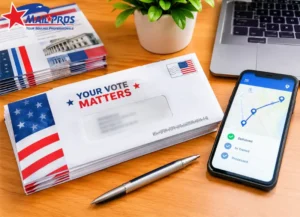

Political campaigns rely heavily on communication that reaches voters in a direct and personal way. Among all outreach channels, direct mail continues to stand out because it creates trust, visibility, and a lasting impression in voters minds. However, rising printing and postage costs make it challenging for campaigns to stay within budget while still running effective outreach programs.
From an industry perspective, political mailing remains one of the most widely used voter engagement channels, because it aligns with USPS delivery systems, allows controlled messaging, and supports measurable outreach performance across districts. Campaign professionals often rely on structured mailing workflows that prioritize accuracy, timing, and compliance to ensure every message reaches real voters effectively.
The key challenge today is not just sending mail but sending the right message at the right cost. Campaign teams are now focusing on smarter planning, better targeting, and efficient production methods that help them reduce unnecessary spending while improving engagement rates. In real campaign environments, this also includes list validation, postal optimization, and segmentation strategies that improve both delivery success and voter response rates.
This guide explains how political direct mail campaigns can design and manage cost effective mail strategies without losing quality or impact. It also shares practical approaches used by experienced campaign managers across the United States to maximize return on every dollar spent.
What is Political Direct Mailing?
Political direct mailing is a traditional yet highly effective campaign communication method where printed materials are sent directly to voters’ homes to promote candidates, policies, or election messages. These mail pieces can include postcards, flyers, brochures, or informational letters that are designed to influence voter awareness and decision making.
Benefits of Direct Mailing For Political Campaigns
Trust Factor in Printed Communication
Printed political mail continues to be one of the most trusted communication formats among voters because it feels more official and personal compared to digital ads. Many voters tend to ignore online promotions due to overload, but physical mail is harder to avoid and often gets read at least once. Industry research in campaign communication consistently shows that tangible mail pieces increase message credibility and voter trust compared to screen based advertising.
High Visibility in Local Households
Direct mail naturally gains visibility inside homes because it is placed in common areas such as kitchen counters, tables, or notice boards. Unlike digital ads that disappear quickly, printed mail remains in sight for longer periods. Campaign professionals often design mail pieces specifically for household retention to ensure repeated exposure throughout the election cycle.
Strong Influence on Undecided Voters
Undecided voters are often influenced by clear and simple messaging that explains key points without confusion. Political mail provides an opportunity to present this information in a structured way. In real campaign usage, direct mail is frequently deployed during the final voting phase because it helps reinforce decision making among swing voters.
Better Retention
Printed materials tend to have higher retention rates because they engage multiple senses. Voters physically hold the material, read it, and often revisit it later. This creates a stronger memory imprint compared to digital content that is quickly scrolled past. Marketing studies in voter communication consistently show that print recall is significantly higher than digital-only messaging.
Integration With Multi Channel Campaigns
Direct mail works best when it is part of a larger campaign strategy that includes digital ads, social media, and field outreach. When voters see consistent messaging across multiple platforms, it strengthens trust and recognition. Modern campaign operations often use integrated communication systems where mail supports digital reinforcement loops for higher engagement performance.
Cost Planning and Budget Control for Campaign Efficiency
!%20%E2%9D%84%EF%B8%8F%20Were%20excited%20to%20roll%20out%20our%20LATEST%20free%20EDDM%20templates%2C-1.png)
Set Campaign Budget Limits
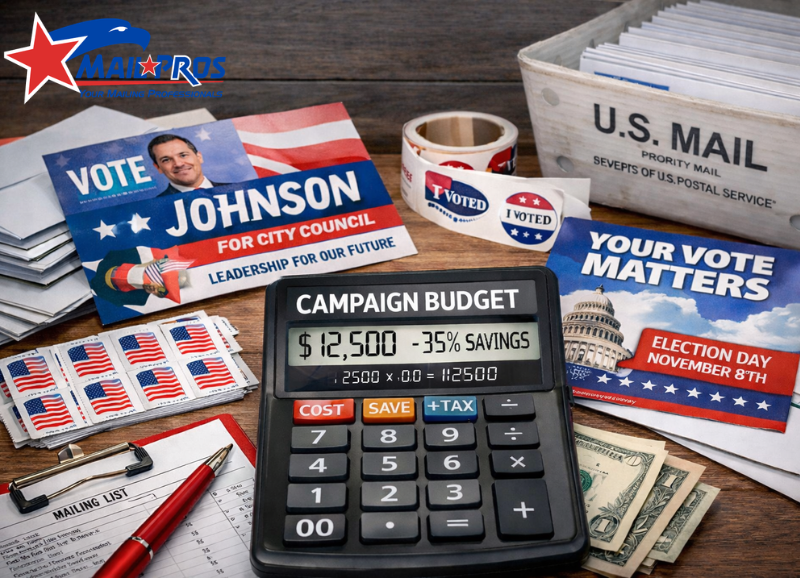
Campaigns must begin with a well defined budget that separates spending into categories like design, printing, and distribution. Without proper planning, costs can quickly increase and reduce available resources for other campaign activities. Experienced campaign managers typically create per voter cost models to ensure spending efficiency across different districts.
Use Low Cost Mail Printing
Many campaigns rely on affordable political mail printing solutions to reduce production costs while still maintaining professional quality. These services allow campaigns to produce large volumes of mail without exceeding financial limits. In high volume campaign environments, print optimization and batch production help reduce per piece cost significantly.
Use Smart List Management
One of the biggest sources of wasted spending is outdated or incorrect mailing lists. By cleaning and updating voter data regularly, campaigns can avoid sending mail to invalid addresses. Industry standard practice includes address verification and segmentation tools to ensure mailing accuracy and USPS compliance.
Choose Cost Effective Mail Formats
Simple formats such as postcards or single page flyers are often more cost effective than complex multi page designs. These formats require fewer materials and less printing time, which directly reduces expenses while still delivering a strong message. Postcard campaigns are widely used in real elections due to their high delivery efficiency and low production cost.
Monitoring Spending
Tracking expenses at each stage of the campaign helps identify areas where costs can be reduced. This ongoing monitoring allows teams to adjust strategies in real time and avoid overspending. Professional campaign analytics often include cost per voter engagement tracking for better financial control.
Design and Printing Optimization for Lower Costs

Simplified Layouts
Clean and simple designs are more cost effective because they require less ink and fewer production steps. A minimal layout also improves readability, ensuring that voters can quickly understand the message without distraction. Campaign design experts often recommend clarity over complexity for higher engagement rates.
Use of Color and Graphics
Limiting the number of colors used in printing can significantly reduce production costs. Campaigns can still maintain a strong visual identity by using consistent branding elements rather than complex graphics. This approach also improves print consistency across large mailing batches.
Bulk Production
Printing in bulk allows campaigns to reduce the cost per mail piece. Larger orders often qualify for discounts, making this one of the most effective ways to manage printing budgets efficiently. High volume campaign mailing operations rely heavily on bulk production planning.
Select Reliable Partners
Working with experienced vendors ensures better pricing structures and fewer production errors. Reliable political direct mail services also help maintain consistent quality across large mail campaigns. In professional mailing operations, vendor reliability directly impacts delivery accuracy and campaign timing.
Utilizing Cheap Political Campaign
Cheap political campaign mailers can still be highly effective when designed with clear messaging and targeted distribution. The key is to focus on clarity rather than complexity. Cost effective does not mean low quality when managed through proper campaign planning.
Targeting and Data Strategy for Maximum Reach

Voter Segmentation for Precision Outreach: Segmenting voters into groups based on demographics, geography, and voting history helps campaigns deliver more relevant messages. This reduces waste and improves engagement rates. Data driven segmentation is a core practice in modern political consulting.
Geographic Targeting for Local Relevance: Focusing on specific districts or regions ensures that messages align with local concerns. This makes the communication more meaningful and impactful. Campaigns often tailor messaging based on regional issues to improve voter connection.
Behavioral Data for Smarter Messaging: Analyzing voter behavior allows campaigns to tailor messages based on past engagement patterns. This improves the chances of response and interaction. Behavioral modeling is widely used in advanced campaign analytics systems.
List Cleaning for Better Efficiency: Regularly updating mailing lists removes duplicates and incorrect entries. This ensures that resources are used efficiently and improves delivery success rates. Clean data is a foundational requirement in professional mailing operations.
Frequently Asked Questions
How can I get the lowest postage rates for my campaign?
To get the best rates, you should use USPS Marketing Mail or Nonprofit rates if you qualify. Additionally, ensure your mail is automation compatible by following specific size and layout guidelines, which allows the post office to process it faster and cheaper.
Is it better to use postcards or letters in envelopes?
Postcards are almost always more cost effective. They do not require an envelope, which saves on material and assembly costs. They also have a higher open rate because the message is visible the moment the voter picks it up.
How many times should I mail the same voter?
Research suggests that a voter needs to see a message between three and seven times to remember it. For a tight budget, aim for at least three high quality touches during the final month of the campaign.
Can I save money by using my own volunteers to label mail?
While it seems cheaper, manual labeling is prone to errors that can lead to undeliverable mail. Professional mail shops use high speed inkjet machines that are highly accurate and often more cost efficient when factoring error reduction and labor time.
What is the best way to track if my mail is working?
Use unique QR codes or vanity URLs for each mailer. By checking website analytics, campaigns can measure which message drove the most engagement and voter interaction.
Wrapping It Up
Building a successful political mail strategy is not about spending more money but about spending it wisely. Campaigns that focus on planning, targeting, and efficiency consistently achieve better results while staying within budget.
From an industry execution perspective, the most effective campaigns combine data driven targeting, USPS optimized production, and structured mailing workflows to maximize voter reach while controlling cost per contact.
Modern elections demand both precision and efficiency, and the right approach to direct mail can deliver both. Campaign teams that align strategy with cost control principles gain a clear advantage in competitive races.
For campaigns looking to balance affordability with performance, MailProsUSA continues to support political teams with reliable solutions that focus on efficiency, quality, USPS compliant workflows, and measurable campaign results.