
Every local business owner knows the frustration of spending money on advertising that simply disappears into the digital void. We see it constantly with new clients who come to us exhausted from fighting algorithms on social media, only to realize their neighbors still don’t know they exist. This is where Every Door Direct Mail (EDDM) changes the dynamic by putting a physical offer directly into the hands of the people who live closest to your business.
When you use EDDM marketing correctly, you stop guessing where your potential customers might be and start communicating with entire neighborhoods. We often explain to clients that this isn’t just about sending mail; it is about dominating a specific geography. Whether you run a landscaping crew, a dental practice, or a local restaurant, the ability to saturate a specific carrier route ensures your brand becomes a household name in your immediate community.
Understanding Why Hyper-Local Targeting Matters
Many businesses make the mistake of casting a net that is too wide, trying to reach an entire city rather than focusing on the areas that actually drive revenue. We have found that hyper-local targeting yields better ROI because it focuses on convenience and relevance for the recipient. If you own a pizza shop, the residents within a three-mile radius are infinitely more valuable than someone across town, yet many marketing budgets ignore this simple reality.
By focusing your budget on specific carrier routes, you eliminate the waste associated with traditional mailing lists. We encourage business owners to look at their current customer base and identify where the majority of them live. When you identify these pockets of success, you can use EDDM to target the surrounding neighbors who likely share similar demographics and needs, effectively cloning your best customers.
Selecting the Right Carrier Routes for Your Business
The success or failure of a campaign almost always comes down to route selection, yet this is the step most people rush through. We advise taking the time to analyze the specific makeup of a route before you commit to printing thousands of postcards. You need to verify if a route consists mostly of single-family homes, apartments, or businesses, as this drastically changes the messaging you should use.
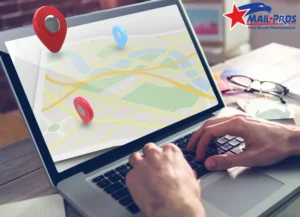
We provide a specialized Map Tool that simplifies this process by allowing you to visualize income levels, age demographics, and household sizes within a specific postal route. For example, a high-end roofing company should target routes with high homeownership rates and older housing stock, rather than routes dominated by rental units. Ignoring these details is the fastest way to burn through a marketing budget with little to show for it.
Analyzing Demographics Behind the Route
Demographics tell the story that a map alone cannot, and understanding this data is what separates a generic blast from a strategic campaign. We always ask our clients to define their perfect customer profile before looking at a map. If you are selling luxury landscaping services, sending mailers to a neighborhood with a median income below the poverty line will not generate leads, regardless of how beautiful the postcard looks.
Once you identify the income and age brackets that align with your services, you can cherry-pick the routes that contain those people. We have seen realtors have massive success by targeting neighborhoods with residents who have lived in their homes for 5-7 years, as these homeowners are statistically more likely to sell. This level of granularity ensures that every piece of mail you pay for has a genuine chance of converting.
Designing Mailers That Actually Get Read
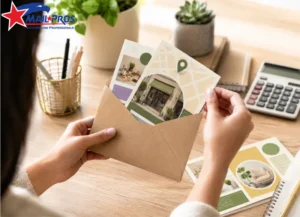
Physical mail has a split second to grab attention before it ends up in the recycling bin, so the design must be punchy and deliberate. We constantly remind clients that pretty does not always mean effective; the design needs to communicate value immediately. A postcard cluttered with paragraphs of text and tiny images will fail because it asks too much effort from the recipient.
Your headline should solve a problem or offer an irresistible benefit within the first glance. We recommend using high-contrast colors and high-resolution images that reflect the quality of your work. If you are a painting company, show a stunning before-and-after photo rather than a picture of a paint bucket. The goal is to make the homeowner visualize the result you provide, not just the service you sell.
The Importance of a Clear Call to Action
A beautiful postcard without a clear instruction is a wasted opportunity, yet we see this omission happen frequently. You must explicitly tell the recipient what to do next, whether that is Call for a Free Estimate, Scan for a Menu, or Bring This Card in for 20% Off. Ambiguity kills conversion rates, so we advise making the Call to Action (CTA) the boldest element on the page aside from the headline.
Avoiding Common Mistakes We See Clients Make
Over the years, we have identified patterns in why some campaigns fail while others generate massive returns. The most common error is viewing EDDM as a “one-and-done” lottery ticket rather than a sustained marketing strategy. Sending one round of mailers and giving up because the phone didn’t ring off the hook is a fundamental misunderstanding of how local brand building works.
Another frequent mistake is using complex or outdated tools to plan the campaign, leading to frustration and errors in the paperwork. We reviewed the top mapping options to show how using the right technology prevents you from targeting the wrong streets. We also see businesses failing to check postal regulations regarding indicia placement and size requirements, which can result in the Post Office rejecting the entire shipment.
Ignoring the Rule of Three
Marketing data consistently shows that a prospect needs to see your brand multiple times before they trust you enough to buy. We advise clients to budget for at least three drops to the same carrier route over a specific period. The first card builds awareness, the second sparks recognition, and the third often triggers the action. Consistency builds trust, and trust is the currency of local business.
Measuring the Success of Your Campaign
You cannot improve what you do not track, so we insist on building measurement mechanisms into every design. While you cannot click a postcard like a digital ad, you can certainly track its impact through redemption codes or dedicated phone numbers. We suggest using a simple code like NEIGHBOR20 or a QR code that leads to a specific landing page on your website.
When you track these metrics, you can see exactly which carrier routes are performing and which ones are dead weight. This data allows us to refine future campaigns, doubling down on the neighborhoods that respond and cutting the ones that don’t. This approach turns EDDM from a guessing game into a predictable, scalable revenue channel for your business.
FAQs
How does EDDM pricing compare to standard direct mail?
EDDM is significantly more affordable than standard direct mail because you save money on postage and mailing lists. Since the post office delivers to every home on a route, they do not have to sort individual addresses, passing those savings on to you. We find it to be the most cost-effective way to reach a large local audience.
Do I need a special permit to send EDDM?
You do not need to purchase your own mailing permit if you use the “Retail” version of EDDM, which allows up to 5,000 pieces per day per zip code. We handle the indicia (the postage mark) formatting for our clients to ensure it meets USPS standards. This makes the process accessible even for very small businesses.
How long does it take for the mail to hit mailboxes?
Once the mailers arrive at the local post office, the USPS guidelines state they are typically delivered within 24 to 48 hours. However, the total timeline includes design, printing, and shipping to the post office. We generally advise clients to plan for a 1-2 week turnaround from the moment they approve the design to the moment it arrives in homes.
Conclusion
Targeting local customers through EDDM is a powerful strategy that cuts through the noise of digital advertising and puts your business literally in the hands of your neighbors. By selecting the right routes, designing with clarity, and committing to consistency, you build a local presence that competitors find hard to match. We believe that direct mail remains one of the most trustworthy ways to build a service business.
We have guided countless businesses through this process, transforming confusion into profitable campaigns. If you are ready to stop guessing and start targeting the right households, MailProsUSA is here to handle the details so you can focus on handling the new leads. Let’s get your message into the right mailboxes today.