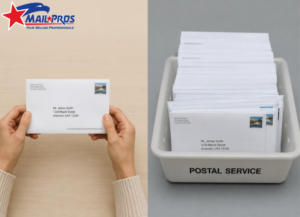

The days of spray and pray sending generic flyers to everyone in a ten-mile radius and crossing your fingers are largely over. To get a real return on investment today, you have to be surgical with your approach. This is where Targeted Direct Mail shines. By narrowing your focus to the people most likely to buy, you aren’t just saving money on postage; you are drastically increasing the probability of conversion. But simply buying a list isn’t enough; you need to optimize every layer of that campaign to truly see results.
Refining Your Audience Data for Maximum Impact
The single most critical element of your campaign is not the design or the offer; it is the list. You can have the most beautiful brochure in the world, offering a free service, but if it lands in the mailbox of someone who doesn’t need it, you have wasted your money. I often see businesses make the mistake of prioritizing quantity over quality, thinking that reaching 10,000 people is always better than reaching 5,000. That is simply not true if the 10,000 are poorly targeted.
At MailProsUSA, we constantly emphasize that data hygiene is the foundation of ROI. You need to ensure your list is scrubbed for accuracy. This means removing duplicate addresses, updating change-of-address records, and filtering out demographics that don’t fit your ideal customer profile. If you are selling high-end pool installations, sending mail to an apartment complex is a guaranteed loss. Spending time refining your data upfront prevents the financial bleed of paying for postage that has zero chance of generating a return.
The Power of Custom Audiences
Beyond basic demographics like age and income, modern targeting allows us to get incredibly specific. This is where the magic happens. By utilizing custom audience services, you can target consumers based on purchasing behavior, lifestyle interests, and even life events like buying a new home or having a baby.
For example, a pet grooming salon sees a much higher ROI by targeting households that have purchased pet food in the last six months rather than just targeting every house in the zip code. This level of granularity ensures that your message lands in the hands of people who are already predisposed to listen. It turns a cold lead into a warm prospect before they even open the envelope.
The Art of Personalization and Relevance
Once you have the right list, you have to speak to them like a human being, not a faceless entity. In the printing world, we know that the more relevant a piece feels to the recipient, the longer they will look at it. We call this the 3-second rule. You have about three seconds to convince the homeowner not to toss your mail. If your mailer looks generic, it is gone.
This is why I always recommend Customized Direct Mail. Using variable data printing technology, we can do much more than just swap out the name in the address block. We can change images, headlines, and offers based on the data we have for that specific person. If you are a car dealership, you can send a postcard featuring a minivan to a family with kids, and a sports car to a single professional, all within the same print run.
Integrating Direct Mail with Digital Strategy
Optimization doesn’t happen in a vacuum. The most successful clients I work with treat direct mail marketing as part of a holistic ecosystem. Your mail piece should look and feel exactly like your website and social media ads. When a customer receives your card and then visits your site, the visual transition should be seamless.
Furthermore, direct mail is incredible at driving digital traffic. Using QR codes or PURLs (Personalized URLs) not only bridges the offline-online gap but also provides you with trackable data. You can see exactly who scanned the code and when, giving you concrete metrics to measure success. This data helps you refine future campaigns, creating a cycle of continuous improvement.
Design Tactics That Drive Action
I have seen many business owners fall into the trap of over-designing. They want to fill every square inch of the postcard with text, photos, bullet points, and three different phone numbers. This is a mistake. Clutter kills conversion. A confused mind always says no. To optimize for ROI, your design needs to be clean, bold, and focused on a single objective.
Your Call to Action (CTA) must be undeniable. Don’t ask the customer to check out our website, follow us on Facebook, and maybe call if you have time. Give them one clear directive: Scan here for 20% off, or “Call today for a free estimate. Make the benefit of acting immediately obvious. The design should guide the eye naturally to this CTA, using contrasting colors and white space to make it pop.
Consistency Builds Trust
One-off campaigns rarely deliver the ROI business owners dream of. Trust is built through repetition. If you send one postcard and don’t see an immediate flood of sales, do not get discouraged. Optimization often involves a multi-touch strategy. By planning strategies for 2026 and beyond, you position your brand as a stable fixture in the community.
When a homeowner sees your logo for the third or fourth time, they move from who is this? to oh, I know them. That familiarity is what leads to increasing local sales. I usually advise clients to budget for at least three mailings to the same list over a period of 8 to 12 weeks. The cumulative effect of these touches almost always outperforms a single, massive blast.
Niche Applications and Timing
Timing can be just as important as the list itself. For general businesses, understanding seasonality is key, but for specific sectors, timing is everything. For instance, in political campaign, the window of opportunity is immovable. A flyer arriving the day after the election is essentially trash.

For these high-stakes campaigns, we optimize by working backward from the event date, factoring in print time, mail processing, and delivery windows. The same logic applies to retail sales or holiday promotions. If you are running a Labor Day sale, your mail needs to hit homes roughly 5 to 7 days before the weekend. Hitting the mailbox too early means they forget; too late means you missed the boat.
FAQs
How do I measure the ROI of my direct mail campaign?
The most effective way is to use tracking mechanisms on the printed piece. This could be a unique phone number (call tracking), a QR code that leads to a specific landing page, or a coupon code unique to that mailer. By counting exactly how many times that number was called or that code was used, you can calculate the exact revenue generated against the cost of the mailing.
Is Every Door Direct Mail (EDDM) better than Targeted Direct Mail?
It depends on your business. EDDM is cheaper per piece and saturates an entire carrier route, which is great for businesses with broad appeal like pizza places or dry cleaners. Targeted Direct Mail costs more per piece but allows you to filter the audience (e.g., only homeowners earning $100k+). For niche services like financial planning or luxury renovation, targeted mail almost always yields a higher ROI despite the higher upfront cost.
What is the minimum number of mailers I should send to see results?
While you can technically mail small quantities, I generally suggest a minimum of 2,500 to 5,000 pieces to get statistically significant data. This provides a large enough sample size to see what is working. Sending 500 postcards might result in zero calls just based on variance, which doesn’t necessarily mean the campaign was bad just that the net wasn’t wide enough.
Can I use my own customer list for targeted mail?
Absolutely, and you should! Your house list is usually your highest-performing asset. These people already know and trust you. We can help you clean up that list, format it for postal discounts, and run a reactivation campaign to win back old clients or upsell current ones.
Conclusion
Optimizing targeted direct mail is not about finding a magic trick; it is about discipline and attention to detail. It requires a willingness to look closely at your data, empathize with your customer’s needs, and resist the urge to clutter your message. When you combine a clean, high-quality list with personalized creative and a strategic timeline, the mailbox becomes one of the most powerful conversion channels available.
Remember, you don’t have to figure this out alone. The best results come from partnering with experts who understand the nuances of print, postage, and marketing psychology. If you are ready to stop guessing and start seeing real returns on your marketing spend, explore our blog for more insights or reach out to us. Let’s build a campaign that actually works for your business.