
Low response rates rarely come from one design choice. They usually reveal a broad list, weak offer, slow message, or difficult response path. The most useful direct mail ideas fix that chain in the right order.
Before printing, answer five questions: Who receives it? Why now? What action is requested? How is it measured? What follows the response?
Start With the Failure Point, Not the Artwork
Redesigning a postcard is tempting because the creative is visible. Yet a polished piece can still fail when it reaches the wrong audience or presents an ordinary offer.
Review the previous mailing across these areas:
- Audience: Was the list built around a genuine need, location, behavior, or lifecycle stage?
- Offer: Was there a reason to act now?
- Message: Could the benefit be understood within seconds?
- Response path: Was there one easy next step?
- Measurement: Could responses be linked to the mailing?
Tighten the List Before Increasing Volume

More volume does not guarantee better results. Effective targeted marketing starts with people who share a meaningful reason to care about the offer.
Segment customers by purchase history, service date, inactivity, location, contract timing, or request history. Divide prospects by household type, business category, neighborhood, or another legitimate buying signal.
For location-sensitive services, new movers direct mail can support offers tied to immediate needs such as maintenance, healthcare, storage, or insurance. A late welcome offer may arrive after the household has already chosen a provider.
Before production, remove duplicates, standardize addresses, suppress ineligible records, and separate customers from prospects. USPS address-quality tools can help reduce undeliverable pieces and wasted spend.
Give Every Mailpiece One Clear Job
The best direct mail ideas do not ask readers to interpret a full service catalog. They focus on one problem, one benefit, and one next step.
A useful offer structure is:
Relevant need + clear benefit + credible proof + deadline + simple action
A weak postcard may say, “We offer complete home services.” A stronger version states the service, deadline, and value clearly.
Promotional mail loses force when it contains several discounts, multiple phone numbers, or competing calls to action. Business mailers should make the main offer visible before adding supporting details.
Personalize the Reason, Not Just the Name
Adding a first name does not make a campaign personal. Real personalization changes the message.
A recent customer may receive a replenishment reminder, while an inactive customer receives a return incentive. A business prospect may see proof from a similar industry.
This is where direct marketing becomes more precise. The headline, image, proof point, and landing page should reflect the recipient’s situation. Variable data printing can support these changes, but technology cannot rescue a generic strategy.
Use purchase category, service history, ZIP code, or stated interest carefully. Avoid assumptions that may feel intrusive.
Make the Main Point Visible Within Seconds
A mailpiece should guide the eye in a clear order: headline, benefit, proof, offer details, deadline, and call to action.
Keep the postcard front focused on value and use the reverse for conditions. Letters need short paragraphs, useful subheads, and a clear postscript.
Print marketing often underperforms when the postcard design looks attractive but hides the offer. Before approval, review the piece at actual size. Check the headline, deadline, QR code, phone number, URL, and promo code.
These choices improve clarity without adding unnecessary copy or visual clutter.
Make Direct Mail Ideas Easier to Act On
Some marketing campaigns create interest but lose the response afterward. A QR code may open a generic homepage, a form may request too much information, or a phone number may lead to a slow menu.
Create a dedicated response path that repeats the mailpiece promise. Keep the page fast, mobile-friendly, and focused on one conversion.
Useful tracking methods include campaign QR codes, short URLs, dedicated phone numbers, offer codes, and matchback analysis. Matchback compares sales records with the mailing file to identify unattributed conversions.
This connects offline marketing with completed business outcomes rather than treating scans as the final result.
Build a Sequence Instead of Repeating One Piece
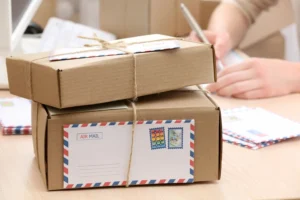
One mailing may be overlooked. A short sequence creates another chance to be noticed without repeating the same creative.
A practical three-touch structure is:
- Touch one: Introduce the problem or missed opportunity.
- Touch two: Present the offer with proof or reassurance.
- Touch three: Restate the benefit and deadline.
A second new movers direct mail piece, for example, should not duplicate the welcome card. It can address a specific service need that becomes more relevant after the household has settled in.
The sequence may connect with email, paid media, or sales follow-up. The goal is continuity, not noise.
Test One Meaningful Difference
Testing should answer a decision. Change one major variable while keeping the remaining elements consistent.
Useful tests include customer versus prospect lists, discounts versus bonuses, postcards versus letters, and QR responses versus phone responses.
A direct mail marketing agency should define the hypothesis before production. For example: “A service bonus will produce more qualified appointments than a percentage discount among previous customers.” An independent preflight review can then confirm that the offer, tracking method, and success metric align.
Measure the Quality of the Response
Response volume can mislead. A campaign with many scans but few qualified leads may be weaker than one with fewer responses and more sales.
Track delivered quantity, qualified leads, completed sales, campaign revenue, cost per lead, cost per acquisition, and average order value.
Targeted marketing should prioritize groups that produce profitable outcomes, not merely high activity. Compare results by list, offer, format, and follow-up path.
Advertising mail should be assessed across the full customer journey, including the mailpiece, landing page, phone handling, sales follow-up, and final purchase. That same measurement discipline should guide broader marketing campaigns.
Refresh the Message Without Losing Recognition

Follow-up pieces should feel connected but not identical. Keep the same core promise, visual identity, and contact details while changing the angle.
A second piece of promotional mail marketing might use a customer result instead of a discount. Later business mailers can answer a common objection. Follow-up mail may explain the cost of waiting or clarify how the process works.
These direct mail ideas are stronger than simply changing colors or replacing an image. The message evolves while the campaign remains recognizable.
Use a Final Campaign Checklist
Before approving production, confirm that:
- The list is segmented.
- The offer solves one clear problem.
- The benefit is immediately visible.
- The response path matches the mailpiece.
- Every link, number, and code works.
- Success has a defined metric.
This final review connects direct marketing strategy, creative, production, response handling, and measurement as one system. It also keeps print marketing decisions tied to customer action rather than appearance alone.
Frequently Asked Questions
What Causes a Low Direct Mail Response Rate?
The most common causes are poor list quality, weak targeting, an ordinary offer, unclear creative, response friction, and incomplete tracking. Review these areas separately before changing the campaign.
How Is Direct Mail Response Rate Calculated?
Divide the number of responses by the number of delivered pieces, then multiply by 100. Also track qualified leads and sales because raw response rate does not show customer value.
Which Direct Mail Format Works Best?
Postcards suit simple offers, letters support explanation, and brochures suit related benefits. Match the format to the decision.
How Often Should Direct Mail Be Sent?
Frequency should reflect the buying cycle, offer deadline, audience value, and purpose. A planned sequence is usually more useful than repeatedly sending the same piece.
Which Direct Mail Ideas Work for Small Businesses?
The most practical direct mail ideas start with a smaller, well-defined segment. Use one offer, one response path, and one test. Expand only after the campaign produces a reliable cost per lead or cost per sale.
Conclusion
Low response rates improve when each stage supports the next. Clean data enables better targeting. Better targeting supports a relevant offer. A stronger offer supports clearer creativity. Clear creativity leads to an easier response path. Reliable tracking shows what deserves another investment.
The most effective direct mail ideas are built around relevance, clarity, timing, and measurable action. Before funding another broad mailing, review the list, offer, message, response path, and measurement plan. When needed, a direct mail marketing agency can validate that system. Advertising mail should still be judged by qualified sales, not circulation alone.
Launch a smaller test with one clear hypothesis and a defined success metric. Use the result to improve the next campaign instead of repeating the same assumptions. That approach turns offline marketing into a disciplined growth channel rather than an unmeasured expense.