Modern Auto Shop Marketing With SMS and Direct Mail Integration

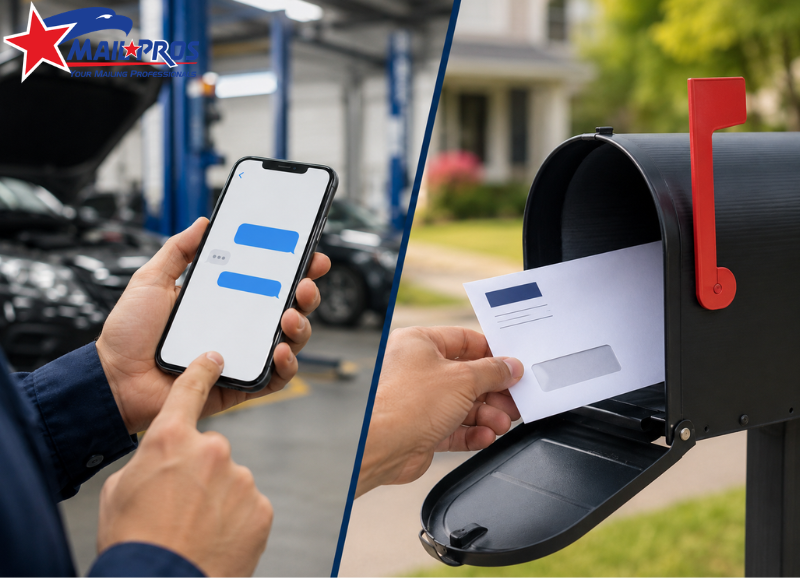
Auto shops are dealing with a customer who is busier, more distracted, and more selective than ever. A driver may need an oil change, brake inspection, tire rotation, or seasonal tune up, but that need competes with work, family, bills, and dozens of phone alerts. This is why many repair businesses are no longer relying on one channel alone.
SMS is fast and direct. Mail is physical and memorable. When both are used together, the message feels harder to miss and easier to act on. A postcard can introduce an offer at home, while a text can remind the customer when the timing is right.
For owners looking at direct mail marketing with a more modern mindset, SMS adds speed without removing the trust that printed mail creates.
SMS Adds Speed While Mail Builds Recognition
Faster Customer Action
Text messages are useful when timing matters. A shop can send a reminder after a postcard lands, mention a limited service offer, or confirm an appointment. The customer does not need to search for details because the message is already in hand.
Stronger Local Recall
A printed postcard gives the shop a physical presence in the home. Drivers may place it on a fridge, desk, or counter. This supports auto shop advertising because the customer sees the shop name more than once before making a decision.
Better Appointment Momentum
Many customers intend to book service but forget. A mailed offer may create interest, then an SMS reminder can push that interest into action. This pairing helps reduce delay between seeing the offer and scheduling the visit.
Clearer Service Reminders
Oil changes, brake checks, AC service, and tire inspections all follow predictable timing. When a shop connects printed reminders with text follow ups, the customer receives the message in two familiar ways without feeling pressured.
More Useful Customer Data
SMS responses, booked appointments, and coupon redemptions help shops see which offers work. Printed campaigns also show neighborhood response patterns. Together, these signals make future campaigns more accurate and less wasteful, especially when auto shop advertising is reviewed by real bookings.
Direct Mail Gives SMS a Stronger Reason to Work
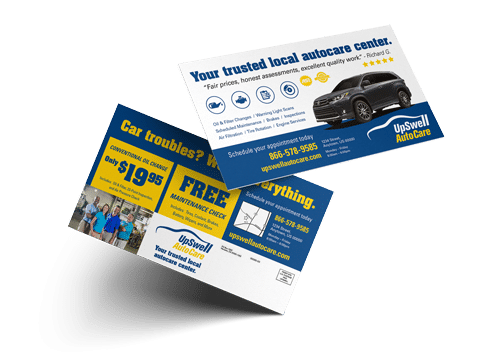
A Tangible First Impression
A postcard feels more official than a random text from an unknown number. When the customer has already seen the shop name in the mail, the SMS feels connected rather than intrusive. This is where auto repair postcard marketing earns its value.
Better Trust in Promotions
Drivers are careful with repair decisions because they want honest pricing and reliable service. A printed coupon with a clear shop name, address, reviews, and offer details makes a later text easier to trust. The message feels planned, not random, which is why auto repair postcard marketing still supports trust.
Stronger Neighborhood Targeting
EDDM marketing for auto shops lets repair businesses reach homes near the shop without needing a customer list. After the mail piece reaches local households, SMS can support existing contacts and help move warm leads toward appointments.
More Effective Coupon Timing
A household may receive a brake special on Monday, but the need may become urgent later in the week. A text reminder can bring that same offer back at the right moment. This makes automotive coupon mailers more useful beyond the mailbox and more connected to booking behavior.
Cleaner Campaign Tracking
When each postcard has a unique code and each SMS links to a booking page, the shop can measure what happened. Owners can see which areas responded, which services booked, and which offer brought the best return.
Auto Shops Use the Pairing to Fill Bays

Oil Change Campaigns: Oil changes are simple entry services that bring customers into the shop. A postcard can promote a first visit deal, while a text can remind past customers that service is due. This keeps bays active during slower days.
Brake Service Offers: Brake repairs often start with concern or noise. A mailer can explain inspection value, and SMS can offer a quick booking link. This type of marketing for mechanic shop leads works because the customer already has a practical reason to respond.
Seasonal Maintenance Pushes: Before summer heat or winter travel, drivers think more about battery health, tires, coolant, and AC. Combining mail with SMS gives the shop a stronger seasonal presence and helps customers prepare before problems become expensive.
Lapsed Customer Reactivation: A shop may have hundreds of past customers who have not returned in months. A friendly postcard followed by a short text can reopen the relationship. The goal is not pressure, but a timely reason to come back.
New Resident Outreach: People who move into a neighborhood need trusted local services. A postcard introduces the shop, and SMS can support those who opt in later. This is a smart way to get more auto repair customers without depending only on search traffic.
Campaign Design Makes the Difference
Simple Offer Presentation
The offer should be easy to understand in seconds. A strong headline, clear service, visible price or discount, and direct booking instruction will outperform a crowded layout. Good auto shop flyer marketing services focus on clarity first.
Consistent Message Across Channels
The postcard and SMS should feel like one campaign. The offer, deadline, shop name, and booking step must match. If the print says one thing and the text says another, customers hesitate and response drops.
Smart Timing Between Touchpoints
Most shops should not text the same day the mail is expected to arrive. A short delay gives the postcard time to be seen. Then SMS works as a reminder, not an interruption. Timing is a major part of campaign performance.
Local Proof and Credibility
Reviews, years in business, certifications, and photos of the shop can make the mail piece more believable. Strong auto shop flyer marketing also makes proof easy to notice without crowding the design.
Measuring Results Across Mail and SMS

Appointment Bookings: Bookings are the most important number for many shops. Calls are useful, but actual scheduled visits show whether the campaign worked. Tracking both mail codes and SMS links gives a more complete view.
Coupon Redemptions: Redemptions show which offers to motivate customers. A discount on diagnostics may attract different drivers than an oil change offer. Auto repair coupon mailers become stronger when the shop can compare each service response.
Customer Retention: The pairing is not only for first visits. Shops can use direct mail marketing to bring people back for routine maintenance, then use SMS to remind them at the right interval. This supports long term service habits.
Cost Per Repair Order: A campaign should be judged by profit, not just response. For many owners, marketing for mechanic shop leads only makes sense when the booked jobs bring enough value to cover the campaign and create repeat visits.
Repeatable Local Growth: When an auto shop finds a strong offer, good timing, and responsive routes, the campaign can be repeated. EDDM marketing for auto shops helps build that route level pattern, while SMS helps convert interest faster.
Answers to Common Questions
Can auto shops use SMS without direct mail?
Yes, but SMS usually works better with a clear reason behind it. When customers have already seen a postcard or service offer, the text feels more familiar and less random.
How often should a repair shop send texts?
Most shops should keep texts limited and useful. Appointment reminders, service due notices, and offer follow ups are acceptable when customers have opted in and the message is relevant.
Is direct mail still effective for auto repair shops?
Yes, especially for local service areas. Drivers often choose nearby shops, and a well designed postcard can reach households that may not be actively searching online yet.
Which services work best in combined campaigns?
Oil changes, brake inspections, tire service, AC checks, battery testing, and seasonal maintenance usually perform well because customers understand the need quickly.
How can a shop avoid annoying customers?
Use clear opt in practices, avoid sending too many texts, and keep each message useful. The mail piece should explain the offer, while the text should simply help the customer act on it.
Summary
Auto shops combine SMS with mail because the two channels solve different problems. Mail builds recognition, explains the offer, and gives the customer something physical to remember. SMS adds timing, speed, and a simple path to booking. When the campaign is clear, local, and measured properly, the result is not just more attention, but better appointments and stronger retention.
For repair businesses that want to get more auto repair customers through a more connected local strategy, MailProsUSA can fit naturally into that conversation without making the marketing feel forced.