

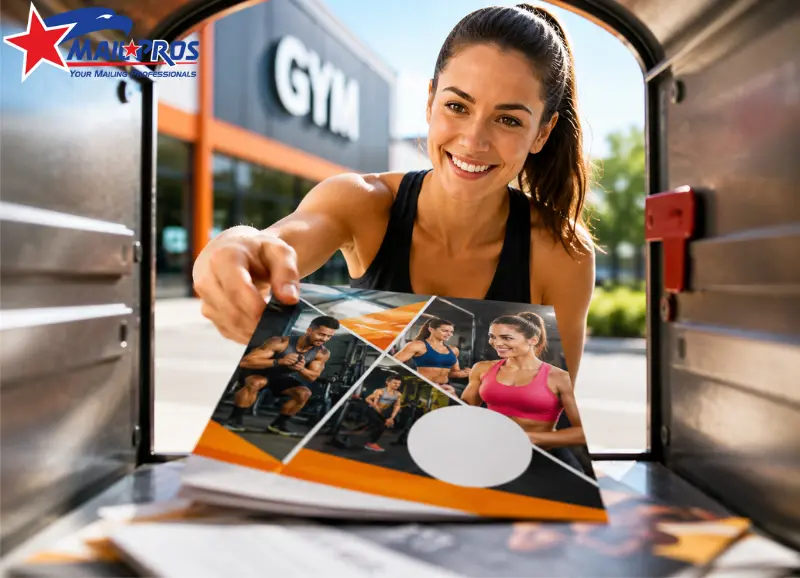
A local gym does not need to reach an entire city. It needs to reach people who live or work close enough to visit several times a week. That makes targeted mail campaigns useful for neighborhood fitness brands.
A physical mailer can introduce the facility, present a specific offer, show the location, and give the reader one clear next step. Strong gym marketing depends on the right household, message, and timing. When direct mail marketing is built around those factors, it becomes a measurable part of local business marketing rather than an isolated postcard drop.
Start With a Realistic Local Trade Area
Convenience often influences which gym a prospect chooses. Begin targeted mail campaigns with the area members can realistically travel from, not the largest area the budget can cover.
Plot current member addresses and look for clusters around neighborhoods, apartment communities, offices, schools, and commuter routes. This gives the fitness business a starting point based on actual member behavior.
The USPS Every Door Direct Mail tool lets advertisers search by address, city, state, or ZIP Code and review nearby carrier routes. It also offers filters based on age, household size, and income using Census-based data. These features support location-led fitness marketing without requiring an individually addressed database. Audience Before the Design
Audience quality affects every later decision. Start by choosing broad neighborhood coverage or a more selective mailing list.
Route-based coverage works when the offer has wide appeal. Targeted mail marketing is better for services such as premium personal training, senior mobility classes, youth performance programs, women-only sessions, or recovery services.
Useful groups may include:
- New movers who have not selected a nearby gym
- Families near facilities with childcare
- Adults within a short driving radius
- Former members who have not returned
- Leads who requested information but never joined
Targeted mail campaigns should communicate the value within seconds. Do not crowd the postcard with every class, amenity, and membership option. Select one offer connected to one business goal.
A practical gym promotion may include a free trial, a waived enrollment fee, a discounted first month, a complimentary assessment, a bring-a-friend pass, or an introductory small-group session.
State who qualifies, what is included, and when the offer expires. For gym membership acquisition, a low-friction trial gives prospects a reason to visit while allowing staff to demonstrate the facility.
Match the message to the audience. Families may value childcare and flexible hours. New movers may respond to a neighborhood welcome offer. Busy professionals may care about express classes, parking, or proximity to work. Effective fitness advertising connects the offer to a real daily concern.
Design for a Fast Decision

A postcard is not a brochure. Its job is to earn attention, communicate one reason to respond, and make the next action obvious. Strong targeted mail campaigns use a clear visual order.
The front should include a benefit-led headline, one relevant image, and the offer. The back should provide the address, a simple map or landmark, essential terms, contact details, and one primary call to action.
Use readable type, strong contrast, and open space. Avoid generic bodybuilder imagery when the intended audience includes beginners, older adults, or parents. The creative should reflect the members the gym wants to attract.
Add a short URL, QR code, trackable phone number, or offer code. Each response path should lead to a page or staff process created for the mailer. This turns direct mail marketing into an accountable acquisition channel.
Plan Timing and Repetition
One mailing can introduce the gym, but a short sequence can build recognition. The first piece may introduce the offer. The second can add proof, such as a testimonial or facility benefit. The final piece can emphasize the real expiration date.
For smaller local drops, USPS EDDM Retail requires at least 200 pieces and allows up to 5,000 pieces per ZIP Code per day. It does not require a special mailing permit, although mailpieces must meet applicable format and preparation rules. Path From Mailbox to Member
Decide how results will be measured before printing. Record the quantity, routes or segments, offer, response deadline, and total campaign cost.
Track QR scans, calls, trial claims, tours, trial attendance, new memberships, campaign revenue, and refunds. Ask every lead how they heard about the gym because some recipients may later search the business name instead of using the printed code.
Calculate cost per lead and cost per new member for each segment. Do not judge targeted mail marketing only by response volume. A smaller audience that produces qualified visits may be more valuable than broad coupon traffic.
Test One Variable at a Time

Testing is useful only when the result can be understood. Changing the audience, offer, design, and deadline at once makes comparison difficult.
Test one element, such as:
- A free trial versus a waived enrollment fee
- New movers versus nearby households
- A benefit-led headline versus a price-led headline
- A three-mile area versus a five-mile area
- One postcard versus a two-piece sequence
Give each version a separate code or landing page. Compare lead quality, attendance, gym membership sales, and acquisition cost. Use the stronger result in the next round.
This process improves gym direct mail marketing with local evidence. It also prevents the fitness business from copying a national chain whose pricing and audience may be different.
A Practical 90-Day Plan
Days 1–15: Define the Market
Map current members, identify productive neighborhoods, choose a realistic radius, remove existing members, and prepare the list. Review competing offers without copying them.
Days 16–30: Build the Campaign
Choose one audience, one gym promotion, and one action. Prepare the landing page, response code, deadline, and staff instructions. This aligns gym advertising with the in-club sales process.
Days 31–60: Launch and Follow Up
Send the first piece, monitor responses, and contact leads promptly. Send a second touch with a different supporting message. Targeted mail campaigns work better when the front desk knows exactly how to explain and redeem the offer.
Days 61–90: Review and Refine
Compare routes, segments, offers, attendance, and membership sales. Keep the strongest combination and remove weak areas. Apply the findings to future fitness marketing, fitness advertising, and local business marketing.
Frequently Asked Questions
How Much Should a Local Gym Spend on Direct Mail?
Base the budget on reachable households, production and postage costs, the value of a new member, and follow-up capacity. Begin with a controlled area large enough to produce useful data without committing the full quarterly budget.
Is EDDM or a Targeted List Better for a Gym?
EDDM suits broad neighborhood offers. A selective mailing list is more suitable for new movers, former members, or households matching defined characteristics.
What Should a Gym Postcard Include?
Include one benefit, one offer, a deadline, the location, a response method, and essential terms. The reader should understand what is offered and how to claim it immediately.
How Often Should Gyms Send Direct Mail?
Frequency should match the goal and budget. A planned two- or three-touch sequence is usually more useful than unrelated mailings because each piece can reinforce the same decision.
How Can a Gym Measure a Mail Campaign?
Use unique QR codes, landing pages, phone numbers, or offer codes. Track leads, visits, conversions, revenue, and acquisition cost by route or audience. This makes targeted mail campaigns easier to compare with other marketing campaigns.
Conclusion
Local gyms grow when their message reaches people who can realistically become active members. The strongest targeted mail campaigns combine a carefully selected area, relevant audience, simple offer, focused design, reliable tracking, and disciplined follow-up.
Do not begin with a large print quantity and hope for attention. Begin with member-location data, select the best nearby routes or prospect segments, and build one measurable offer.
Start planning the next campaign now. Request a professional review of the audience, mailing method, postcard format, quantity, and response strategy before production begins.
A clear plan made before printing can reduce wasted coverage and give the sales team a stronger chance to turn nearby prospects into lasting members.