


Presorted mail lowers the cost per mailpiece because the sender completes part of the sorting and preparation work before the mailing enters the United States Postal Service network. When a campaign meets the required volume, address, barcode, design, and documentation standards, it may qualify for commercial postage prices instead of single-piece retail rates.
The savings are not created by volume alone. Effective presorting combines accurate address data, automation-compatible mailpieces, correct mail classification, and organized postal entry. Missing one of these factors can reduce the expected discount or waste money on pieces that never reach valid recipients.
What Is Presorted Mail?
Presorted mail is organized by destination before USPS accepts it. Addresses may be grouped by five-digit ZIP Code, three-digit ZIP Code area, processing facility, or carrier route. The pieces are then placed in properly labeled trays, containers, or sacks with the required postal documentation.
USPS describes this process as work sharing. The mailer completes tasks that USPS would otherwise perform, such as ZIP Code sorting and automation preparation. Qualifying business mailing campaigns receive lower commercial prices because they enter the network in a more usable form.
Presorted First-Class Mail often supports statements, notices, invoices, and time-sensitive communication. USPS Marketing Mail commonly covers advertising postcards, flyers, catalogs, newsletters, and other eligible promotional material.
Where the Cost Savings Come From?
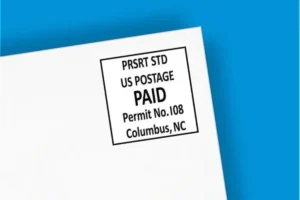
The cost per mailpiece can fall through several connected improvements. Presorting is one part of the process, but address quality and physical design also affect the final rate.
Deeper Sorting Reduces Postal Work
A basic presort groups pieces into broad destination areas. A deeper sort may organize more pieces by five-digit ZIP Code or carrier route, leaving less processing for USPS.
The deepest sort is not always the least expensive overall. Extra preparation may require more labor, software, transportation, or equipment. The right option is the one that produces the lowest total campaign cost, not simply the lowest listed postage rate.
Businesses comparing precision with postal efficiency can review these targeted direct mail strategies before deciding how narrowly to segment a campaign.
Automation Compatibility Supports Lower Rates
Automation-priced letters and cards must meet detailed USPS standards. Common requirements include an Intelligent Mail barcode, a complete delivery address, recent CASS-certified data, and acceptable size, shape, weight, and construction.
A mailpiece can look professional and still lose automation eligibility. Square formats, unusual rigidity, incorrect address placement, excessive thickness, and certain closures can increase mailing costs. Postal review should happen before the artwork and paper stock are approved.
How to Calculate the Real Cost Per Mailpiece?
A hypothetical saving of five cents per piece equals $250 on 5,000 pieces, $500 on 10,000 pieces, and $2,500 on 50,000 pieces. These figures show how small differences scale, not a guaranteed postal discount.
Use this calculation:
Total campaign cost divided by delivered mailpieces equals cost per mailpiece.
Include printing, list acquisition, data processing, addressing, presort preparation, postal paperwork, transportation, and postage. Measuring only the permit amount can hide waste elsewhere. A lower rate offers little value when an outdated list creates hundreds of undeliverable pieces.
Address Quality Protects Postage Savings
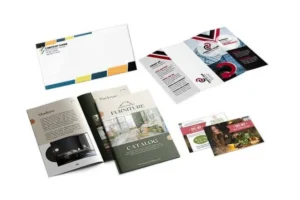
Presorting organizes an address file, but it cannot repair bad data by itself. Duplicate records, missing unit numbers, outdated addresses, and formatting errors increase printing and postage without improving reach.
CASS Certification Improves Accuracy
CASS stands for Coding Accuracy Support System. USPS-approved software uses it to standardize addresses and confirm information needed for automation processing. Clean data also supports accurate ZIP+4 information and delivery point barcodes.
Move Updates Reduce Waste
People and businesses relocate, so mailing lists lose accuracy over time. Before a large direct mail campaign, the file should be deduplicated, updated, and checked for known delivery problems.
Paying less to mail an undeliverable piece is still wasted spending. Businesses deciding between broad local coverage and individual targeting can learn how saturation mailing lists work before selecting the final audience.
Mailpiece Design Can Change Postage
Mail processing depends on physical characteristics as well as address data. Size, shape, weight, thickness, flexibility, folds, tabs, and coatings can change how USPS classifies a piece.
Standard Formats Process More Efficiently
Rectangular letters and postcards built within automation standards are easier for postal equipment to handle. Oversized or unusually shaped pieces may attract more attention, but the expected response benefit should justify the additional mailing costs.
Verify the Finished Weight
Paper stock, envelopes, inserts, adhesives, and finishes add weight. A piece designed near a postal threshold can enter a higher price category after production.
Create a physical sample with every planned component. Measure it, weigh it, and confirm the address and barcode areas before authorizing the full print run.
Presorted First-Class Mail vs USPS Marketing Mail
Choosing the correct mail class is essential because content, timing, and service expectations differ.
| Factor | Presorted First-Class Mail | USPS Marketing Mail |
| Common uses | Bills, statements, notices, customer correspondence | Advertising, postcards, flyers, catalogs, promotions |
| Typical minimum | 500 pieces | 200 pieces or 50 pounds |
| Delivery priority | First-Class service | Wider delivery window |
| Forwarding and returns | Included under applicable First-Class rules | Not included unless requested with an eligible endorsement |
| Best fit | Important or time-sensitive communication | Cost-controlled promotional campaigns |
Presorted First-Class Mail may cost more, but it is often appropriate when delivery speed, forwarding, or return handling matters. USPS Marketing Mail can be more economical for promotional campaigns with scheduling flexibility.
Content eligibility must guide the choice. Required First-Class material should not be placed into a lower-priced category simply to reduce postage.
A broader comparison of production, audience reach, and postal preparation is available in this guide to direct mail versus bulk mailing.
Common Mistakes That Reduce Presort Savings
Several avoidable problems can increase the cost per mailpiece:
- Finalizing the design before checking postal dimensions and barcode space
- Printing from a list that has not been cleaned or updated
- Selecting a mail class based only on its lowest price
- Ignoring setup fees, labor, transportation, and processing expenses
- Planning a date-sensitive promotion without enough delivery time
- Assuming every high-volume mailing earns the same discount
A structured mail processing review prevents late redesigns, reprints, nonautomation charges, and missed campaign dates.
Practical Ways to Reduce Mailing Costs
Begin with the audience and campaign goal. A targeted mailing may cost more per piece than a saturation campaign but waste fewer impressions. A broad local offer may benefit from carrier-route density.
Clean the address file before calculating the print quantity. Remove duplicates, correct incomplete records, and update movers. The final quantity should reflect usable addresses, not the original number of spreadsheet rows.
Request a postal design review before production. Confirm dimensions, weight, thickness, folds, tabs, address location, and barcode clearance. Then compare the complete cost of in-house preparation with professional mailing services, including software, permits, sorting labor, trays, paperwork, and USPS entry.
What is presorted mail?
Presorted mail is organized by destination and prepared according to USPS requirements before postal entry. This reduces work inside the postal network and may qualify eligible campaigns for commercial postage prices.
What is the minimum quantity for presorted mail?
USPS Business Mail 101 lists a minimum of 500 pieces for qualifying commercial First-Class Mail and 200 pieces or 50 pounds for USPS Marketing Mail.
Is presorted mail the same as bulk mail?
The terms are related but not identical. Bulk mail describes larger commercial mailings, while presorting is a preparation method used to organize pieces and qualify eligible campaigns for commercial prices.
Is presorted mail always cheaper?
Not always. The postage rate may be lower, but data processing, software, labor, permits, transportation, and preparation affect the final cost. Compare the complete cost per delivered piece.
Does presorted mail arrive faster?
Delivery depends mainly on the mail class, origin, destination, and postal conditions. Presorted First-Class Mail receives First-Class handling. USPS Marketing Mail generally has a wider delivery window.
Conclusion
Presorted mail reduces the cost per mailpiece by transferring part of the postal preparation work from USPS to the sender or mailing services provider. The strongest results combine clean address data, automation-compatible design, correct mail classification, accurate documentation, and efficient sorting.
Before approving a campaign, verify the final mailpiece, update the mailing list, compare mail classes, and calculate the complete cost per valid recipient. These steps protect postage savings and reduce expensive production errors.
MailPros USA manages direct mail printing, list processing, addressing, presorting, postal documentation, and USPS entry through one coordinated workflow. Submit the campaign quantity, mailpiece format, target area, and preferred delivery window to receive a practical mailing plan and clear cost estimate before production begins.