Turn Targeted Mail Marketing Into a Local Market Growth Strategy

A nearby ZIP Code can look like an easy place to grow, yet distance alone does not prove demand. The homes may not fit the offer, the area may be costly to serve, or likely customer value may be too low.
Targeted mail marketing gives a local business a safer way to test expansion. Instead of treating an entire city as one audience, it can compare carrier routes, household groups, property types, or business segments and learn where profitable demand actually exists.
USPS currently lists EDDM Retail postage at $0.247 per piece for qualifying Marketing Mail flats up to 3.3 ounces. EDDM Retail requires at least 200 pieces and allows up to 5,000 pieces per day per ZIP Code, making neighborhood tests practical before a larger rollout.
Why Expanding Into a Nearby Market Needs More Than a ZIP Code?
Market Fit Matters
A new area is useful only when the people inside it resemble customers the business can serve profitably. A roofer may care about owner-occupied homes and property age. A pediatric dental office may look for family-heavy neighborhoods. A B2B supplier may need the right industries and decision-makers.
Targeted mail marketing is more selective than broad local advertising because the aim is not simply to reach more addresses. It is to find nearby prospects with a credible reason to buy.
Study Existing Customers
Start with recent customers who produced healthy margins, repeat purchases, or strong lifetime value. Plot their addresses and look for patterns in ZIP Codes, housing type, distance, and buying behavior.
A clear buyer profile makes targeted mailing lists more useful because selection begins with real customer characteristics rather than assumptions.
How to Find Local Areas With Real Growth Potential?
Match Customer Profiles
Compare nearby neighborhoods with customers who already perform well. Useful filters may include homeownership, income, home value, property age, family composition, industry, or company size. Keep only filters that clearly relate to the offer.
A pool service, for example, gains little from mailing dense apartment routes where few residents control maintenance decisions. Specific audience logic keeps direct mail advertising tied to commercial reality.
Check Service Distance
Define how far the business can travel while protecting margin, response time, and customer experience. A market can look attractive on demographic data and still fail if technicians spend too much time driving.
Market selection should evaluate serviceability alongside audience fit.
Rank Market Potential
Score candidate areas from 1 to 5 for customer similarity, serviceability, likely order value, competitive opportunity, and route density. Test the strongest areas first.
That gives local marketing a reason for choosing one neighborhood before another and keeps the direct mail strategy from being driven by print quantity alone.
EDDM or Targeted Mailing Lists: Which Approach Fits the Market?
When EDDM Works?
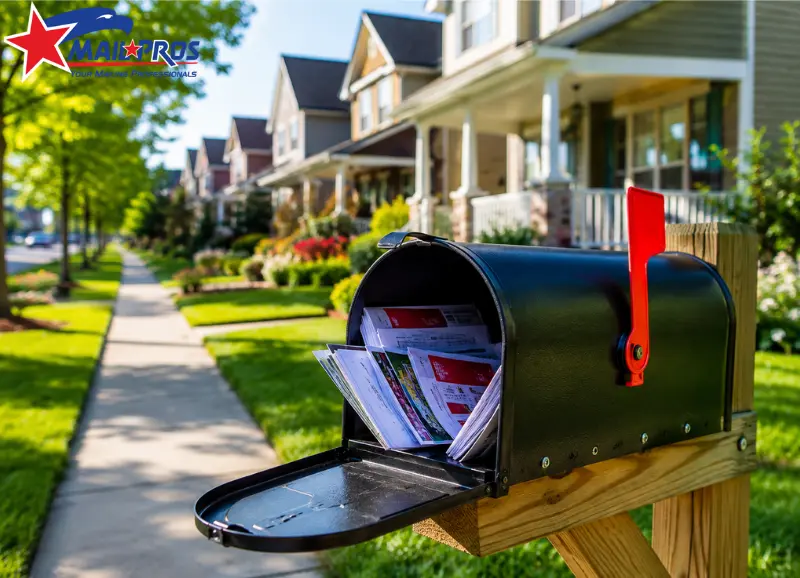
Every Door Direct Mail works well when most households on a selected route could reasonably buy. Restaurants, neighborhood retail, auto shops, general home services, and grand openings often fit this model.
USPS says EDDM Retail can be planned by neighborhood and does not require a special mailing permit. Businesses that want help with route selection, printing, preparation, and postal entry can use EDDM mailing services.
When Targeting Works?
A narrower offer needs tighter selection. Targeted direct mail services make more sense when homeownership, income, property type, household profile, industry, or another trait determines who is likely to qualify.
Targeted mail marketing is especially useful when sending to every address would waste too much budget.
Choose the Right Method
Use every door direct mail when geography is the main qualification. Use a filtered list when the offer depends on specific consumer, property, household, or B2B traits.
The distribution method should follow the audience problem, not define it.
How to Build a Direct Mail Test for a New Neighborhood?

Set Acquisition Goals
Begin with customer economics rather than postcard quantity. Estimate gross profit from an average new customer and decide the highest acceptable acquisition cost.
If a customer produces $400 in gross profit and the business will spend up to $120 to acquire one, a $2,400 direct mail campaign needs 20 new customers to hit that target. Calls and scans alone do not prove the test worked.
Start With Testing
Choose one or two promising routes or a defined list segment before covering the full expansion area. The article on how targeted direct mail creates more predictable marketing results explains why audience, offer, tracking, and economics should work together before scale.
The first test should be large enough to teach something but small enough to contain a weak result.
Control Campaign Variables
Do not change the audience, offer, format, headline, landing page, and timing together. Keep one mailing as a clear control and change one major variable in the next version.
Create an Offer That Fits the People in That Area
Match Local Needs
A generic “now serving your area” message gives people little reason to act. New movers may value an introductory service, while owners of older homes may respond to an inspection or estimate.
Good direct mail advertising connects the offer to the reason that the audience was selected.
Strengthen the Offer
State what is being offered, who it helps, why it matters now, and what the recipient should do next. Targeted mail marketing becomes more persuasive when audience selection and offer design support each other.
USPS gives a useful geographic instruction: “Choose the neighborhoods in the EDDM Online Tool where your customers live.”
Simplify the Response
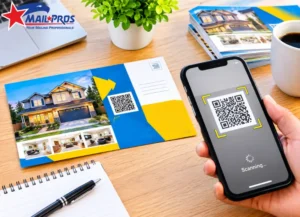
Use one primary next step. A dedicated phone number, QR code, promotion code, or campaign landing page can make attribution clearer.
Direct mail marketing services should support this tracking because local business marketing decisions improve when each customer can be tied to a route, audience, or offer.
What to Measure Before You Mail the Next Area?

Look Beyond Responses
Response rate can hide poor economics. One neighborhood may produce many inquiries but few sales, while another brings fewer calls and better customers.
Track qualified leads, conversions, acquisition cost, revenue, and gross profit alongside response rate.
Measure Customer Value
If the business depends on repeat purchases, maintenance plans, renewals, or referrals, review customer quality beyond the first order. This analysis can reveal that an average-looking route is valuable because its customers stay longer or buy more often.
Compare Market Results
Compare ZIP Codes, carrier routes, audience types, and offers. If a filtered audience wins, targeted direct mail services can help reproduce those criteria nearby. If broad routes perform better, EDDM may remain the practical choice.
How to Turn One Successful Neighborhood Into a Larger Local Market?
Find Similar Areas
The next market should resemble the one that already worked. Compare demographics, housing, business mix, distance, order value, and the traits linked to the original result.
Targeted mail marketing turns one profitable test into a repeatable market-selection process.
Scale Proven Markets
Increase volume only after acquisition cost, margin, customer quality, and service capacity meet the original targets. As volume grows, broader route coverage can follow when saturation remains the better fit.
Support Other Channels
Mail results can sharpen paid search, sales outreach, referrals, and other nearby-market efforts. Stronger neighborhoods can receive more coordinated attention instead of spreading local advertising evenly across good and weak areas.
That is where a measured direct mail strategy becomes broader market intelligence.
Common Mistakes That Make Local Mail Expansion Expensive
Mailing Too Broadly: Covering a large city before proving a smaller area increases waste and makes weak segments harder to spot.
Ignoring Customer Fit: Population and household count are not enough. Local business marketing still depends on buyer fit, serviceability, and customer value.
Repeating One Offer: Different areas can have different reasons to respond. Repeating the same offer everywhere can hide a promising market.
Scaling Too Early: A few calls are not proof of profitable growth. Wait until the mailing meets acquisition and customer-quality targets before increasing volume.
Frequently Asked Questions
How Does Targeted Mail Marketing Help a Business Enter a New Market?
It breaks expansion into measurable audience groups. Businesses can test selected routes or customer profiles, track actual buyers, and put more budget into areas that produce profitable demand.
Is EDDM Better Than a Targeted Mailing List for Local Marketing?
EDDM is usually better when most addresses on a route could use the offer. A filtered list is better when eligibility depends on demographic, property, household, or business traits. EDDM mailing services and list-based campaigns solve different audience problems.
How Many Households Should a Business Include in Its First Test?
There is no universal quantity. The test should be large enough to produce useful data without committing the full budget. For EDDM Retail, USPS requires at least 200 pieces and allows up to 5,000 pieces per day per ZIP Code.
What Should a Business Track After a Direct Mail Campaign?
Track delivered pieces, responses, qualified leads, customers, revenue, gross profit, and customer acquisition cost. Direct mail marketing services become easier to evaluate when results are also separated by route, audience, or offer.
When Is It Safe to Expand a Successful Mailing Into More ZIP Codes?
Expand when the first market meets the acquisition, margin, customer-quality, and service-capacity targets set before mailing. Nearby ZIP Codes should resemble the proven market rather than simply share a border.
To Sum Up
Expansion works better when geography is treated as a business decision rather than a mailing quantity. Start with current customer evidence, identify similar nearby areas, choose the right distribution method, set an acquisition target, and test before scaling.
Targeted mail marketing gives that process structure. When an area produces profitable customers, carry the same logic into similar neighborhoods. When it does not, adjust the audience or offer before committing more budget.
For businesses ready to turn a nearby market into a controlled customer-acquisition test, Mail Pros USA can connect audience planning, printing, postal preparation, and tracking in one campaign. Define the best-fit market first, measure what it produces, and expand only when the numbers support the next move.