
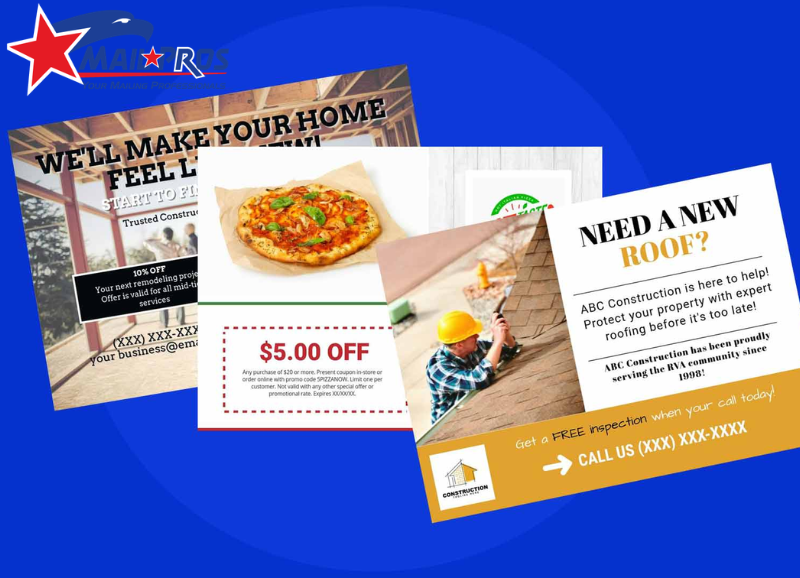
Running a local business often feels like a constant battle for attention. You might be posting on social media daily or tweaking Google Ads, only to feel like you’re shouting into a void. I’ve sat down with countless business owners—from pizza shop managers to real estate agents—who feel frustrated because their digital efforts just aren’t connecting with the people actually living down the street. Sometimes, the most effective way to reach a neighbor isn’t through their phone screen, but through their mailbox.
This is where the tangible power of direct mail comes into play. Specifically, EDDM Marketing (Every Door Direct Mail) has leveled the playing field for small businesses. It allows you to blanket specific neighborhoods with your message without purchasing expensive mailing lists. However, simply printing a flyer and sending it out isn’t enough. Success requires strategy, patience, and a deep understanding of your local market.
In my years of helping clients execute these campaigns, I’ve learned that EDDM isn’t a magic wand; it’s a tool. When used correctly, it builds brand recognition and drives foot traffic in ways that digital ads often struggle to match. Let’s dive into how you can use this program to genuinely grow your business.
Why EDDM Still Matters in a Digital World
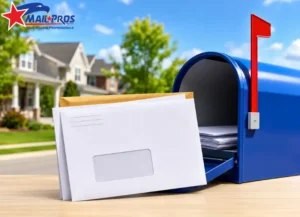
It is easy to assume that print is dead, but the data and my own client results suggest otherwise. Digital inboxes are cluttered with spam, and social feeds are saturated with algorithms that hide your content. In contrast, the physical mailbox is less crowded than it was ten years ago. When a homeowner retrieves their mail, they physically handle every piece. That tactile engagement offers a “micro-moment” of undivided attention that is incredibly rare in modern marketing.
EDDM is particularly powerful because it is hyper-local. If you own a landscaping company, you don’t need to reach the whole city; you only need to reach the subdivisions with lawns you want to mow. By targeting specific carrier routes, you ensure your marketing budget is spent only on the people most likely to use your service. It creates a sense of neighborhood presence, making your business feel like a fixture of the community rather than a faceless entity on the internet.
Mastering the Map: Selecting the Right Carrier Routes
The most common mistake I see beginners make is choosing routes based solely on proximity to their shop. While distance matters, demographics matter more. Just because a neighborhood is close doesn’t mean it fits your customer profile. A high-end pool cleaning service, for example, shouldn’t waste postage on apartment complexes. You have to look at the data behind the map.
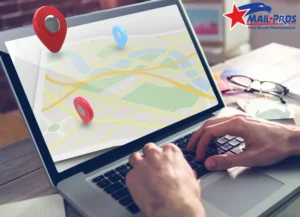
USPS provides data on average household size, income, and age for every carrier route. We always advise clients to use a dedicated map tool to visualize this data before making a decision. You might find that a neighborhood three miles away has a demographic that matches your ideal client perfectly, while the street right behind your store does not.
Mapping can be a bit overwhelming if you’ve never done it before. The USPS interface can be clunky, and selecting the wrong routes can drain your budget. Utilizing the best mapping software available simplifies this process, ensuring you aren’t just guessing where your potential customers live. Precision here is the difference between a wasted investment and a high ROI.
Designing a Postcard That Actually Converts
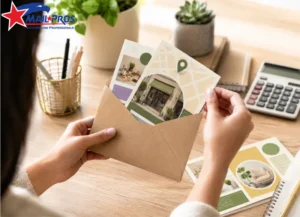
Design is where many business owners sabotage their own success. There is a temptation to cram every service, price, and history of the company onto a 6.5 x 9 postcard. Please, resist this urge. When I hold a consultation, I tell my clients: You have two seconds to make an impression. If the recipient can’t understand what you offer and what they get out of it in two seconds, that card is going in the recycling bin.
Effective EDDM design relies on a strong hook and a clear Call to Action (CTA). Use high-quality images that show happy people using your product or service, not just generic stock photos. Your headline should address a pain point like Tired of cleaning your own gutters? rather than just stating your company name.
Furthermore, the offer needs to be compelling. 10% off usually isn’t enough to motivate a new customer to switch brands. You need an irresistible offer that mitigates the risk of trying someone new. If you are unsure how to structure your layout, reviewing proven EDDM strategies can provide the blueprint you need to create a mailer that drives action.
The Importance of Paper Quality and Size
In the world of direct mail, perception is reality. A flimsy, thin postcard tells the homeowner that your service might be cheap or low quality. Conversely, a thick, glossy, or matte-finish card suggests professionalism and reliability. Since EDDM has specific size requirements to qualify for the low postage rate, you are generally working with larger formats.
Use this extra space to your advantage. A large postcard stands out in the mail stack, sandwiching the smaller envelopes. It gives your message room to breathe. Don’t cut corners on print quality; if the colors are washed out or the images are pixelated, it reflects poorly on your business.
Is EDDM Right for Your Budget?
Cost is always a primary concern for small business owners. The beauty of EDDM is the postage savings usually a fraction of the cost of a First-Class stamp. However, you still have to factor in printing and graphic design costs. When clients ask me is EDDM worth it, we look at their Customer Lifetime Value (CLV).
If a new customer is worth $500 to you over a year, and it costs $0.50 per postcard (print and postage combined) to reach them, you only need a very small response rate to break even and turn a profit. It is not about how much the campaign costs upfront; it is about the cost of acquisition per customer. For businesses with high average ticket values like roofing, dental, or automotive repair the math almost always works in favor of direct mail.
Consistency: The Secret Ingredient
If you take one thing away from this article, let it be this: One-off mailings rarely work. I have seen clients send out 5,000 cards once, get zero calls, and declare that mail doesn’t work. The reality is that marketing follows the Rule of 7. A prospect often needs to see your brand multiple times before they trust you enough to call.
We generally recommend a strategy of three drops over three months to the same carrier routes. The first card creates awareness. The second sparks recognition (“Oh, I’ve seen these guys before”). The third often triggers the action. Budget for a campaign, not a single blast. Consistency builds trust, and trust is what makes the phone ring.
FAQs
Can I target specific houses with EDDM?
No, EDDM is designed to saturate entire carrier routes. You must deliver to every active residential address on that route. If you need to target specific people (like only homeowners with pools or houses built before 1980), you would need a targeted direct mail list, which uses different postage rates.
How long does it take for the mail to be delivered?
Once you drop your mail at the post office (or your print provider does it for you), USPS generally delivers EDDM within 1 to 5 business days. However, this can vary based on the local post office’s workload. I always advise clients to plan their drops at least a week before they want the offer to hit homes.
Do I need a permit to send EDDM?
A: If you are using “EDDM Retail” (sending fewer than 5,000 pieces per day per zip code), you do not need a special permit; you use a generic USPS indicia. For larger mailings using “EDDM BMEU” (Business Mail Entry Unit), a permit is required. Most professional printing companies handle the permit aspect for you, saving you the paperwork.
Conclusion
Every Door Direct Mail remains one of the most potent tools for local businesses to build a stronghold in their community. It cuts through the digital noise and places your brand directly in the hands of the people who matter most your neighbors. By carefully selecting your routes, designing with a clear purpose, and committing to consistency, you can turn a simple postcard into a revenue-generating asset.
Remember, marketing is not about tricking people into buying; it’s about communicating value to the people who need it. If you are ready to launch a campaign that truly resonates with your local area, MailProsUSA is here to guide you through every step, from mapping to the mailbox.