


A GivingTuesday appeal that reaches mailboxes on December 14 has missed the day it was written for. So has a year-end ask that lands a week after a donor’s last gift. Neither letter is badly written. Both were mailed badly.
Here’s the fix, and it isn’t clever. Choose the date the donor should be holding the letter. Then count backward. Printing gets a date, so do proofs, the list pull, and the postal drop, and each of them has a person’s name next to it.
Fundraising Mailers Work Best When Timing Follows Donor Behavior
Think of three people on one file. Maria gave $250 last month and wants to know what happened to it. Dan stopped giving in 2024. And there’s a neighbor down the street who has never heard of you at all. One mailing date can’t serve all three.
That’s why fundraising direct mail starts with the audience and the ask. The calendar comes second. It also helps to keep creative, printing, and postal entry under one roof, since every handoff is a place for a date to slip, and that is the real argument for direct mail marketing services that run the job on a single schedule.
Marketing Mail isn’t a stopwatch. USPS estimates 3 to 10 business days and doesn’t guarantee them. When you buy nonprofit direct mail services, ask for a delivery range, say four or five days wide, and not a single date.
Plan The Schedule Backward From The In-Home Date
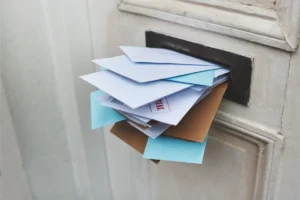
Say the gift has to be in by December 31. Before that happens, someone has to find the letter in a pile, open it, set it aside, remember it a week later, and then write the check or scan the code. That’s a lot of days.
Build your fundraising campaign calendar around six dates. The response deadline. The mailbox window. The list freeze. Proof approval. Printing time. And the USPS entry date, which your fundraising mailing service should confirm in writing before anything is released.
Take this fall. Mail entered on Tuesday, November 3, 2026, should reach homes between November 6 and November 18. Veterans Day is the 11th and nothing gets delivered, so that’s already counted.
Printing takes about seven business days, which puts proof sign-off on October 22. The list freezes around October 15. Fundraising mailers handled like this rarely get rushed at the press.
Every fundraising appeal needs a reason to act now, and the reason has to be true. A fiscal year that closes on June 30 counts. So does a matching gift that expires on a stated date. A made-up deadline doesn’t, and donors can smell one.
Each Season Gives Direct Mail Fundraising A Different Job
Year-end gets the big ask, and that’s fine. The trouble starts when a nonprofit fundraising calendar crams everything into November and December and leaves ten quiet months. Each season can do a different job.
Use Spring For Renewals And Small Tests
Spring is for renewals and asks tied to one program. It’s also the cheap time to test things. Send two ask amounts, or two story angles, to a few hundred people each and see what wins. A small direct mail campaign like that costs little, and what you learn goes straight into the year-end drop.
Reconnect With Lapsed Donors In Early Fall
Early fall, September into early October, belongs to people who gave last year and haven’t been back. Don’t push hard. A short update and a soft ask is enough, and it helps donor retention without the December rush. Some of the ideas in this win-back postcard strategy carry over well to donors who drifted off.
Stage Year-End Appeals In Waves
Space year-end fundraising mailers out. Letter one lands in late October or early November. Letter two goes to people who haven’t answered, around the last week of November. Then a short note in December. Scrub the final list first, because somebody will have given in the meantime.
Segment The Donor File Before Setting Mail Frequency

Three factors to consider when writing a donor letter: 1. How recently the donor gave; 2. How often the donor gives; and 3. How much the donor gave. Someone who gave $250 six weeks ago would not qualify as a donor who gave $35 three years ago.
For comparison, the M+R Benchmarks 2026 study revealed that in 2025 nonprofits sent mail to donors 15 times, lapsed donors 8 and prospects 6. Budgets were similar, with 41 percent of direct mail spend going to donors and 38 percent to prospects. Different groups of donors receive direct fundraising appeals at different rates.
If the file is a mess, or too small, mailing list services can clean up addresses, remove duplicates, and find the audience. For a laser-focused mailing list of donors, start with your mission and the ask. Age and income can help narrow it down. They shouldn’t be the whole plan.
Production Delays Can Break A Good Mailing Window
Production is where tidy calendars go wrong. Proofs come back two days late. A merge field turns out blank on 400 records. Somebody forgets to refresh the suppression file. Each problem eats a day or two, and together they can eat the whole cushion. For fundraising mailers with a fixed in-home window, give data prep, proofing, printing, and postal processing their own blocks of time, and a slip in one stage shows up early.
Sort out the postal rules before files go to a direct mail printing company. USPS Marketing Mail needs at least 200 addressed pieces or 50 pounds. A nonprofit also has to be authorized by USPS before it can use nonprofit prices, and USPS Publication 417 spells out who qualifies, so check that early.
For bigger mailings, bulk mailing services can take care of list processing, addressing, presort, printing, and postal entry in one flow.
Every Mail Piece Needs A Matching Response Path

Direct mail fundraising falls apart when the pieces don’t match. Say the letter is about a winter shelter. The donor scans the QR code and lands on a generic donate page that never mentions it. Now they have to work it out again, and plenty of people won’t bother.
Customized direct mail is worth the extra setup when groups need different ask amounts, letters, reply forms, or tracking. Putting a first name at the top won’t do much if the ask amount is wrong for that person.
Fundraising mailers should also offer one clear way to give. And before a later drop leaves the fundraising mailing service, update the suppression file. Nobody likes being asked for a gift they gave last week.
Track Timing Data Next To Revenue Results
M+R Benchmarks 2026 reports that direct mail revenue at participating nonprofits grew 9 percent in 2025, while the number of gifts grew 4 percent. Those are sector averages, though. They matter only once you compare them with your own drops.
For every drop, write down the USPS entry date, the in-home window, the first response date, the day responses peaked, average gift, cost per response, and net revenue. A few seasons of that and you’ll know when fundraising direct mail works best for your file. The routine behind tracking recurring mail drops fits here too.
Let the numbers pick your next move. A follow-up fundraising appeal can wait if most gifts usually arrive within ten days. There’s no point sending it while that wave is still coming in.
Stewardship Between Appeals Keeps Donors Giving
A calendar that’s all asks starts to feel like a bill. January and February are a good time for thank-you notes and impact reports. Save the bigger asks for later in the year.
That pace helps donor retention, because people get to see what their last gift did. It also gives donor acquisition teams room to test a targeted mailing list before the busy season starts.
Before the next round of fundraising mailers goes to print, ask your direct mail printing company to log the approval and postal handoff dates. Ask your nonprofit direct mail services team to confirm nonprofit-rate eligibility. Good nonprofit fundraising keeps what each direct mail campaign taught and uses it next time.
Common Asking Questions
What is the best month to send an appeal?
Any month will do. Year-end giving has us busier October- December. Spring is good for renewals and to dig into your lapsed donors. May be your best month for giving depending on your donor history and your real deadline.
What is the Latest Date to Mail a Year-End Giving Appeal?
Don’t count back from the date of print. Count back from your arrival window. USPS Marketing Mail is estimated at 3- 10 business days. However, there is no assurance of timely delivery. For year-end letters,ers this would mean having the mail ready to go by early November.
Should a Nonprofit Send Mail Before Giving Tuesday?
Yes, if Giving Tuesday is in your calendar, Giving Tuesday is December 1, 2026. Target delivery before Thanksgiving week, then follow up with email and social media.
How Frequently Should A Nonprofit Send Fundraising Mail?
It depends on the group. 15 mailings to active donors, 8 to lapsed donors, and 6 to prospects in the 2026 M+R study. And add thank-you mailings. Never include anyone who has just donated.
What should be checked before a mailing is released?
Pull the fundraising mailing list for addresses, duplicates, dead files, and recent gifts. Cross-check with ask amounts, reply pieces, and Qs.
To Sum Up
The best fundraising mailers get planned from the mailbox backward. Lock the in-home window first. Everything else, from data prep to follow-up, needs enough room around it.
Put every deadline for the next drop on one shared calendar, and give each step an owner. If list work, printing, mail prep ,and USPS entry should run through one team, MailProsUSA can take the plan from schedule to mailbox with fewer handoffs.
Send a quote request with your target in-home date, and the schedule gets built from there.