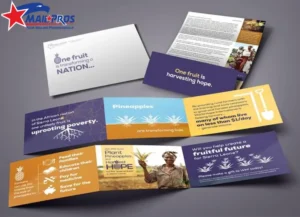

A mail piece can reach the correct address and still fail to persuade. The problem is usually a break between the audience, message, offer, design, and response path.
Poor results often begin before printing. Broad mailing lists create waste. Generic copy gives the recipient no reason to care. A crowded layout hides the offer, while an unclear next step allows interest to disappear.
Direct mail marketing performs best when every decision supports one measurable action. The checks below show where direct mail response rates are lost and what to correct before the next drop.
Start With the Audience, Not the Artwork
A polished design cannot repair weak targeting. Outdated records, duplicate households, and addresses outside the service area consume budget before the message is seen.
USPS requires qualifying commercial First-Class Mail and USPS Marketing Mail addresses to meet its Move Update standard. In general, an address must be updated through an approved method and used within 95 days. List hygiene is therefore a production requirement, not an optional cleanup task.
Reliable direct mail services should verify addresses, remove duplicates, apply suppression rules, and separate customers from prospects. Audience filters should then reflect the service, location, and likely need.
Review a sample before approving the list. Check names, ZIP Codes, duplicate households, and geographic coverage. Better data gives personalized direct mail a purpose because the message reflects a recognizable need rather than using a first name as decoration.
Give the Recipient a Reason to Pause
Most mail is sorted quickly. The first visible message must answer one question: why does this matter now?
Company history may support credibility, but it should not lead. Effective print marketing begins with the customer’s problem and connects it to a useful outcome. “Update an outdated kitchen without coordinating several contractors” is more persuasive than “Complete remodeling services.”
The same distinction improves advertising mail. The headline should name one outcome, while proof should reduce a specific concern through clear terms, a warranty, or a verifiable result.
Keep the message in this order:
- A problem the recipient recognizes
- A benefit stated in plain language
- Evidence that lowers doubt
- An offer with complete terms
- One primary response action
Each section should answer the question raised by the one before it. That simple connection prevents the piece from reading like separate blocks of sales copy.
Make the Offer Worth Acting On
“Call today” is an instruction, not an offer. A useful direct mail promotion explains what the recipient receives, why it matters, who qualifies, and when the opportunity ends.
The incentive does not need to be a discount. An estimate, sample, upgrade, guide, or guarantee may reduce hesitation without damaging margin.
Good direct mail solutions settle eligibility, service boundaries, redemption limits, and expiration dates before the creative is written. That prevents the sales team from interpreting the offer differently after calls begin.
Place the offer where it can be found without reading every line. Repeat the essential terms beside the response action. Promotional mail becomes difficult to trust when the headline promises one thing, and the fine print changes it.
Make the Main Point Visible in Five Seconds
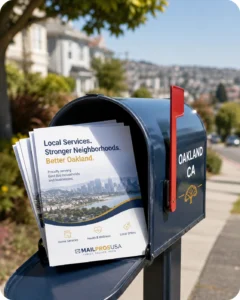
Design is not decoration. Its first job is to reveal the reading order.
A recipient should identify the subject, benefit, offer, and next step in one scan. Competing fonts, excessive bold text, and unrelated images destroy that priority.
Print the direct mail advertising artwork at full size. View it from arm’s length, then cover the body copy. The headline, offer, and response action should still make sense. Ask someone unfamiliar with the campaign to explain the piece after five seconds. Any point requiring explanation is not yet clear enough.
A postcard can carry one simple local offer. A letter package provides room for proof and objection handling. The correct format carries the argument without clutter.
Remove Friction From the Response Path
Interest fades when the next step looks inconvenient. A long URL, tiny phone number, unexplained QR code, or generic home page creates work at the moment the recipient should act.
Every response route must continue the promise shown on the piece. A campaign phone number should reach staff who understand the deadline, eligibility rules, and intended audience.
Before production:
- Scan the final printed QR code on several phones
- Confirm the landing page works on mobile
- Keep the form limited to necessary information
- Use a campaign-specific number or offer code
- Give staff a short call-handling guide
These checks turn direct mail strategy into an operating process and protect results from avoidable losses caused by a broken page or unprepared staff.
One Drop Rarely Tells the Whole Story
A single mailing may underperform because of timing. The recipient may not need the service that week or may plan to respond later and forget.
Connected direct mail campaigns build recognition without repeating the same piece. The first contact may introduce the problem. The second can add proof or answer an objection. A final piece may emphasize a deadline or seasonal reason to act.
Preserve the same central promise. Changing the audience, offer, format, and message at once makes the result impossible to diagnose. It also weakens effective mail marketing because each drop feels unrelated.
Suppress recent buyers and completed leads before the next mailing. Continued acquisition messages waste money and make the campaign appear poorly managed.
Measure Sales, Not Activity Alone
QR scans, calls, and forms show engagement, not profitability.
Review direct mail response rates beside lead quality, conversion rate, revenue per piece, cost per sale, average order value, and repeat purchase value. Fewer responses may produce the better result when those leads convert at a higher rate.
Use separate response paths for each test group. Where volume allows, compare the mailed group with a holdout group to estimate campaign lift.
Measure personalized direct mail by segment as well as in total. A strong homeowner segment can be hidden by a weak renter segment when both are combined. Review ZIP Codes, customer status, offers, and creative versions separately.
Run One Connected Preflight Review
The final review should follow the recipient’s path from eligibility to response. This prevents each department from approving its own task while missing a break between tasks.
Confirm that:
- The audience matches the service, geography, and offer
- The mailing lists have been cleaned and sampled
- The headline names one useful outcome
- The proof supports that outcome
- The offer has clear value and complete terms
- Every code, number, and page has been tested
- Tracking connects inquiries with completed sales
Experienced direct mail services should explain how data, format, production, postage, and tracking support the goal. Avoid direct mail solutions based on a standard quantity or format before the objective is clear.
Compare the mail piece, landing page, and sales script side by side. Consistent wording strengthens direct mail advertising and prevents customers from receiving three versions of the offer. This alignment supports effective mail marketing, improves print marketing, and keeps the direct mail strategy connected from first impression to sale. It also gives advertising mail a consistent identity across every response channel.
Frequently Asked Questions
What Is the Most Common Reason Direct Mail Gets No Response?
Poor audience fit is one of the most damaging causes. Even clear creative struggles when the recipient has no likely need, lives outside the service area, or does not qualify for the offer.
How Much Copy Should a Mail Piece Include?
Use enough copy to explain the problem, benefit, proof, offer, and next step. A postcard may need only a few sections, while a higher-value service may require a letter that addresses risk.
Should Every Campaign Include a Discount?
No. Estimates, samples, upgrades, planning tools, or guarantees can support a direct mail promotion without lowering the selling price.
How Can Responses Be Tracked Accurately?
Use campaign-specific QR codes, URLs, phone numbers, offer codes, or reply devices. Connect responses to sales records so the report shows revenue and customer quality.
How Often Should a Business Send Promotional Mail?
Frequency should reflect the buying cycle, deadline, audience size, and follow-up capacity. Review each drop and stop acquisition messages once a recipient converts.
Conclusion
Direct mail pieces usually fail at a handoff. The list does not match the offer, the message does not support the headline, the design hides the value, or the response process breaks after interest is created.
The remedy is not another untested mailing. Build direct mail campaigns from the audience outward. Use clean data, one credible promise, a valuable offer, a clear visual path, and tracking that reaches the final sale. This approach also makes direct mail marketing easier to improve because every result can be traced to a decision.
Before approving the next print run, submit the mail piece, audience criteria, offer terms, and response path for a professional review. Identify the most expensive weakness, correct it before production, and turn the next campaign into a measurable sales process rather than another batch of mail.