Dental Recall Postcards: Essential Elements for Better Results

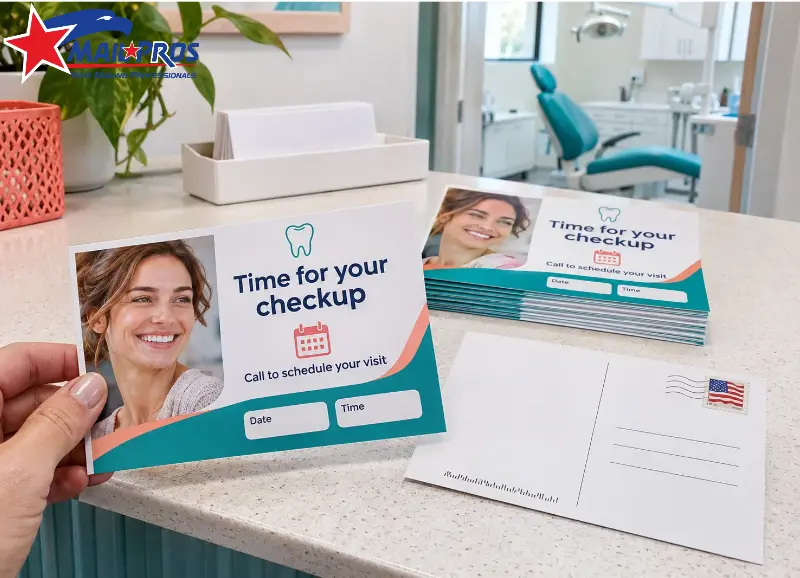
However, very few practices have a system in place to ensure patients on their recall list return. The software will indicate which patients are due, and receptionists will attempt to call them within available time windows. Many patients will be left on voicemail.
The postcard means it is more tangible for patients. Having a postcard with their name and the month they should be seen in will likely sit on the fridge for around 1-2 weeks, meaning that it is likely that patients will pick up the phone.
Dental Recall Postcards Need These Four Core Details
If the postcard does not clearly communicate who it is from and why it is being sent, then it is unlikely to be read once it reaches the bin.
Personalize The Greeting
Use personal greetings. “Maria, your cleaning is due in March” feels more personal, whilst “Don’t forget your check-up!” feels more like advertising. First names and due dates will be in a spreadsheet.
Using variable data printing means that the postcards will be personalised with individual names. Just 1 design will be needed for personalised postcards to remind patients of recalls.
Offer One Booking Path
Only 1 option to book appointments should be included. Although phone numbers are useful for older patients, as parents may be very busy with school drop-offs, it makes sense to include a QR code linking to an online booking system so appointments can be made late at night.
Show The Practice And Team
Include logo, address and opening hours. Including a picture of the hygienist they usually see will make the postcards more personal. Personalising the postcards in this way will improve dental patient recall much better than a motto.
Separate Recall From Appointment Cards
Appointment cards are used to confirm an appointment that has been made. They are often given to patients when they pay. Recall cards are to remind a patient to come in for an appointment that hasn’t been made yet. Merging the two into 1 card may confuse patients into thinking they are or are not due an appointment.
HIPAA Limits Keep Dental Reminder Postcards Private
As postcards do not have envelopes, there is a risk that the information contained is viewed by people other than the intended recipient. For example, a flatmate or teenagers sorting post. However, it has been confirmed by HHS that it is acceptable for practices to send reminder postcards to patients’ homes under the HIPAA Privacy Rule. The issue comes with what information is included in the postcards.
Limit What The Card Reveals
Only include basic information. Don’t include treatment information. Including phrases such as “your periodontal maintenance visit” or “the crown we discussed” gives private information to someone who is not part of the family. If someone outside of the family would be able to assume any health issues from reading the postcard, please rephrase.
Honor Patient Requests
Some patients may wish for postcards to be sent to a PO Box or work address. Under HIPAA, reasonable requests like this must be met. In addition to this, this should be included in the notice of privacy practices. In some states, there are stricter regulations, so it is best to confirm with your state’s dental association.
Secure Vendor Agreements
As patient information (names and addresses) is being passed to an external printer to create recall postcards, it is important to have a signed Business Associate Agreement in place. With reputable dental direct mail services, this will be provided to you free of charge.
Three Recall Notices Move Overdue Patients To Book

If patients are not booking with the first reminder, many dental systems allow for ‘aggressive’ recalls. There will be 3 different messages in these reminders, with increasing aggressiveness. Sending all 3 together will make dental recall messages look good.
This means your front-of-house team won’t have to write different messages each month. If sending by post, you will be able to easily manage multiple versions of the campaign. Just give each a different filename and a tracking code.
Keep The First Notice Routine
This should be sent in advance of the overdue date. Use a friendly tone. Mention that many plans mean preventative dental checks may have little or no cost to the patient. Just a brief statement like this will encourage patients to book.
As there is no discount, a great quote to use in this message is Benjamin Franklin’s ‘An ounce of prevention is worth a pound of cure’. As it has been so long since the patient had a check, saving them money on treatment makes dentistry much cheaper.
Name The Gap In Notice Two
Sent around 4 weeks past the due date. Clearly state how long has passed. “It has been more than seven months since your last cleaning.” This is not too aggressive. Give one reason to book. Early morning appointment times work well. Or, if they are on a calendar year insurance plan, mention that benefits are reset in December. These dental recals encourage patients with factual statements.
Reactivate With The Third Card
After 6 months, more of a reactivation is required. Offer a reactivation check, let them know evening appointments are available, or send a short note from the dentist. Larger postcards help at this stage. They allow plenty of space to take a team photo and include a time-sensitive offer.
Some patients will have moved away and therefore will not return. Often, a reply card is the first indication of this. Many dental practices will use new mover direct mail campaigns to fill these gaps. This allows new families to be targeted in the area.
Smart Design And Print Choices Lower Recall Costs
Even with a good message, poor design and printing can result in expensive dental recall postcards.
Pick A Postal-Friendly Size
Postcards with dimensions between 3.5 in by 5 in and 4.25 in by 6 in, with thickness between 0.007 in and 0.016 in, are classed as First Class Mail by USPS. A 4in by 6in postcard would fit in this category. Postcards any larger (such as 6in by 9in or 6in by 11in) will be considered Letter Mail. For regular dental recalls, many practices will opt for smaller postcards to save on costs. Larger postcards for patients who have lapsed.
Match The Office Brand
Any custom postcards for patient dental recall should match the branding of the practice and website. Using real team photos in the postcard will appear more trustworthy. Body text should be 10pt or above. Leave a small, light background in the address section of the postcard to make scanning easier for postal services.
Print In Monthly Batches
Printing postcards using in-house printers can cause smudging, meaning addresses become misaligned after printing only a few hundred. Partnering with a printer for dental recall postcards means that the export for each month can be combined. Full colour, high-quality printing will be completed, and the mail will be dropped on a specific date. Smaller amounts per month mean even distribution of phone calls throughout the month.
Timing And Tracking Turn Recall Mail Into Booked Visits
To get the best out of dental direct mail, send at the same time each month and track results.
Mail Ahead Of The Due Month
Most patients will be fine with a 3-4 week lead time. As Marketing Mail by USPS takes longer to arrive, if using a professional dental postcard printer, the date will be chosen appropriately to allow for this delay.
Track Each Notice Separately
Include a unique tracking code or booking link for each postcard. Get your front-of-house team to log when they receive calls referencing the postcard. After 2-3 months, you can see which postcard results in the most bookings. You can amend future dental recall postcards based on evidence instead of routine.
Combine Mail With Texts
Generally, postcards will be sent first, with SMS 1 week later. A personal call will be made to anyone who hasn’t yet booked. The postcards can be left on the kitchen counter, whilst quick confirmations can be made via SMS. Using the same booking links in all channels means booking patients in is easy for both practice members and patients.
Clean The List Quarterly
Patients can move home, get married, change jobs, and change insurance. Sending mail to an outdated address is a waste of money and means you have missed contacting that patient. Most dental recall cycles will be set for quarterly. The same signs that you need to update your business mailing list will be relevant to updating patient files.
Common Asking Questions
How many recall postcards should we send?
Most dental practices will send three postcards. The first of these will be sent 3-4 weeks in advance of the due date. The second will be sent around one month late, and the third 6 months late. The number of months between appointments varies for patients depending on what their dentist deems appropriate.
What Information Should Be Included In The Postcard?
To confirm an appointment has been made, include the patient’s name, appointment time and date, practice contact details, and cancellation policy. There is no need to add any offers or lengthy information.
Are dental postcard reminders effective with SMS reminders?
Yes. A postcard can be very useful, as patients may not receive your SMS or may have changed their number. They are also very visible to patients for several days. Combining SMS and postcard reminders for dental recalls is most effective, meaning many practices include dental Direct Mail in their budgets.
What Size Should The Postcard Be?
The most commonly used size For Dental Recall Postcards is 4×6, as they qualify for cheaper postage costs (First Class). However, a larger postcard (6×9) will cost more to post. This does, however, mean you can include images and offers in the postcard.
Fill Open Hygiene Chairs With A Steady Recall Plan
Personalised, discreet and simple postcards for dental recall appointments mean patients are likely to return. A clear message, easy-to-read address, and simple tracking system within dental recall marketing campaigns will result in bookings.
Export this month’s list of patients to recall. Choose a card size and a definite postage date. MailProsUSA can assist you with dental postcard printing, dental marketing postcards, and full dental direct mail services for dental practices across the country. Get a quote now so that your first batch of postcards reaches patients ahead of next month’s schedule.