
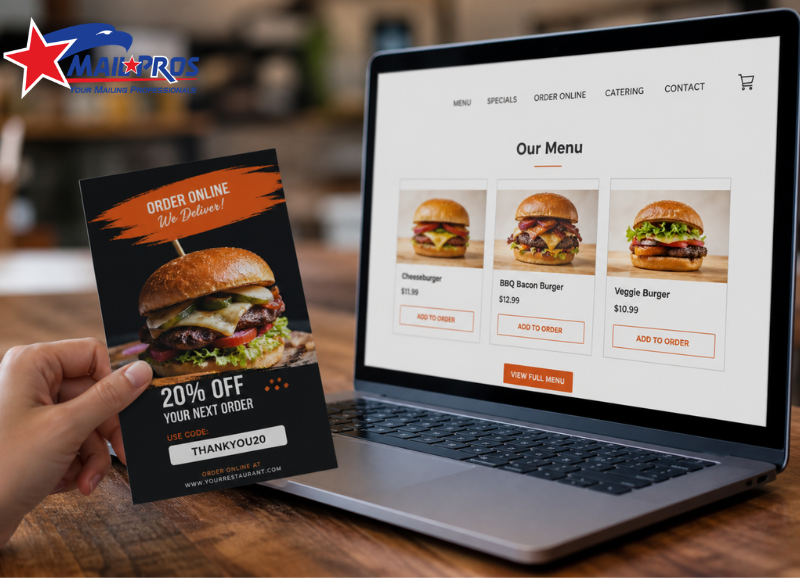
Restaurant owners spend a lot of time thinking about online orders, yet many of those orders still begin offline. A customer might see a printed menu at home, remember a lunch offer at work, or scan a code from a postcard after a busy day. That simple reminder can push them toward your website instead of a third party app.
This approach works because it feels local, practical, and easy to act on. It does not replace digital marketing. It gives digital ordering a stronger starting point by putting your food, offer, and ordering path in front of nearby customers.
Why Mail Still Drives Online Orders?
Local Dinner Recall: Local households often decide meals fast, so a printed offer can arrive at the right moment. Direct mail marketing for restaurants keeps your menu visible at home, then guides people to order online when they are hungry and ready to buy tonight now.
Saved Menu Value: A saved menu can work for days after it lands in the mailbox. Customers may place it on a fridge, desk, or counter, which gives your offer more life than a quick social post that disappears after one scroll. People see it again while choosing dinner.
Print To Digital Flow: Print becomes stronger when it points to a website, QR codes, or simple ordering page. A customer can see the meal, scan the piece, pick a special, and finish checkout without searching for your restaurant again. That makes online orders feel faster.
Demand Timing: Restaurants can mail before weekends, school nights, holidays, or local events. This timing matters because customers are more likely to order when the message reaches them close to the moment they need food. The offer feels timely instead of random.
Trust Before Checkout: People trust restaurants that feel present in the community. A polished mail piece with real photos, reviews, and clear ordering steps can make a new guest feel more comfortable placing their first online order. It can ease first order doubt as well.
Targeting That Improves Response
Nearby Customer Focus
Good targeting helps restaurants avoid wasting budget on people too far away to order. A focused radius around the store can reach homes and apartments where delivery is realistic and pickup feels convenient. This ties spending to nearby real demand.
Audience Habit Matching
Direct mail for small businesses can be shaped around real customer habits. Families may like bundle deals, office workers may want lunch offers, and students may respond to simple value meals. Better fit can lift response and repeat sales over time.
Neighborhood Offer Fit
Different neighborhoods respond to different food needs. A pizza shop near schools may promote family dinners, while a cafe near offices may highlight breakfast, catering, and quick online pickup options. The message feels closer to daily life there.
Response Data Clarity
Zip code results, coupon codes, and scan activity can show where orders came from. This gives owners practical data, not guesswork, so the next campaign can be smarter and easier to measure. Real results help owners plan the next campaign better too.
Discount Control Strategy
Targeting also helps control discount use. Instead of offering the same deal to everyone, restaurants can test meal bundles, free sides, or loyalty rewards in areas with the best chance of response. Better control protects margin and offers value too.
Design Choices That Sell Food
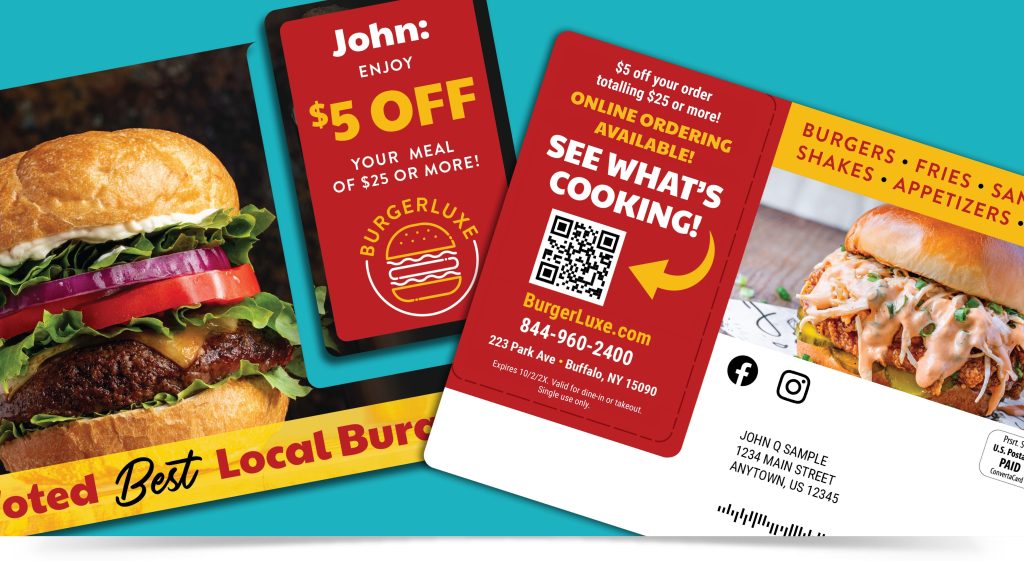
Real Food Photos
Strong food photos make people imagine the meal before they buy. Realistic images of popular dishes, generous portions, and fresh ingredients can make an online order feel easier to choose. Honest visuals help customers know the meal they can expect.
Clean Mailer Layout
Simple design is usually better than crowded design. A restaurant mailer should show the offer, the food, the website, and the deadline without making the customer work to find the point. Clarity keeps attention on ordering food instead of confusion.
Local Brand Voice
Local tone can make the message feel personal. Mentioning nearby neighborhoods, family dinner needs, office lunch rushes, or game day orders shows customers that the restaurant understands their routine. This helps every offer feel local, and useful.
Review Based Confidence
Reviews and short proof points can reduce hesitation. A line about a popular dish, a local rating, or years serving the area can help customers feel safer when ordering online. Social proof can support a faster buying decision from a new local guest.
Professional Local Look
Direct mail for small businesses should look professional without feeling cold. Friendly copy, clean photos, and clear value can help a local restaurant compete with bigger chains and delivery apps. It can feel local, helpful, trusted, and very reliable.
Practical Ways Restaurants Use Mail

Repeat Order Value: Many owners compare campaign costs against online orders, but the bigger picture includes repeat visits. A customer who tries one mailed offer may return again if the food and service are strong. Repeat orders often create real profit after trial.
Higher Basket Potential: Average order value can rise when the offer promotes bundles. Family meals, catering trays, and dinner combos often guide customers to buy more than a single item. Larger baskets can lift campaign return when simple bundles make bigger orders easier.
Slow Day Support: Restaurant direct mailing can also support slower days. A Tuesday dinner deal, or Wednesday lunch coupon can shift demand into weaker periods, which helps staff and kitchen time stay productive. Smart timing can make quiet days stronger and steadier.
Small Batch Testing: Good campaigns should be tested in small batches first. Owners can compare two offers, two neighborhoods, or two designs, then put more budget behind the version that brings better online orders. Testing keeps budgets safer and decisions smarter too.
Connected Customer Journey: The best results come when mail, website, menu, and service all work together. Print brings attention, the order page converts interest, and a good meal turns that first order into a habit. Every step should support the next order and the next visit.
Frequently Ask Questions
How does printed mail help online restaurant orders?
It gives nearby customers a physical reminder to visit your website, scan a code, or use an offer when they are ready to order food.
What should a restaurant include on a mailer?
A strong food photo, simple offer, website link, QR code, phone number, location, and clear deadline usually make the piece easier to use.
How can restaurants track results?
They can use coupon codes, QR scans, landing pages, and order notes to see which campaign, offer, or neighborhood created online sales.
What offer works best for first time customers?
Simple value works well, such as a family meal, free side, first order discount, or lunch bundle with clear terms and quick online redemption.
How often should restaurants send mail?
Many restaurants test monthly or seasonal campaigns, then increase frequency when they can see consistent orders and profitable customer response.
Wrapping It Up
Printed campaigns can still play a serious role in restaurant growth when they are targeted, useful, and connected to a smooth online order path. The strongest results come from clear offers, local timing, clean design, and simple tracking.
For restaurant owners who want a practical way to turn neighborhood attention into website orders, MailProsUSA fits naturally into the final planning conversation.