How Direct Mailings Drive Customer Retention for Automotive Companies

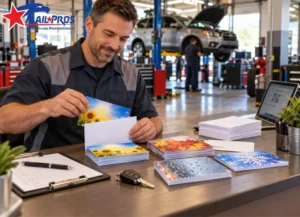
Customers rarely announce that they are leaving a dealership. They stop booking service, postpone recommended work, trade elsewhere, or let a lease deadline pass. The record remains, but the relationship weakens.
Direct mail letters can reopen that relationship when the message is based on a verified customer need. The mailpiece should explain the reason for contact, the useful next step, and the easiest way to respond. That separates a retention campaign from a mass promotion.
Why Past Customers Stop Responding?
A customer may leave because reminders were poorly timed, the offer felt irrelevant, or booking required too much effort. Some owners move to an independent shop. Others delay maintenance or hear from the dealership only when a broad sales event arrives.
Effective automotive marketing accounts for these different situations and keeps each message tied to a clear customer need. A service customer, a lease customer, and a past buyer are not interchangeable audiences. Each group has a different reason to return, so each message needs a different purpose.
Better Targeting Starts With Verified Records
Begin with CRM and DMS records rather than assumptions. Review the last repair order, declined recommendations, warranty information, lease maturity, purchase history, preferred location, and contact permissions.
Useful groups for direct mailing may include
- Customers who have moved outside their expected service pattern
- Owners with unresolved or previously declined service recommendations
- Buyers who have not established a service relationship
- Lease customers approaching a confirmed decision point
- Past customers with a verified trade or appraisal opportunity
- Owners affected by a seasonal maintenance need in their region
The trigger should come from the customer record, manufacturer guidance, dealership policy, or a confirmed program. Good dealership marketing does not guess.
What Strong Direct Mail Letters Need to Accomplish?
The customer should quickly recognize the dealership, understand the reason for contact, and see one clear response path. The offer must connect with a real service, ownership, lease, or replacement need.
Strong direct mail letters usually contain
- A specific headline
- A short reason for contact
- One main offer
- Clear eligibility terms
- A genuine response deadline
- A phone number, QR code, or booking page
- Required disclosures in readable type
Direct mail marketing becomes weaker when the letter carries several unrelated offers. A service reminder, trade appraisal, financing message, and new-model announcement should not compete for attention on the same page.
Service Customers Need a Service Reason
Service-lane campaigns should use verified information such as a missed maintenance milestone, an open recommendation, a seasonal need, or the absence of recent dealership service activity.
Do not claim that a vehicle needs repair without support. Invite the owner to schedule an inspection or review a documented recommendation.
Automotive mailers for service retention can emphasize convenient appointment times, pickup options where available, clearly defined maintenance packages, or a review of previously recommended work. Direct mail letters should not promise availability, pricing, or completion times that the service department cannot support.
Sales and Lease Messages Need Different Timing
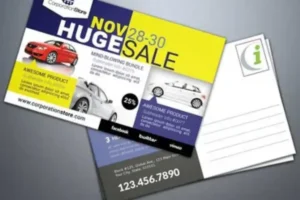
A sales message should not be disguised as a service notice. State plainly whether the purpose is a trade valuation, replacement consultation, or inventory discussion.
Lease communication requires confirmed maturity information and approved program details, including inspection guidance, return options, and appointment availability.
This form of automotive advertising addresses an active decision. It loses credibility when the letter creates false urgency, uses an unverified equity claim, or hides important conditions.
A Practical Campaign Workflow
A focused campaign can be planned in six stages.
- Select one customer group from verified records.
- Define one goal such as booked service visits, completed inspections, or appraisal appointments.
- Match one offer to the customer need.
- Prepare the letter, response page, phone routing, and staff instructions.
- Send a controlled test before expanding the audience.
- Compare completed outcomes with total campaign cost.
This workflow keeps automotive direct mail campaigns manageable and reveals whether the list, offer, creative, or response process needs improvement.
Before production, check names, vehicle references, variable fields, QR codes, phone routing, deadlines, offer terms, and disclosures. One wrong field can undermine the entire message.
Print and Digital Follow-Up Should Match
The second stage of direct mailing should lead customers to a response page that repeats the same promise, deadline, and eligibility rules. Customers should not scan a code and land on a generic homepage. The form should request only the information needed to route the inquiry or schedule the appointment.
Direct mail advertising can work with permission-based email or text follow-up. The supporting message should reinforce the original offer rather than introduce another promotion.
Campaign-specific phone numbers, QR codes, booking links, and CRM source codes make response handling easier to measure. These tools cannot rescue a weak offer, but they can connect interest with appointments.
Staff Preparation Is Part of the Campaign
A mailpiece can create interest while the dealership loses the appointment. This happens when staff cannot verify the offer or the booking path sends customers to the wrong department.
Before responses arrive, give staff the mailpiece, eligibility rules, approved answers, and booking instructions. Confirm that enough service or sales capacity is available.
Direct mail letters work best when the page, phone representative, and advisor provide the same information. Mixed answers damage confidence faster than an ordinary offer can rebuild it.
The Numbers That Matter After Delivery
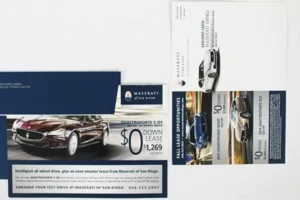
Calls and scans show interest, but they are not the final result. Automotive marketing becomes accountable when the campaign report connects the mailpiece with completed customer activity.
Track
- Pieces entered into the mailing process
- Returned or undeliverable pieces
- Calls, scans, and form submissions
- Appointments booked
- Appointment show rate
- Completed repair orders
- Completed appraisals or vehicle sales
- Revenue linked to the campaign
- Total campaign cost
- Cost per completed customer action
Direct mail marketing should be evaluated by customer group and outcome. A smaller list that produces completed repair orders may be more valuable than a large list that generates low-intent responses. This is how direct mail advertising moves from activity reporting to business measurement.
The first test creates a baseline. Later automotive direct mail campaigns can compare another headline, format, offer, or audience, but only one major variable should change at a time.
Mistakes That Make Dealership Mail Feel Generic
Generic content appears when the dealership starts with a template instead of a customer reason. Familiar claims about exclusive savings or immediate action are not enough to earn trust.
Avoid these problems
- Using the same letter for service, sales, and lease audiences
- Adding a vehicle reference that has not been verified
- Claiming a maintenance need without supporting information
- Promoting an offer that staff cannot locate
- Sending customers to an unrelated response page
- Hiding important conditions in hard-to-read text
- Measuring responses without checking completed revenue
Specific automotive mailers describe a real next step. Specific dealership marketing also prepares the people who must deliver that step.
Frequently Asked Questions
Does Automotive Direct Mail Still Work for Dealerships?
It can work when the audience, reason for contact, and response path are clear. Automotive direct mail is not a substitute for good service or accurate customer data. It is a way to reach a defined customer with a relevant offer and a measurable next step.
What Should Direct Mail Letters Include?
Direct mail letters should identify the dealership, explain the verified reason for contact, present one main offer, state important terms, and provide a simple booking method.
How Often Should a Dealership Send Customer Mail?
Frequency should follow the customer lifecycle. Service reminders, lease communication, ownership milestones, and win-back efforts should be triggered by reliable records rather than an arbitrary schedule.
Are Letters or Postcards Better for Automotive Promotions?
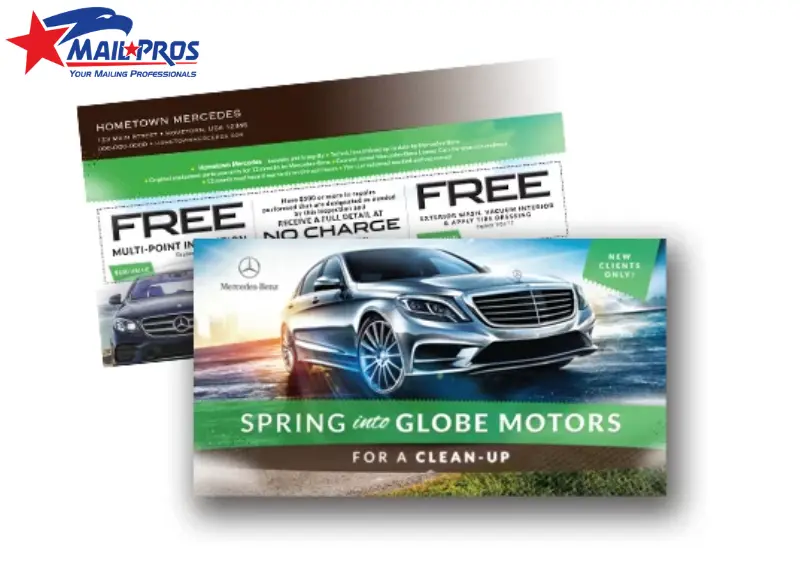
Postcards suit brief reminders and simple offers. Letters provide more room for explanation, personalization, and terms. The right format depends on how much information the customer needs before responding.
How Can a Dealership Track Direct Mail Results?
Use campaign-specific phone numbers, QR codes, response pages, source codes, and appointment reasons. Connect those responses with completed visits, repair orders, appraisals, sales, and revenue. That gives automotive advertising a business result rather than a vanity metric.
To Sum Up
Bringing a customer back begins with a verified reason, not a dramatic claim. The best direct mail letters reflect the customer record, present one useful next step, and lead to a response process the dealership is ready to handle.
Choose one clean group, approve one accurate offer, brief the staff, and test the campaign before increasing volume. A disciplined test shows which customers returned, what they completed, and whether the campaign produced profitable activity.