
Most Reliable Legal Notice Mailing Methods for Secure Delivery

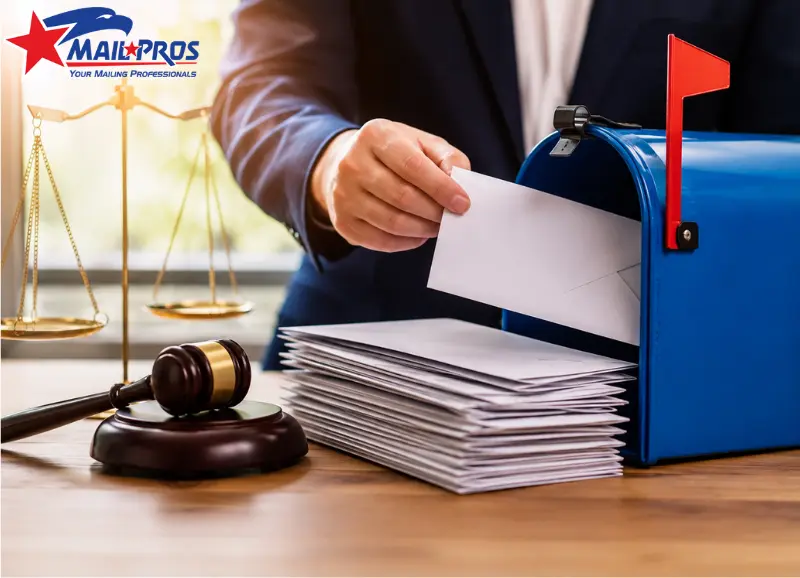
The Certified Mail service is a practical starting point when a sender needs evidence that an item entered the postal system and reached the delivery stage. According to USPS Certified Mail guidance, it provides a mailing receipt and access to delivery or attempted-delivery information.
A Return Receipt can add available signature information. This combination suits legal documents such as demand letters, contract notices, collection communications, and lease documents when certified mailing is permitted.
Certified Mail does not replace service of process. Summonses, complaints, subpoenas, and similar documents may require a sheriff, process server, authorized adult, or another method established by local rules.
Registered Mail is preferable when contents have material value or demand the highest postal security. A Certificate of Mailing serves a narrower purpose: it records USPS acceptance but does not provide tracking or proof of delivery.
What Makes Legal Notice Mailing Defensible?
Proof of Mailing Must Match the Exact Documents
A tracking number records activity for an envelope, not its contents. A legal mailing file must connect the postal record to the final notice and every enclosure.
A tracking page may confirm delivery of a property notice while a dispute focuses on its contents. Keeping the approved document, enclosure list, envelope image, and receipt together closes that gap.
Plan the record before production rather than reconstructing it after a dispute. This guide to planning a successful direct mail campaign likewise treats timing, proof, and tracking as one workflow.
Delivery Results Must Be Saved
Proof of delivery may include the delivery date, attempted-delivery event, recipient name, signature, or returned envelope. Save each result promptly because online mail tracking services may not preserve every detail indefinitely.
Preserve refused, unclaimed, and undeliverable envelopes with their postal endorsements, tracking history, and internal notes. Their legal effect depends on the governing rule.
How the Main Mailing Methods Compare?
Choose the Method by Evidence and Security
| Mailing method | Record created | Best fit |
| Certified Mail | Mailing receipt plus delivery or attempted-delivery data | Routine notices requiring documented mailing |
| Certified Mail with Return Receipt | Certified records plus delivery and available signature evidence | Notices requiring stronger receipt documentation |
| Registered Mail | Enhanced custody controls, mailing receipt, and delivery records | Valuable, sensitive, or irreplaceable contents |
| Certificate of Mailing | USPS acceptance date only | Proof of dispatch when tracking is not required |
| Priority Mail Express | Expedited handling, tracking, and available delivery evidence | Urgent documents when the governing rule permits it |
| Process server | Affidavit or proof of service | Documents requiring personal or substituted service |
Security and Legal Sufficiency Are Different
Registered Mail offers maximum postal security, but it is not legally correct for every notice. The current USPS Domestic Mail Manual explains its receipt-based monitoring and delivery records. Certified Mail is generally more practical when documented acceptance and delivery events are the main needs.
A signature also does not automatically establish valid service. Restricted Delivery can limit delivery to the addressee or an authorized agent, but it should be selected only when it fits the applicable requirement.
Build a Reliable Document Mailing Workflow
Confirm the Rule, Deadline, and Address
Read the controlling provision before preparing the envelope. Confirm whether compliance is measured from mailing, delivery, or completed service. Verify the recipient’s legal name, notice address, unit number, and ZIP Code.
Do not assume the customer database controls. A contract, court filing, agency instruction, or written change may identify another address. The Mail Pros USA article on how accurate mailing lists reduce wasted postage explains how missing units, outdated records, and incorrect ZIP Codes contribute to returns and delays.
Create One Evidence File per Recipient
Each evidence file should contain:
- The final notice and every enclosure
- The recipient’s verified name and address
- The rule, contract clause, or instruction governing delivery
- An image or copy of the addressed envelope
- The mailing date and compliance deadline
- The receipt, article number, and selected extra services
- Tracking history and proof of delivery
- Any returned envelope or postal endorsement
- Internal approval and production records
- Notes about follow-up action
For multiple recipients, assign each tracking number before the pieces leave production. This prevents a correct receipt from being attached to the wrong notice.
Prevent Common Legal Mailing Failures

Plan for Delivery Exceptions
A signature requirement can produce an attempted delivery when no authorized person is available. Allow time for re-delivery, pickup, return, or another permitted method.
Avoid the final day unless mailing on that date clearly satisfies the rule. A wrong address, rejected envelope, or missing form may leave no time for correction. A second copy by First-Class Mail or approved electronic delivery may support communication, but it does not replace a required method.
Apply Controls to High-Volume Mailings
High-volume legal mail services need document matching, page-count checks, address validation, controlled insertion, postage verification, exception reporting, and retained production logs.
Before outsourcing document delivery, review how the provider prevents mixed recipients or enclosures. This overview of scalable direct mail fulfillment covers address management, sorting, quality control, and tracking. Legal notices require written procedures suited to their sensitivity.
Evaluate Legal Mail Services Carefully
Ask for a Documented Process
A qualified provider should explain how files are received, approved, printed, matched, inserted, mailed, tracked, and retained. Confirm that each notice can be tied to its envelope and article number, and ask how exceptions are reported.
Business mailing services should identify supported postal services and post-mailing records. Mail delivery services must also explain controls, escalation steps, retention periods, and sample reports rather than rely on broad secure mailing claims.
Protect Information and Preserve Records
Legal notices may contain personal, financial, employment, healthcare, or account information. Review access controls, file transfer, production safeguards, staff authorization, and data-destruction procedures.
Set a retention period with counsel. Postal evidence, proof of service, mailing affidavits, and returned envelopes may need to remain accessible through a dispute, audit, or limitation period.
Frequently Asked Questions
Is Certified Mail Required for Every Legal Notice?
No. The correct method depends on the statute, court rule, agency instruction, or contract. Some notices permit ordinary mail, while others require Certified Mail, personal service, publication, or more than one method.
Does Certified Mail Prove What Was Inside the Envelope?
No. It records mailing and delivery events associated with the mailpiece. Preserve the final notice, enclosures, envelope image, receipt, and tracking record to document the contents.
What Is the Difference Between Certified and Registered Mail?
Certified Mail emphasizes proof of mailing and delivery events. Registered Mail adds stronger custody controls and is USPS’s most secure service. The right option depends on the legal requirement and the value or sensitivity of the contents.
What Happens if the Recipient Refuses the Notice?
Keep the returned envelope and complete tracking history. Refusal may have legal significance, but the result varies by jurisdiction and notice type. Counsel can determine whether another delivery attempt or service method is required.
How Long Should Mailing Records Be Retained?
There is no universal period. Retention should reflect the governing law, contract, dispute period, regulatory duties, and internal policy. Obtain legal guidance when the notice may affect rights, money, property, or a filing deadline.
Conclusion
For many routine notices, Certified Mail with Return Receipt is the most reliable practical choice. Registered Mail offers maximum physical security. Use an authorized process server when the governing rule requires formal service.
Reliable legal notice mailing depends on correct documents, verified addresses, timely production, accurate matching, and preserved evidence. Mail Pros USA can help businesses organize printing, addressing, postal preparation, and record-focused mailing workflows at scale.
Review the notice requirement before the deadline to avoid urgency. Then contact Mail Pros USA with the recipient volume, document format, mailing date, security needs, and required delivery evidence to build a clear production plan.