
In an era where we are constantly bombarded with digital notifications, pop-up ads, and fleeting social media stories, there is something undeniably powerful about a physical presence. As a printing provider, I’ve seen business owners pour thousands into digital ads that vanish the second the budget runs out. Conversely, I’ve watched local businesses thrive by placing a well-designed, large-format graphic in the right window or community board. The tangible nature of print creates a sense of permanence and trust that pixels simply cannot replicate.
When we talk about traditional advertising, many people assume it’s outdated, but the data tells a different story. Posters act as a silent salesperson that works for you twenty-four hours a day, seven days a week. Whether you are announcing a grand opening, promoting a seasonal sale, or simply trying to reinforce brand recognition, utilizing professional Poster Printing for Marketing offers a high-impact solution that cuts through the digital noise. It forces the viewer to stop, look, and engage with your message in the real world.
Leveraging High-Visibility Visuals for Local Brand Awareness
One of the biggest challenges my clients face is simply getting noticed in their immediate geographic area. You might offer the best service in town, but if the foot traffic passing your door doesn’t know you exist, you’re leaving money on the table. Posters excel at hyper-local marketing because they allow you to dominate specific visual spaces. Unlike an email that sits unopened in a spam folder, a poster placed in a high-traffic corridor is almost impossible to ignore.
However, visibility alone isn’t enough; the context of that visibility matters. I always advise clients to think about where their potential customers spend their time waiting. Bus stops, coffee shop bulletin boards, and reception areas are goldmines for poster placement. In these moments, people are looking for a distraction, and a bold, creative poster provides exactly that. It transforms a passive wait time into an active brand engagement opportunity.
To get the most out of this, you need to understand the different materials available. A poster meant for a sleek indoor retail display requires a different approach than one destined for an outdoor festival. Understanding the nuances of our poster types and uses will help you select the right format, ensuring your message survives the elements and looks professional regardless of the setting.
Why Large Format Print Is a Cost-Effective Strategy
Budget is a primary concern for every business owner I talk to, from startups to established franchises. One of the most compelling arguments for poster printing is its incredible return on investment (ROI). With digital advertising, you pay for every click or every thousand impressions. Once you stop paying, the traffic stops immediately. Posters, on the other hand, require a one-time production cost but can continue generating impressions for months or even years.
I remember working with a local theater group that was struggling with the rising costs of social media ads. We shifted a portion of their budget to high-quality posters placed in strategic partner businesses around the city. The cost per impression dropped significantly because those posters stayed up for six weeks, being seen by thousands of locals daily without costing a penny more than the initial print fee.
The durability of your marketing materials plays a huge role in cost-effectiveness. If you print on cheap paper, the corners curl and the colors fade, making your brand look neglected. Investing in the right stock ensures longevity. While often discussed in the context of mailers, the principles in our paper quality guide apply here too: heavier, coated stocks withstand humidity and handling much better than standard paper, protecting your investment.
Integrating Posters with Direct Mail and Other Print Channels
Marketing works best when it is an ecosystem rather than a series of isolated efforts. A common mistake I see is businesses treating their posters as completely separate from their other campaigns. In reality, your posters should serve as the headline of your campaign, while your smaller print collaterals provide the details and the call to action.
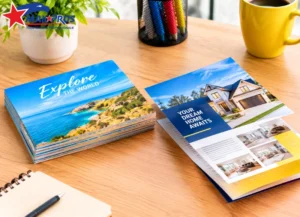
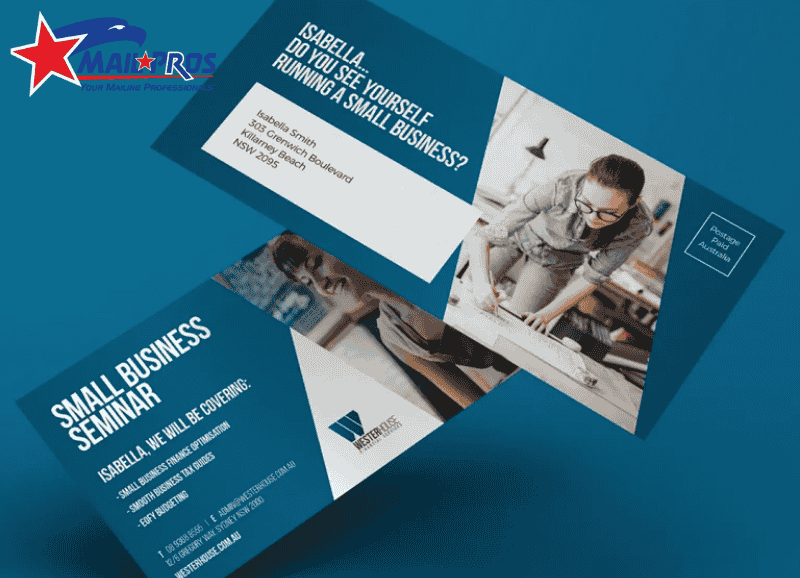
Imagine a potential customer sees a striking poster for your landscaping business while walking their dog. The seed is planted. Two days later, they receive a postcard in their mailbox with the same branding and a discount offer. That recognition triggers trust. By coordinating your large format prints with Postcard Printing, you create multiple touchpoints that reinforce each other, drastically increasing the likelihood of conversion.
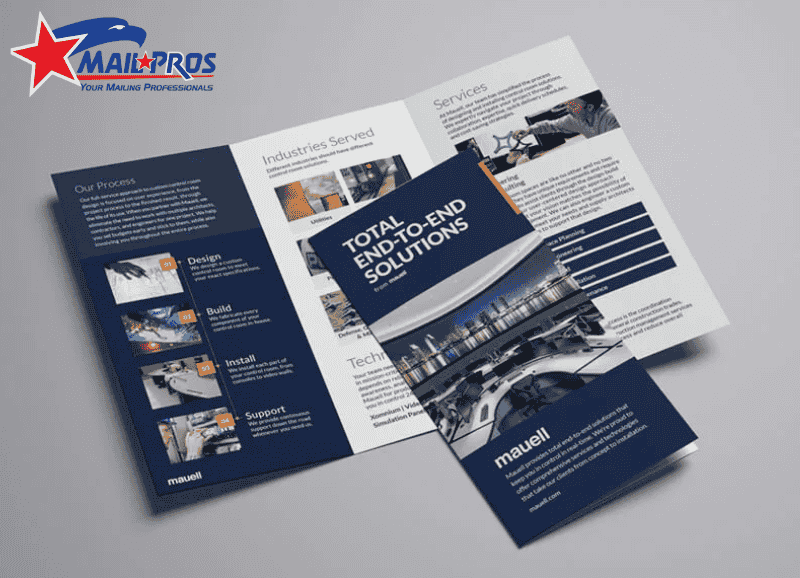
This integration also applies to informational content. A poster can grab attention with a strong image and a headline, but it shouldn’t be cluttered with paragraphs of text. Instead, keep the poster simple and have Brochures Printing available nearby. This allows interested prospects to take the information with them, bridging the gap between seeing an ad and making a phone call.
Common Design Mistakes That Kill ROI
Having printed thousands of files, I can tell you that design often makes or breaks a campaign. The most frequent error is overcrowding. Business owners often want to list every service, price, and hour of operation on a single poster. This overwhelms the viewer, causing them to look away. A poster needs a clear hierarchy: one dominant image, one strong headline, and one clear call to action.
Another issue is image resolution. An image that looks fine on your smartphone screen will likely look pixelated and blurry when blown up to 24×36 inches. Using low-resolution images signals a lack of professionalism to your customers. Always use vector graphics or high-DPI photography. If you aren’t sure if your file is print-ready, ask your printer. We would much rather help you fix a file beforehand than print something you won’t be happy with.
FAQs
How long should I keep a marketing poster up?
It depends on the location and the offer. If it is a time-sensitive event, take it down immediately after the event passes nothing looks worse than an expired ad. For general branding, I recommend rotating creative every 3 to 6 months. If a poster hangs for too long, it eventually becomes wallpaper that people walk past without noticing.
What is the best size for a marketing poster?
The standard size for small business marketing is usually 18×24 or 24×36 inches. These sizes are large enough to catch the eye from a distance but small enough to fit in standard windows and A-frame sidewalk signs. However, for community bulletin boards, 11×17 is often the maximum allowed size, so it’s wise to print a mix of formats.
Can I put QR codes on posters?
Absolutely, and you should. QR codes bridge the gap between physical print and digital action. However, ensure the code is large enough to scan from a distance (at least 2-3 feet away) and place it at eye level. Don’t make people crouch down to scan a code located at the very bottom of the design.
Conclusion
Poster printing remains one of the most versatile and reliable tools in a marketer’s arsenal. It provides a tactile, visual authority that digital ads struggle to match, helping you claim ownership of your local market. Whether you are looking to drive foot traffic, support a direct mail campaign, or simply build brand awareness, the key is to combine professional design with high-quality production.
Marketing is about building trust, and quality print materials show your customers that you take your business seriously. If you are ready to elevate your visual marketing strategy with materials that leave a lasting impression, visit MailProsUSA. Let’s create something that stops the scroll in real life.